
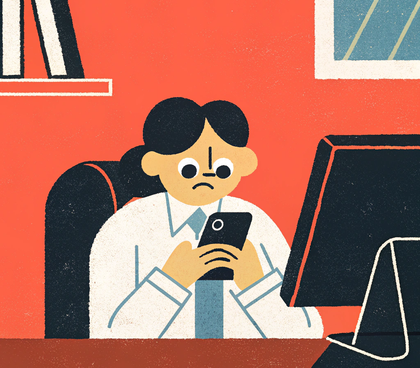
The "day in my life” video has become one of TikTok’s most recognisable content formats, with the #dayinmylife hashtag alone surpassing a staggering 48 billion views on the platform. From 5 a.m. morning routines and elaborate productivity rituals to back-to-back meeting montages, millions of users are being given a carefully curated glimpse into other people’s working lives.
But while these videos can offer career inspiration and motivation, new research suggests that constant exposure to this highly curated productivity content could also be contributing to unrealistic expectations around work.
What we did
We surveyed 600 workers to understand the impact that social media has on their productivity at work, finding that more than two in five (40.5%) believe hustle culture is glorified on social media in a way that’s damaging to workers, with nearly one in five (17.8%) saying it strongly normalises overworking and burnout.
However, the findings also reveal a more nuanced picture. More than one in four workers (26.7%) described the impact as "mixed,” acknowledging that productivity content can both be damaging and motivating. Just one in seven (14.3%) saw hustle culture content as purely inspirational.
Key Findings:
- More than two in five workers (40.5%) say social media glorifies hustle culture in ways that are damaging to workers.
- Nearly one in five (17.8%) say social media strongly normalises overworking and burnout.
- Millennials are the most critical, with 48.7% saying social media glorifies hustle culture in ways that harm workers.
Gen Z Is the Most Divided Generation
Gen Z workers appear to have the most complicated relationship with hustle culture content online.
Nearly half of Gen Z workers (46.8%) believe hustle culture content on social media is damaging to workers, including one in five (20.9%) who say it strongly normalises overworking and burnout.
Yet Gen Z was also the most conflicted generation: nearly a third (32.3%) described the impact as both damaging and motivating, the highest rate of any generation.
Just 6.5% of Gen Z respondents said they had no strong opinion on the topic, compared to 15.1% of millennials, 23% of Gen X and 25.9% of Boomers.
Millennials Lead the Backlash
Millennials emerged as the most critical generation when it comes to social media’s influence on workplace culture.
Nearly half (48.7%) said hustle culture is glorified on social media in ways that harm workers, the highest combined agreement rate of any age group.
Almost one in four millennials (23.3%) selected the strongest response, saying it normalises overwork and burnout. Having come of age during the 'rise and grind' era of the early 2010s, millennials appear to be the generation most vocally pushing back against the narrative.
Men More Critical of Hustle Culture Than Women
The research also uncovered a gender divide in how workers perceive hustle culture content.
Men were more likely than women to say social media glorifies hustle culture in ways that are damaging to workers, with 46.9% selecting one of the two damaging responses compared with 35.3% of women.
Women, meanwhile, were more likely to describe the impact as mixed, with 31.3% saying hustle culture content can be both damaging and motivating compared with 21.0% of men.
Women were also somewhat more likely to say they had no strong opinion on the issue (20.4% vs. 16.2%).
With this in mind, Amanda Augustine, a Certified Professional Career Coach (CPCC), Certified Professional Resume Writer (CPRW), and resident career expert for resume.io shares her advice for navigating hustle culture content and maintaining a healthy perspective on social media:
1. Remember that you’re seeing a highlight reel
“Day in the life” content is edited, curated, and optimised for engagement. You’re seeing what the creator has chosen to show you, not necessarily a complete or representative picture of their workday.
2. Pay attention to how your feed makes you feel
If scrolling through productivity content consistently leaves you feeling inadequate rather than informed or inspired, reconsider what you’re consuming. Unfollow or mute accounts that encourage unhealthy comparisons, and seek out content that offers useful, realistic career information.
3. Don’t use social media as a productivity benchmark
Use platforms like TikTok and Instagram to explore careers, companies, and professional opportunities, but don’t mistake a 60-second productivity montage for a measure of workplace performance. What matters is whether you’re meeting expectations, producing quality work, developing your skills, and contributing value.
4. Talk to people who actually work in your target career
If you’re considering a new career or industry, speak with people who work in it. Mentors, colleagues, and professional contacts can give you a much more realistic picture of the day-to-day experience, including the parts that rarely make it into a social media post.
5. Focus on sustainable career growth
Rather than trying to keep up with the productivity standards portrayed on social media, focus on what will genuinely move your career forward: building relevant skills, taking on meaningful projects, expanding your network, and developing work habits that allow you to perform well over the long term.
Methodology
We surveyed 600 working professionals conducted via Pollfish in May 2026.


