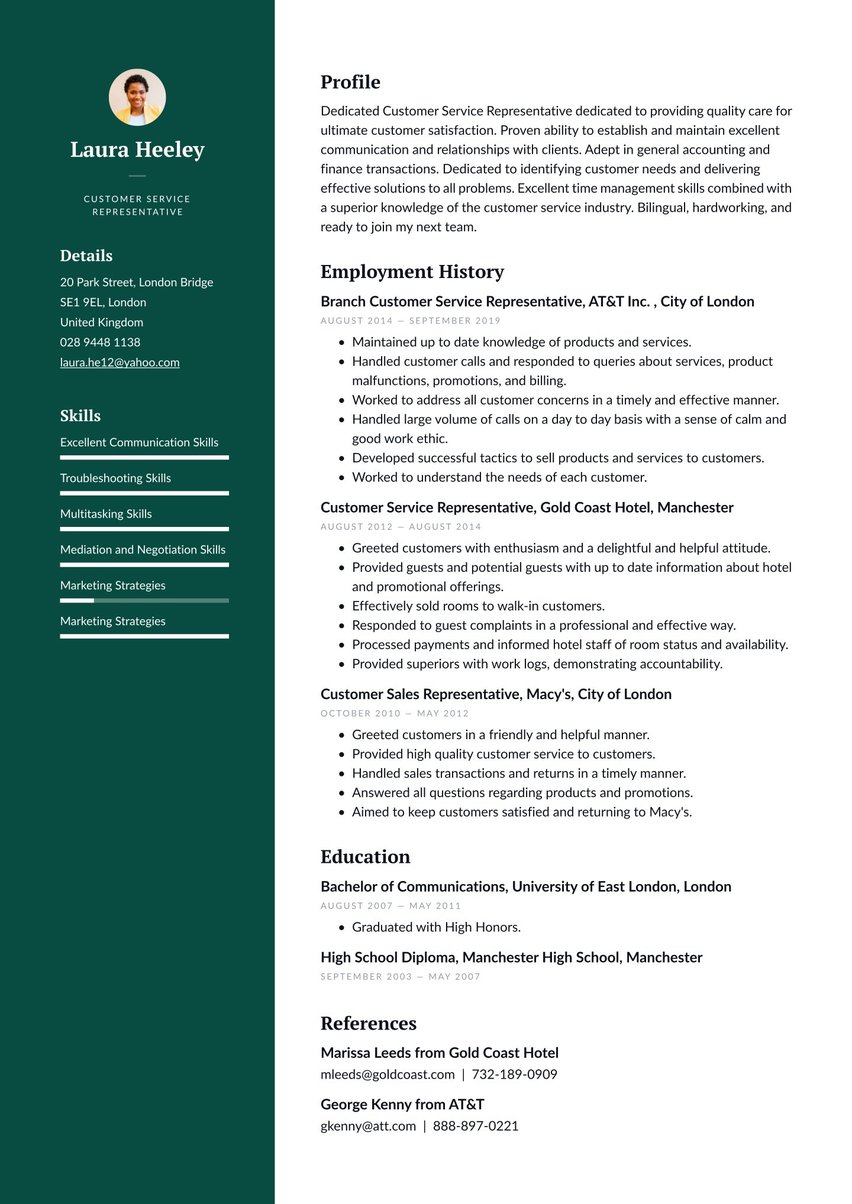
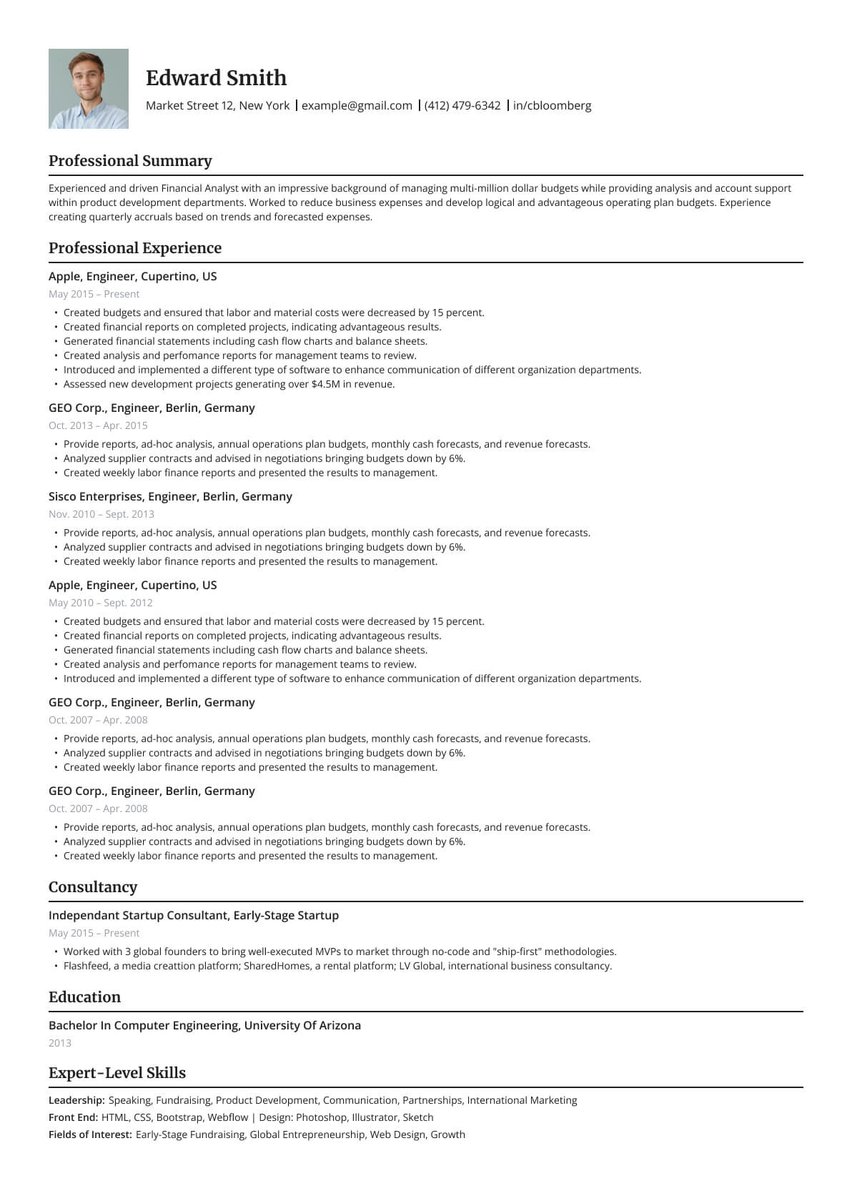
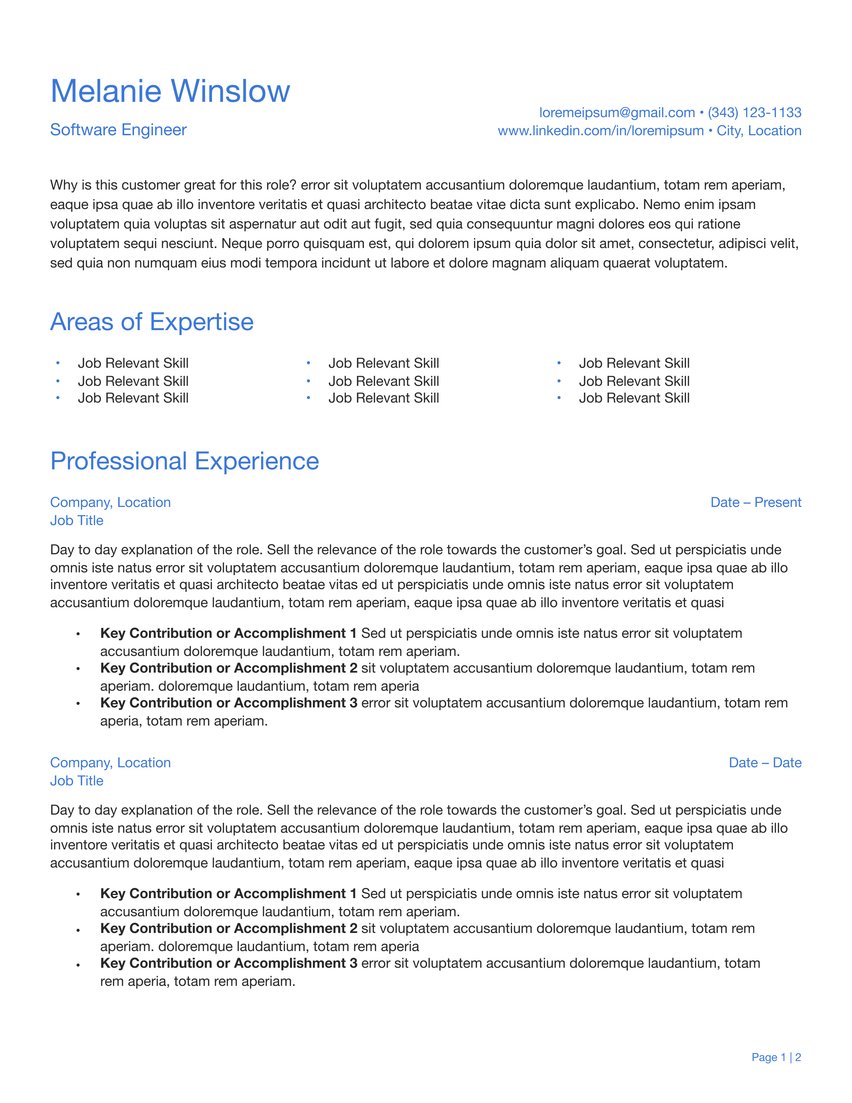
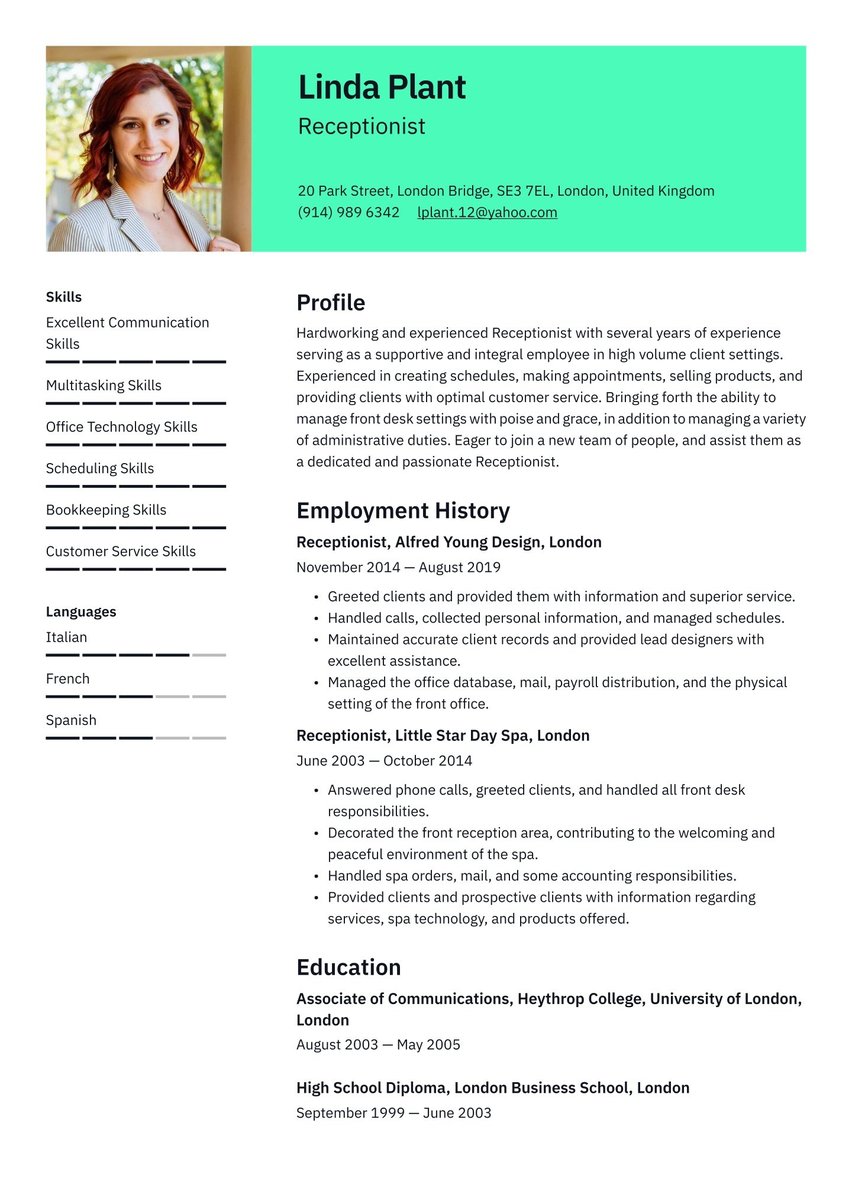
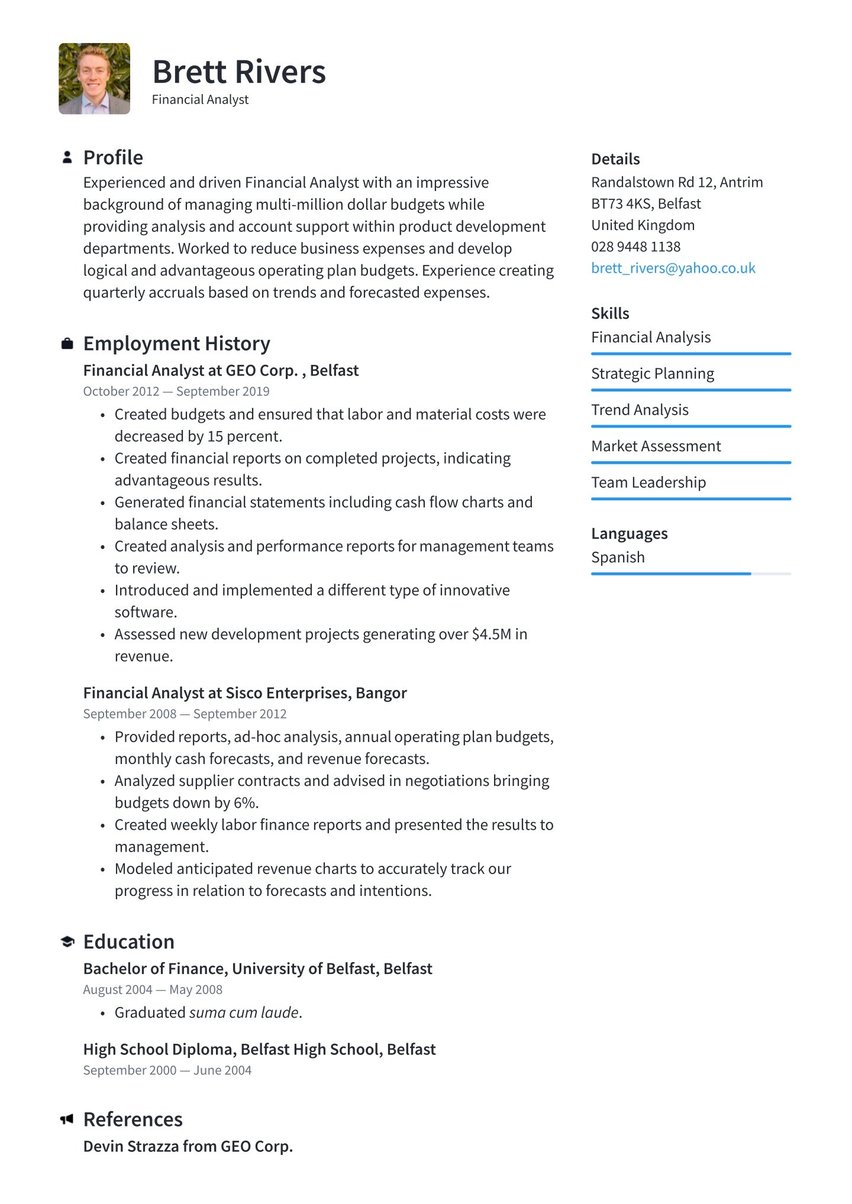
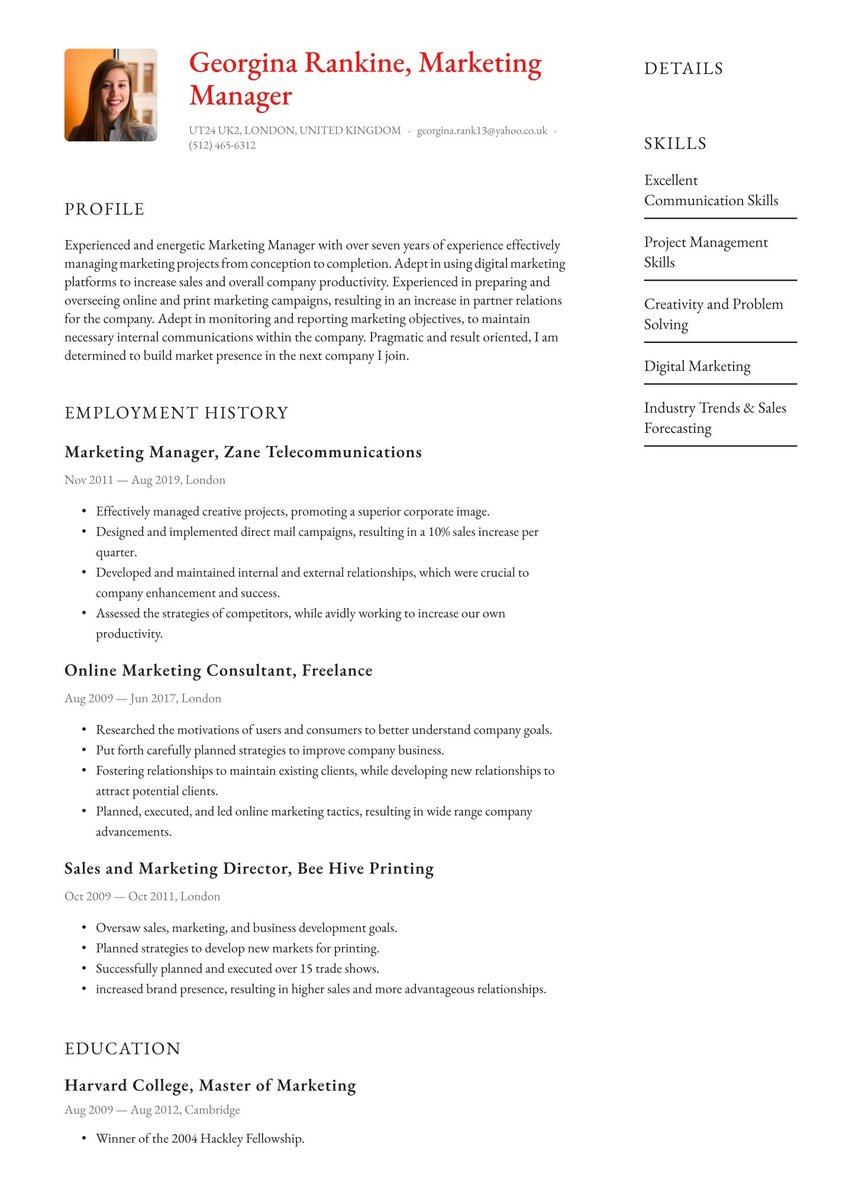
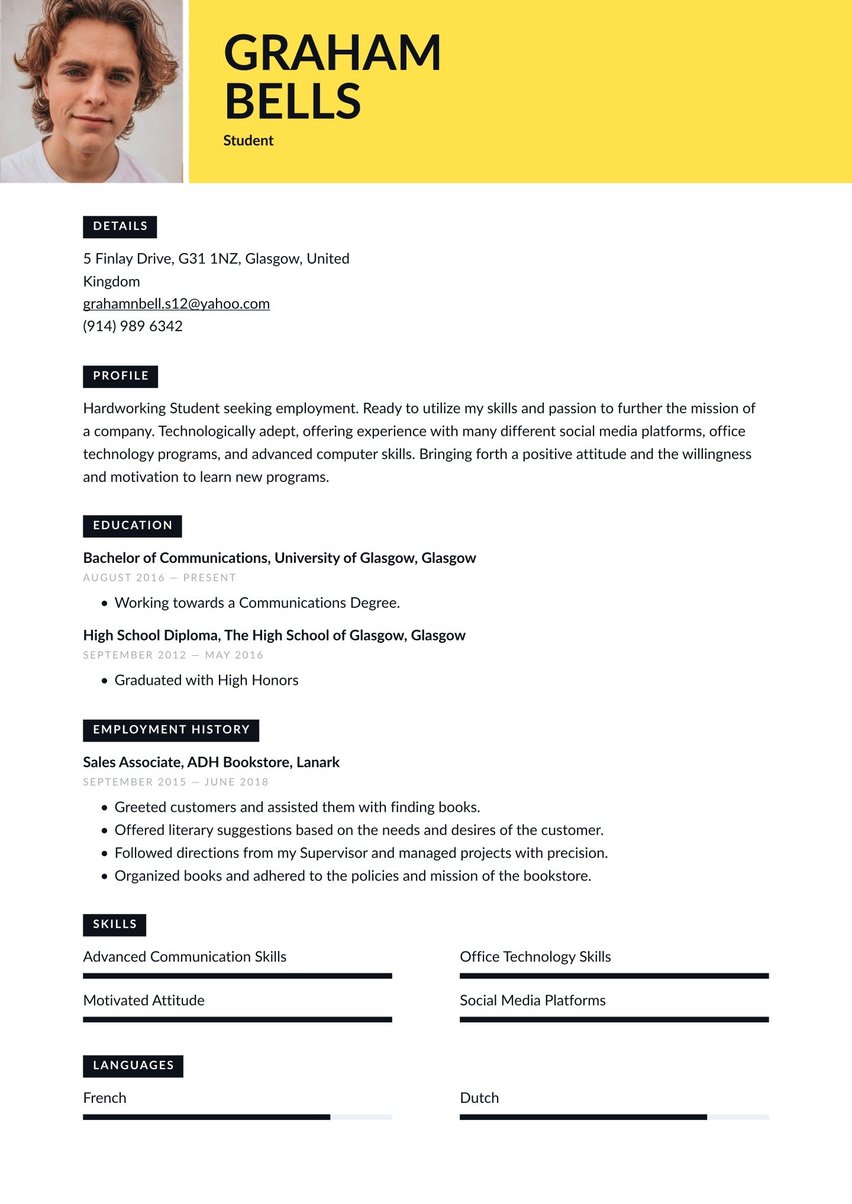
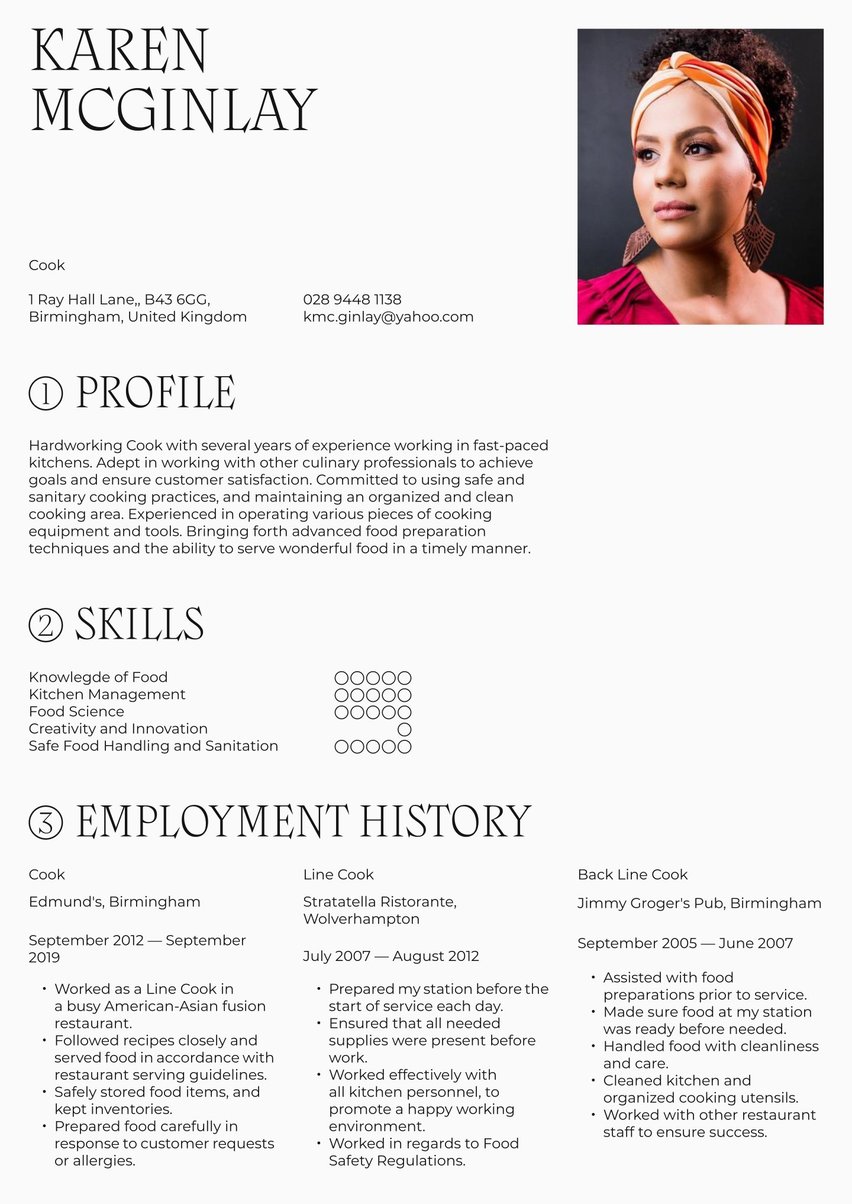
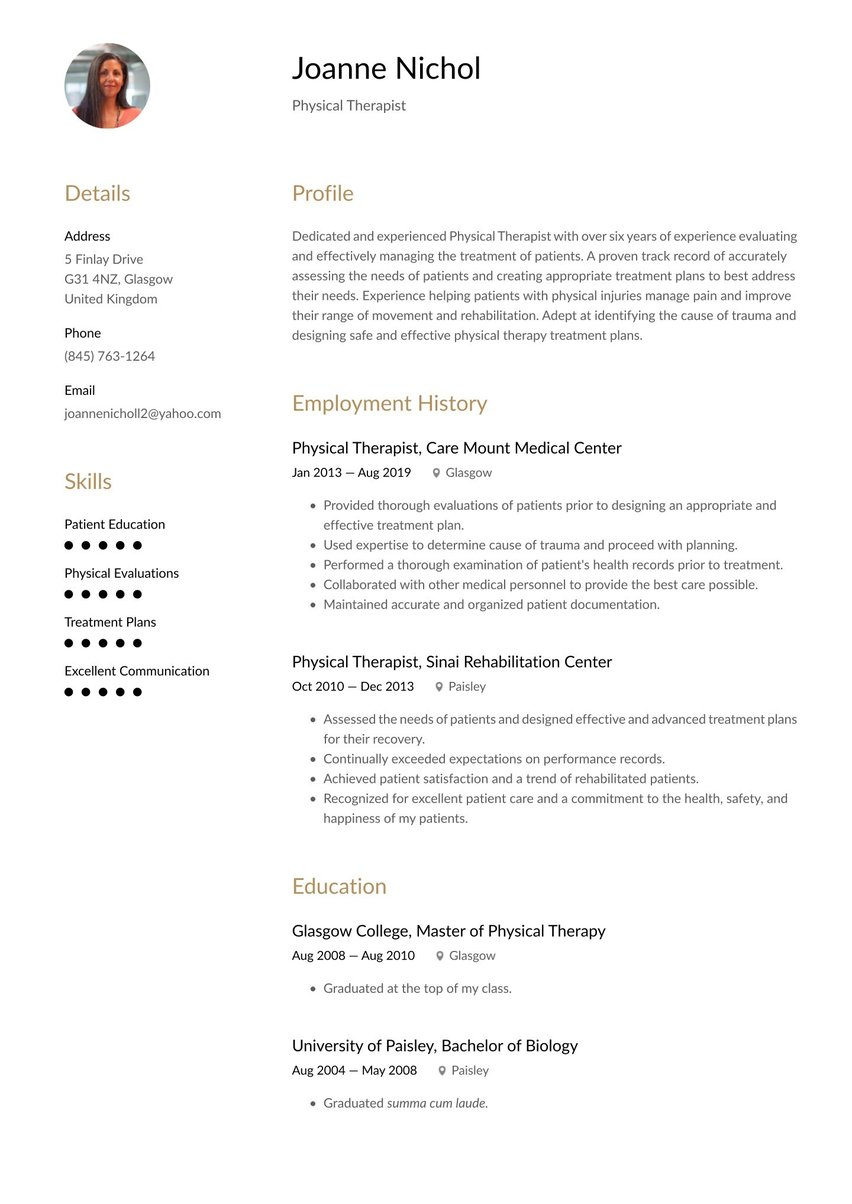
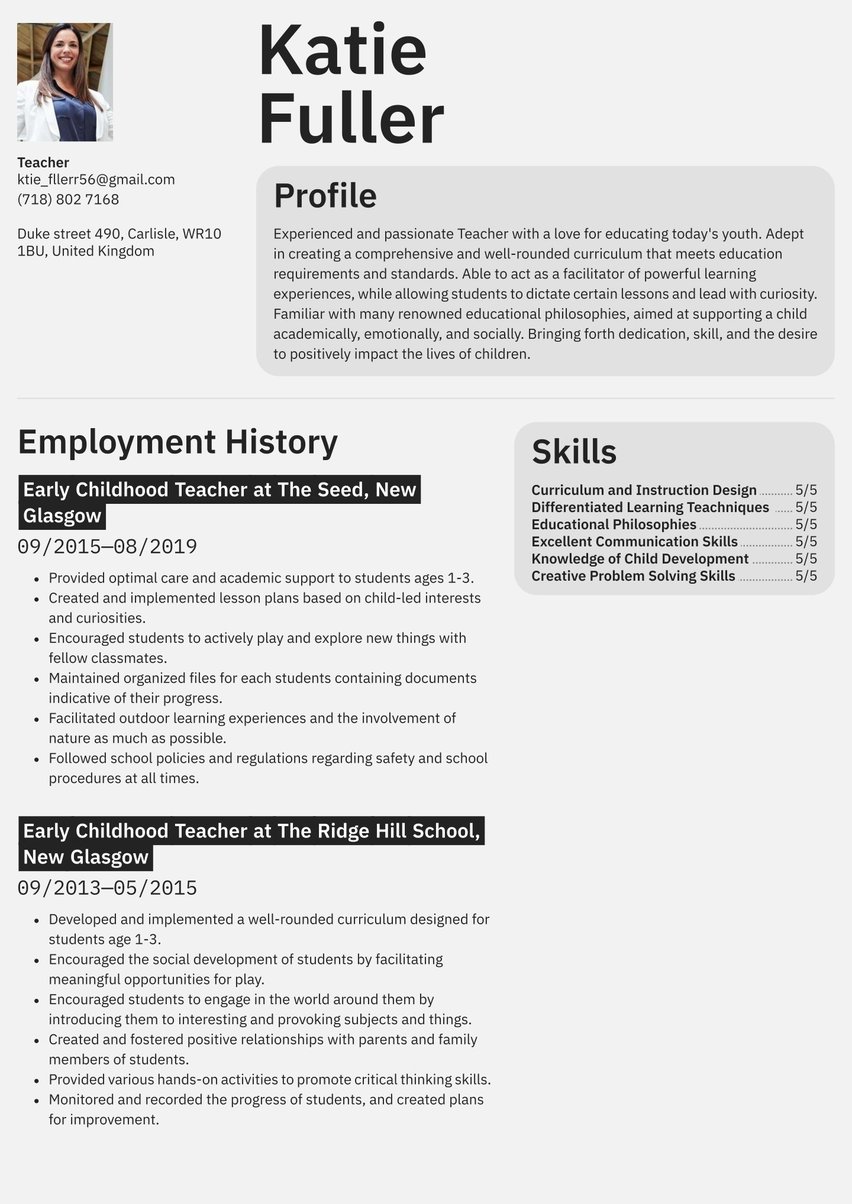
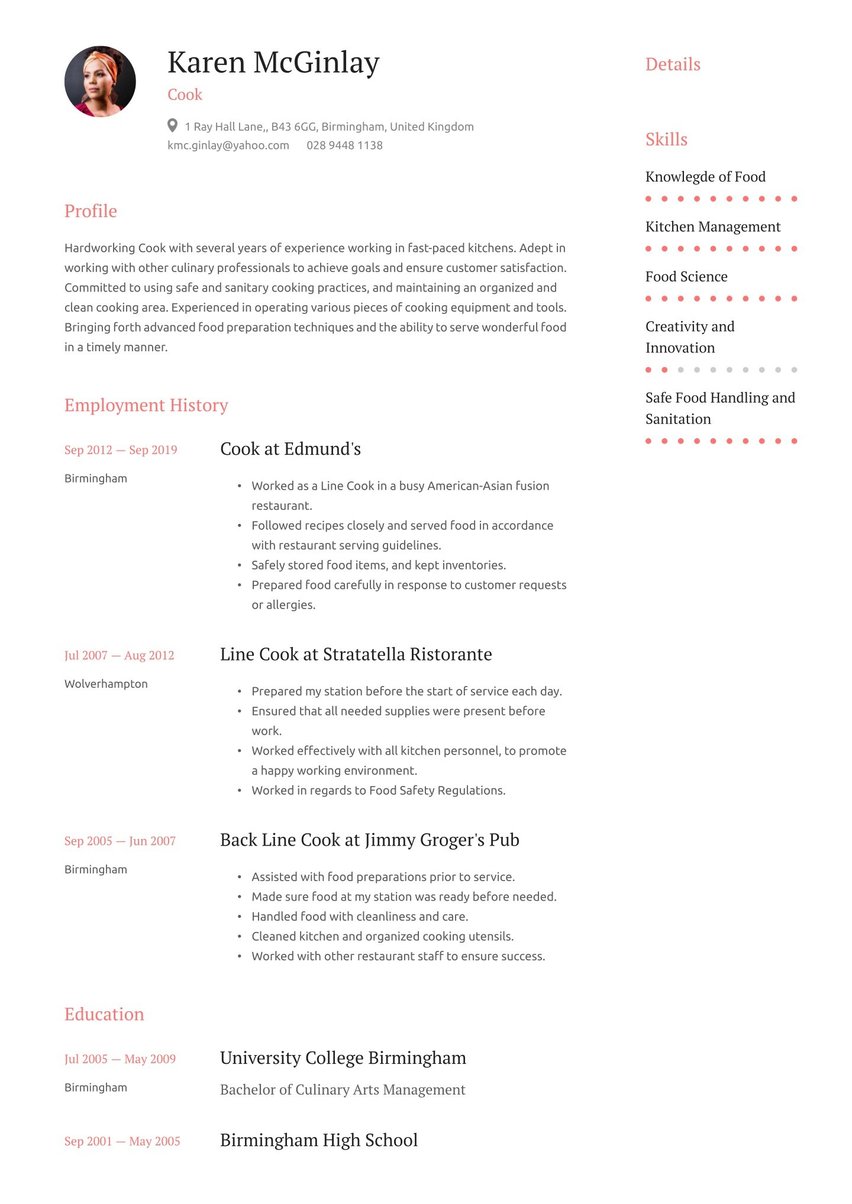
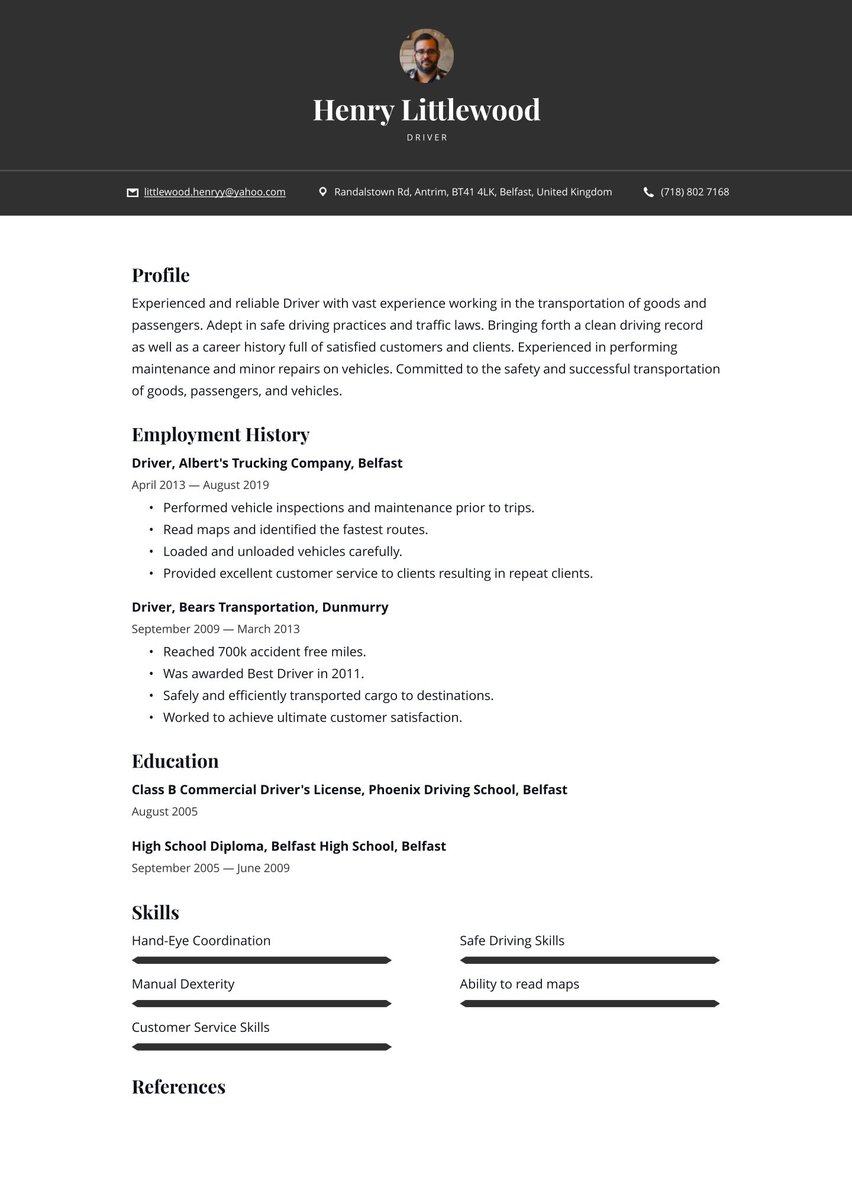
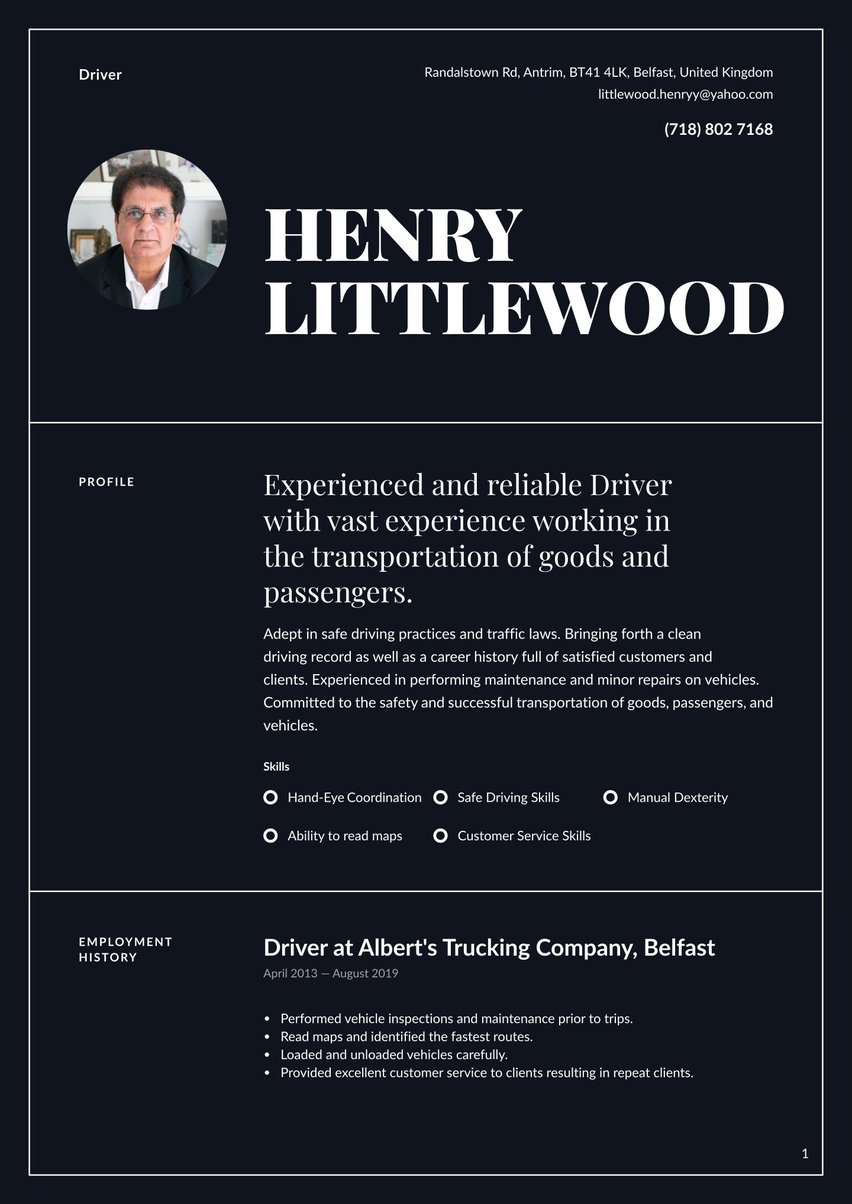
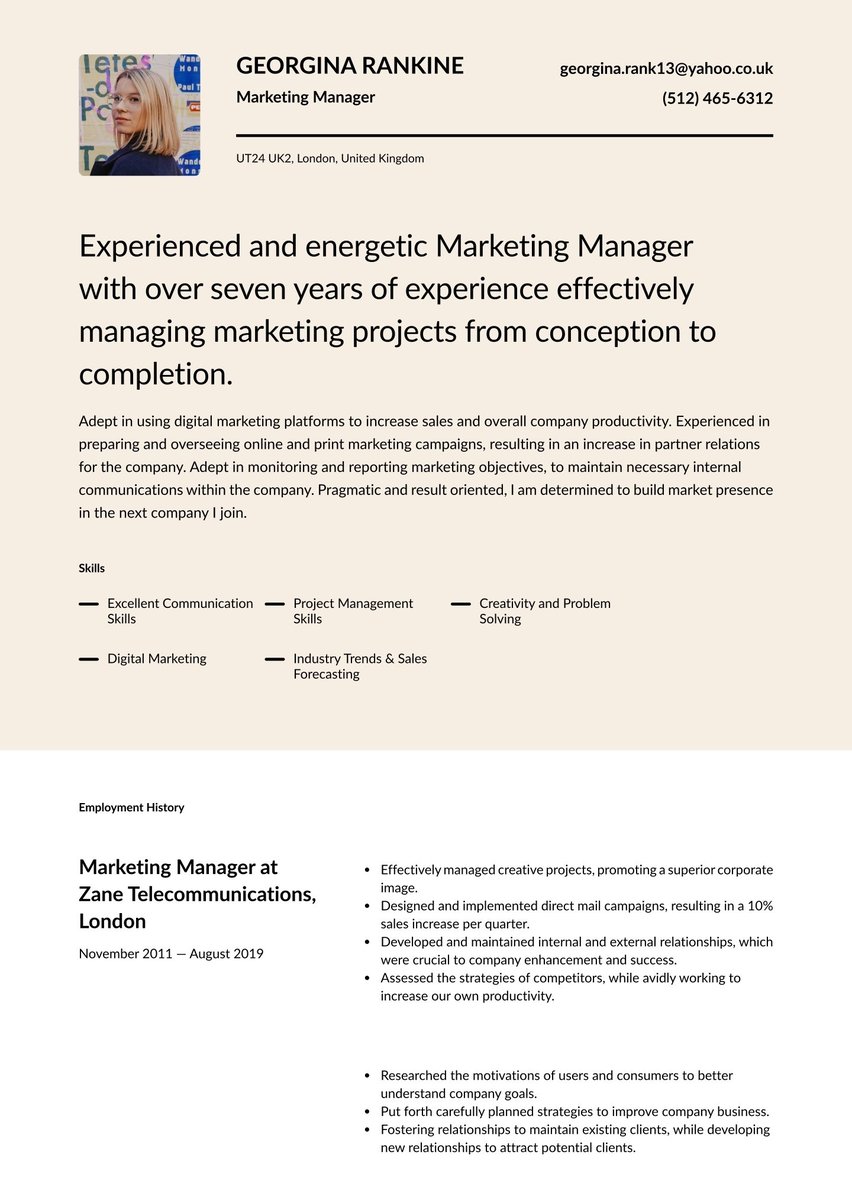
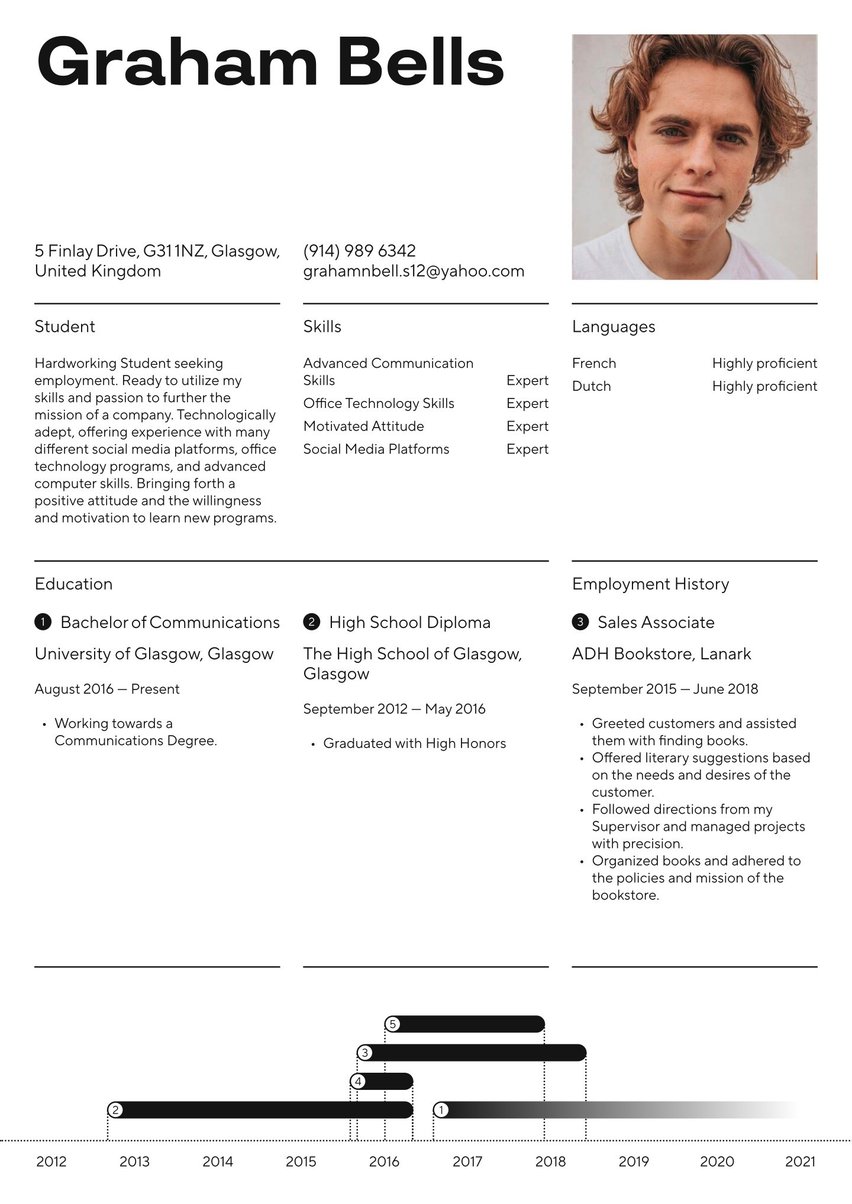
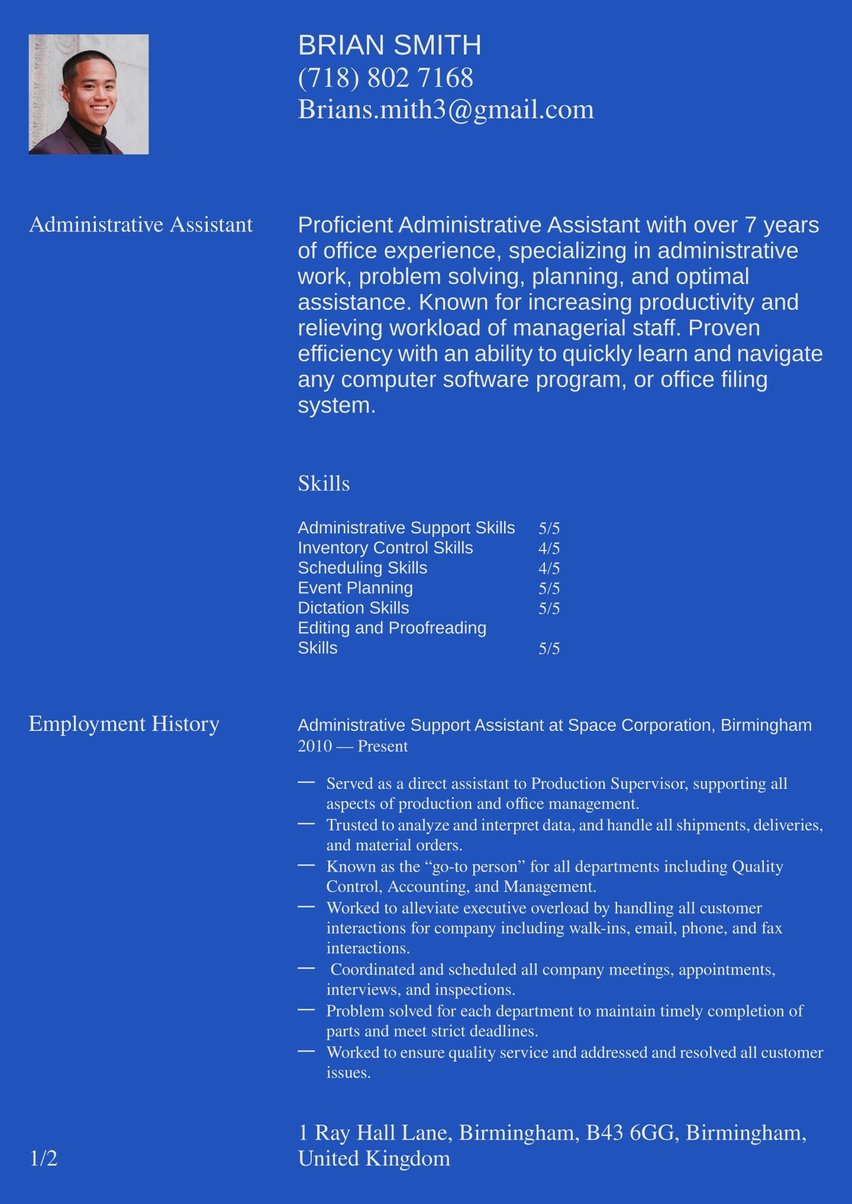
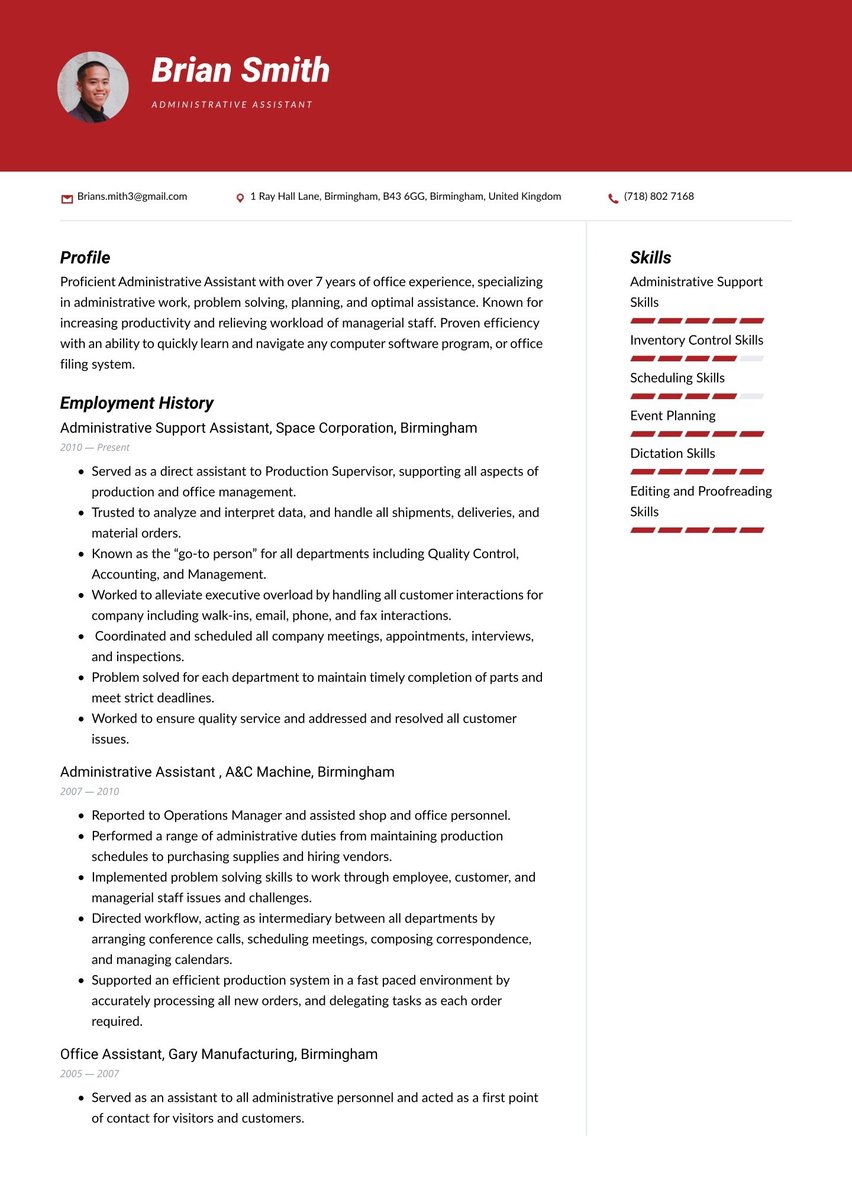
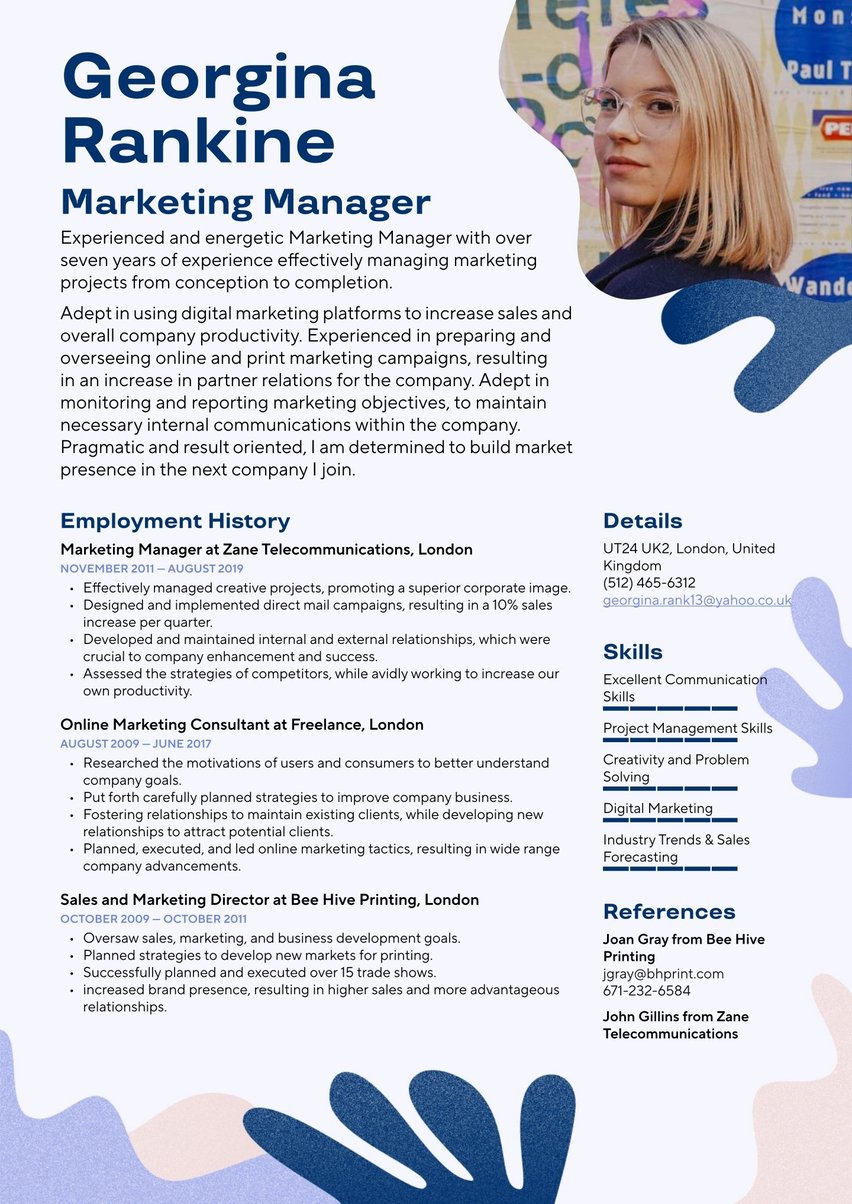
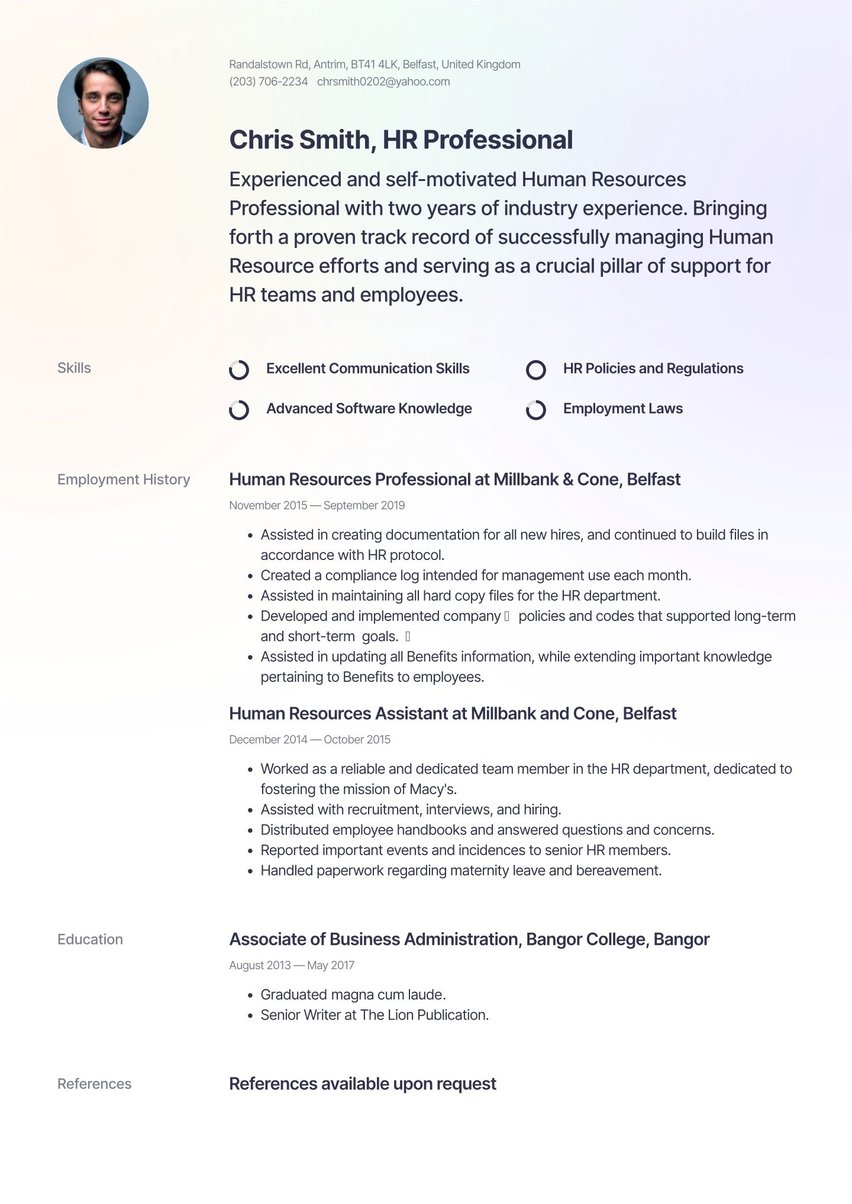
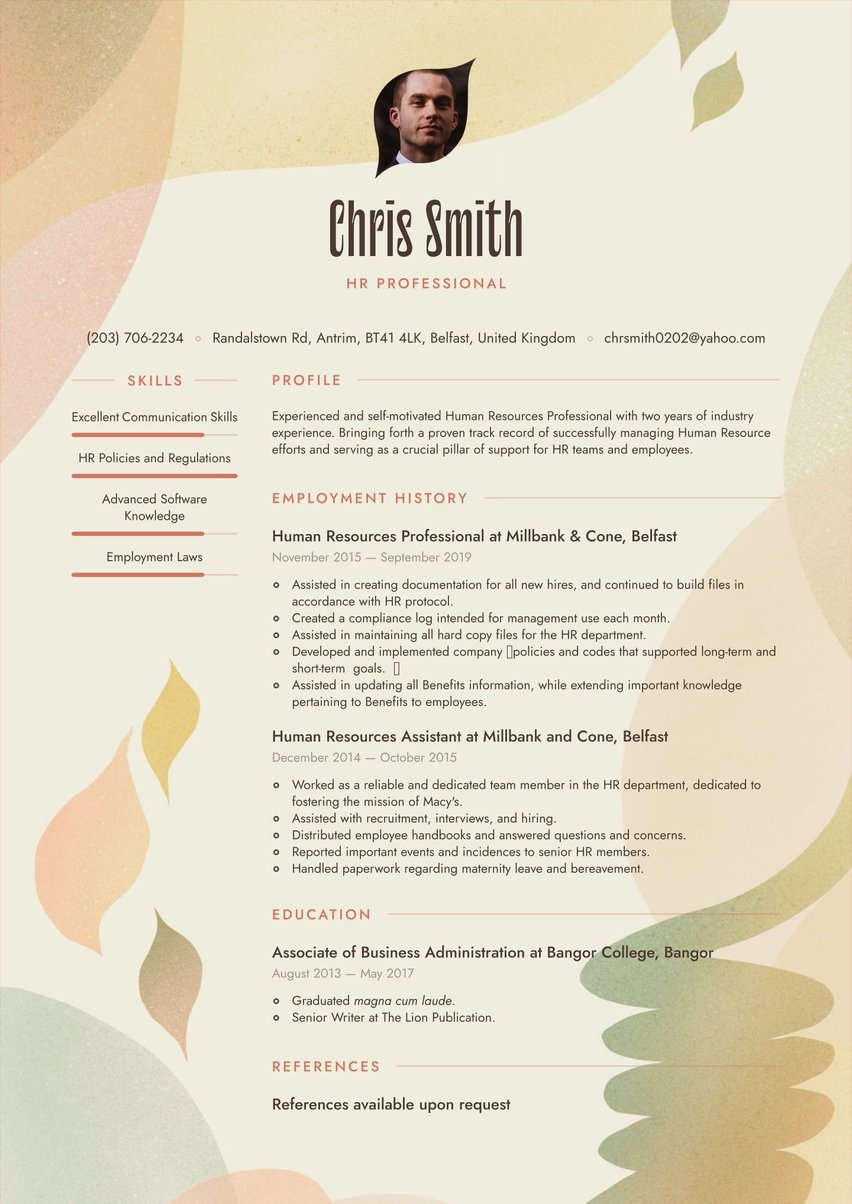
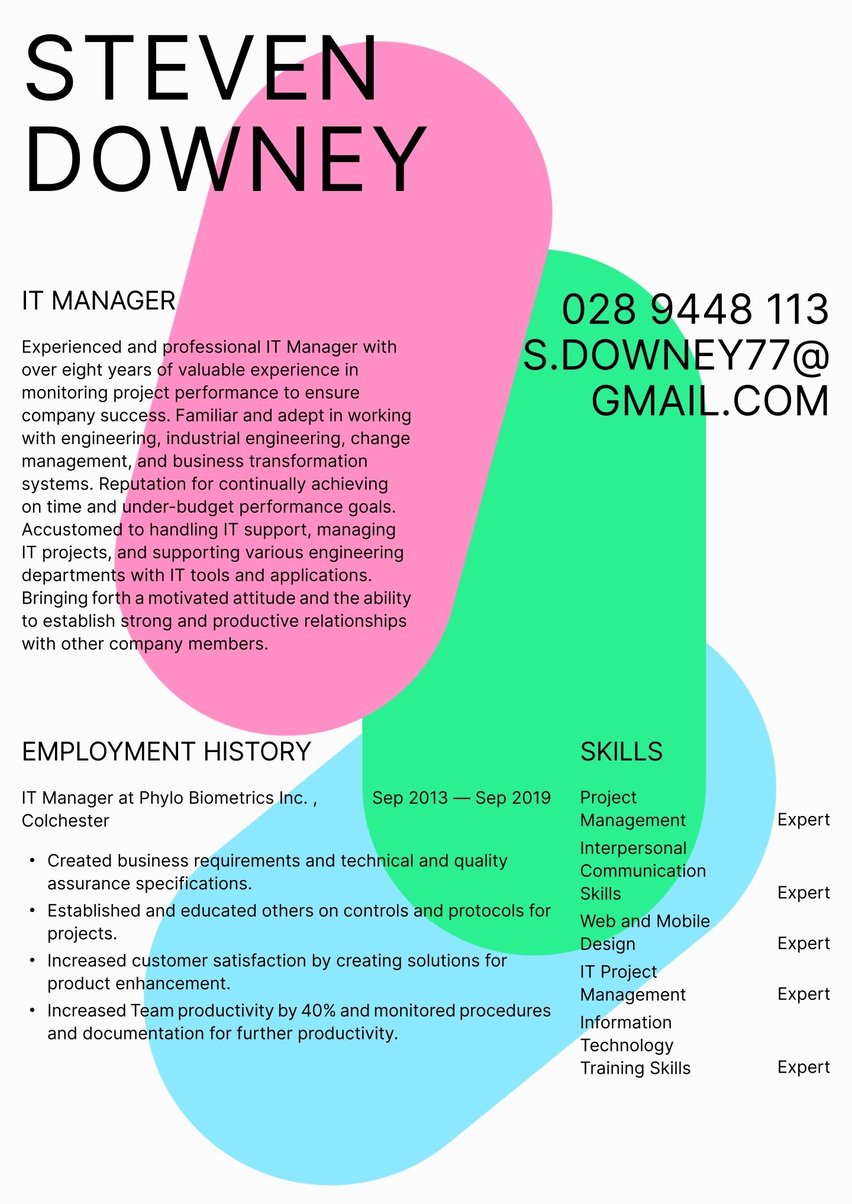
Resume.io has 300+ free UK CV examples, sorted by job and industry, and each one comes with a writing guide.
Find the example closest to the role you want, see why it works, and adapt it for your own job application.
Every example is free to read and to open in the CV builder.
What does a good UK CV look like?
A good UK CV fits on one or two A4 pages and opens with your contact details and a short personal statement, followed by your work history, education, and skills.
It shows results with numbers, leaves out a photo and your date of birth, and is tailored to the job advert.
The general CV example below shows a finished UK CV, with a note on why each part works.
Use it as a model for structure and tone, and turn to the guide on how to write a CV when you are writing a section from scratch.
Sophie Clarke
Customer service team leader
Leeds | 07700 900123 | sophie.clarke@email.com | linkedin.com/in/sophieclarke
Personal statement
Customer service team leader with six years of experience in retail and contact centre roles. Led a team of eight to raise customer satisfaction scores from 82% to 91% in one year. Looking to move into an operations supervisor role to improve service processes at scale.
Work history
Team leader, Northway Home Stores, Leeds | March 2022 to present
- Led a team of eight across the customer service desk and online orders
- Cut average complaint resolution time from five days to two by introducing a daily review meeting
- Trained 12 new starters, with 10 still in post after a year
Customer service adviser, Kestrel Energy Services, Bradford | June 2019 to February 2022
- Handled 60+ calls a day on billing and account queries
- Achieved the team’s highest first-call resolution rate for three quarters in a row
Education
BTEC Level 3 Extended Diploma in Business, Leeds City College | September 2017 to June 2019
GCSEs: 8 at grades 9 to 4, including English and Maths
Skills
Team leadership, complaint handling, staff training, rota planning, Microsoft Excel, Zendesk
References available on request
Why each part works:
- Headline: The job title under the name acts as a CV headline, so a recruiter knows the role in one glance.
- Contact details: Town, phone, email, and LinkedIn only, with no photo, date of birth, or full address, which is all a UK CV header needs.
- Personal statement: Three sentences that name the role, prove it with a number, and say what comes next.
- Work history: Most recent job first, with results in place of duties.
- Education: Qualifications with dates, kept short because experience leads, with space for any awards that relate to the role.
- Skills: Job-specific hard skills a recruiter can match to the advert, while soft skills and personality traits show through the results above.
- References: One line, because UK employers ask for referee details later.
The National Careers Service lists the same core sections: contact details, a short introduction, education, work history, and references.
The University of Manchester Careers Service also recommends writing experience as context, action, and result, which is the pattern every bullet in this example follows.

Which CV example should I choose?
Choose the CV example closest to the job you want, then check that it suits your career stage.
A school leaver and a senior manager applying for similar roles need very different CVs, because career stage decides how much space goes to education, experience, and skills.
| Career stage | Start with these examples | What the CV should lead with |
|---|---|---|
| First job or school leaver | Student, retail, waitress | GCSEs or A levels, part-time work, and volunteering |
| University student or intern | Internship | Your degree, placements, transferable skills, and extracurricular activities |
| Graduate | Graduate | Degree classification, projects, and internships |
| Career changer | The example for the job you want, not the one you have | A personal statement that explains the move, plus transferable skills |
| Experienced professional | Your job title, such as accountant or sales | Results with numbers from your two most recent roles |
| Senior or management | Business | Team size, budgets, and leadership results |
Most first job CVs and student CVs fit on one page, while experienced candidates usually need two.
Nearly every example uses a reverse-chronological layout, with your most recent job first.
The right CV format changes only when you have little work history to show.
For example, a graduate applying for a marketing assistant role should take the job-specific wording from the marketing example and the education layout from the graduate example, since the degree is their strongest evidence.
What should a CV example show in my industry?
A CV example for your industry should lead with the evidence that sector’s employers screen for first: qualifications in law and finance, a portfolio in creative work, licences in logistics, and customer results in hospitality and retail.
Competition varies widely by sector, so your strongest proof belongs near the top of page one.
In the UK, venture capital and private equity roles attract 23.69 applicants per job per day, compared with 0.10 for call centre roles (Resume.io, Most Competitive Job Markets in the UK, 2024).
- Law and finance: Qualifications and accuracy, such as the SQE for a lawyer or ACA and ACCA for finance roles, set out in a professional layout.
- Business and sales: Targets, revenue, and client numbers for sales and estate agent roles.
- Education: Qualified Teacher Status and the age groups you have taught in education roles.
- Technology and engineering: Tools, projects, and certifications for IT and engineering roles, often in a modern layout.
- Creative and marketing: A portfolio link and campaign results for artist, graphic designer, photographer, and actor roles, where a creative CV template can carry more colour.
- Hospitality and retail: Customer feedback, sales figures, and availability for hospitality roles, set out in a simple layout.
- Admin and logistics: Accuracy, systems, and licences for administrator and transport and logistics roles.
The example covers what to write for your sector; the design, from classic to creative, is covered by our CV templates.
How do I adapt a CV example for a job application?
Adapt a CV example by keeping its structure and style, and replacing everything else with your own facts: your employers, dates, results, and skills.
Then rewrite the personal statement for the specific job and mirror the keywords in the advert, so recruiters and applicant tracking systems see a clear match.
- Keep the section order, the length, and the way each bullet starts with an action verb and ends with a result.
- Replace every employer, date, number, and qualification with your own. Never copy a result you did not achieve.
- Rewrite the personal statement so its first sentence names the job you are applying for.
- Match the skills and keywords in the advert wherever your experience backs them up.
- Cut anything in the example that does not apply to you or the role.
Keywords matter more than most applicants expect.
The average job description contains 43 keywords, yet CVs include only 51% of them on average (Cultivated Culture, Resume Statistics, 2025).
“Make sure you customise your CV for each job application to emphasise your relevant skills and experience based on the vacancy’s requirements.” - Amanda Augustine, CPRW, CPCC, resident career expert at Resume.io
Open any example in the CV builder to edit it in place, and change the layout by switching template at any point without losing your text.
Key tips
- Start with the CV example closest to the job you want, then adjust how much space goes to education and experience based on your career stage
- Keep the example’s section order, length, and bullet style, but replace every employer, date, result, and qualification with your own
- Lead with the evidence your industry screens for first, such as qualifications in finance, a portfolio in creative roles, or licences in logistics
- Keep a UK CV to two A4 pages at most, or one page for a first job, and leave out your photo, date of birth, and full address
- Rewrite your personal statement for every application so its first sentence names the role, and mirror the keywords from the job advert throughout.
CV example FAQs
These answers cover common questions about using Resume.io’s CV examples.
Are Resume.io’s CV examples free?
Yes. All 300+ CV examples and their writing guides are free to read, and you can open any example in the CV builder for free.
Downloading the finished design as a PDF or Word file needs a premium plan.
No card details are needed to create an account, and you can switch between examples and templates as often as you like before deciding.
Do I need a cover letter with my CV?
Yes, in most cases. A cover letter explains why you want the role, which a CV cannot do.
Resume.io has free cover letter examples and matching templates in modern, professional, simple, and creative designs.
Keep the letter to one page and use it to connect two or three of your strongest results to what the employer has asked for.
What if there is no CV example for my job?
Use the example for the closest related job, or one from the same industry.
The structure and section order carry over, so you only need to swap in the skills and results for your role.
You can also contact Resume.io’s support team to suggest a job title for a new example.
Is a CV the same as a resume?
In the UK, yes in practice. UK employers say CV for the document most other countries call a resume, while in the US a CV usually means a longer academic document.
So if a UK job advert asks for a resume, send your CV.