



Include your high school education on your resume if it is your highest level of education or if you are a student or recent graduate.
List your diploma or GED clearly in your education section with your school or credential, dates, and location, and remove it once you have a college degree or enough experience to replace it.
Should I list my high school education on my resume?
Yes, you should list your high school education on your resume if it is your highest level of education or if you are still early in your career.
If you have a college degree or several years of relevant work experience, you can usually remove it to save space and keep your resume focused.
When to include your high school education
- Current high school student or recent graduate
This is your most relevant education, so it should be clearly listed.
It helps employers understand your background while you build early experience.
- Current college student or recent college graduate
Include both your college education and your high school diploma.
If you’ve recently graduated and need space, you can remove high school once your college degree stands on its own.
When you can remove it
- College graduate with work experience
Once you have a completed college degree and relevant experience, your high school education is no longer needed.
Removing it gives you more space for professional achievements.
- High school graduate with work experience (no college degree)
You should still include your high school diploma, but you can remove graduation dates if they are no longer relevant.
Focus more on certifications, training, or career-related skills.
Quick decision guide
| Situation | Include high school? | Notes |
|---|---|---|
| Still in high school | Yes | Add expected graduation date |
| Recent high school graduate | Yes | This is your main education |
| In college | Yes | List college first, then high school |
| College graduate | No (usually) | Remove once degree is complete |
| No college, working professional | Yes | You can remove dates if needed |
How to list your high school education on your resume
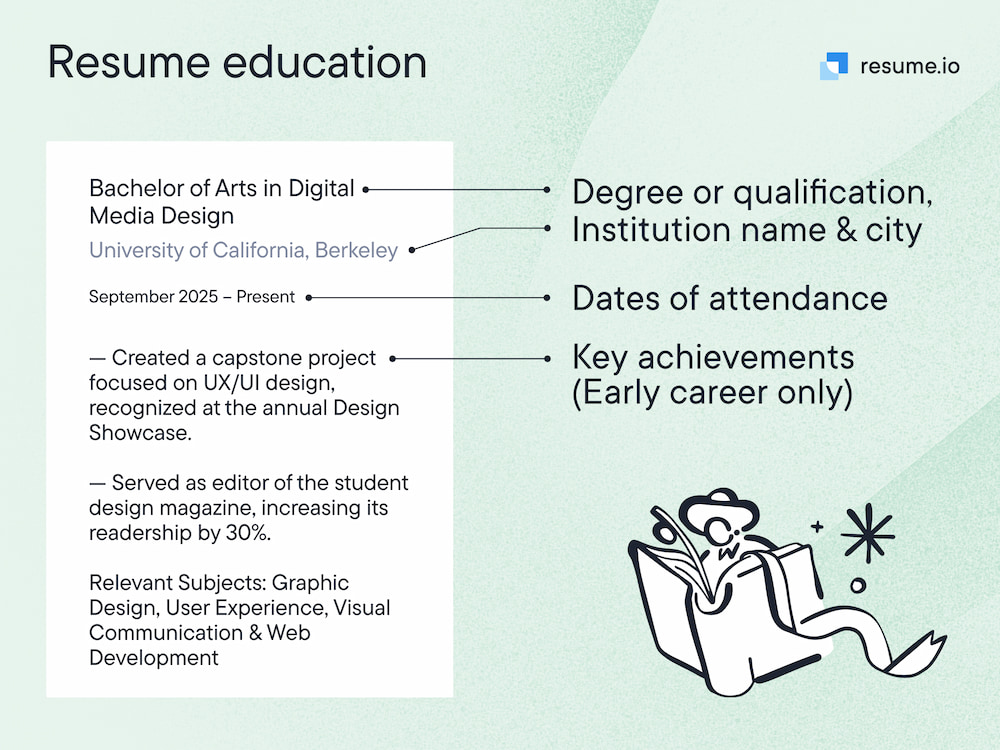
To list your high school education on your resume, add it to your education section with your diploma or GED, school or credential name, location, and dates attended.
If you have multiple entries, list your most recent education first so employers can quickly see your current level.
What to include in your high school entry
- Diploma or credential name (High school diploma or GED)
- School name or issuing organization
- Location (city, state)
- Dates attended or graduation date
This structure keeps your education section consistent and easy for employers to scan.
High school education formatting at a glance
| Element | Example |
|---|---|
| Diploma | High school diploma |
| School | Patterson Hills High School |
| Location | Billings, MT |
| Dates | 2018-2022 or Expected graduation: 2024 |
Example 1: Standard high school diploma
High school diploma:
Patterson Hills High School, Billings, 2018-2022
Example 2: Still in high school
If you are still in high school, you can simply add an expected graduation date.
High school diploma:
Patterson Hills High School, Billings, Expected graduation date: 2024
Example 3: College + high school
If you are a college student, make sure to add your college degree in progress before your high school diploma, like this:
B.A. Journalism and communications
University of Montana, Missoula, Expected graduation date: 2024
High school diploma
Patterson Hills High School, Billings, 2018-2022
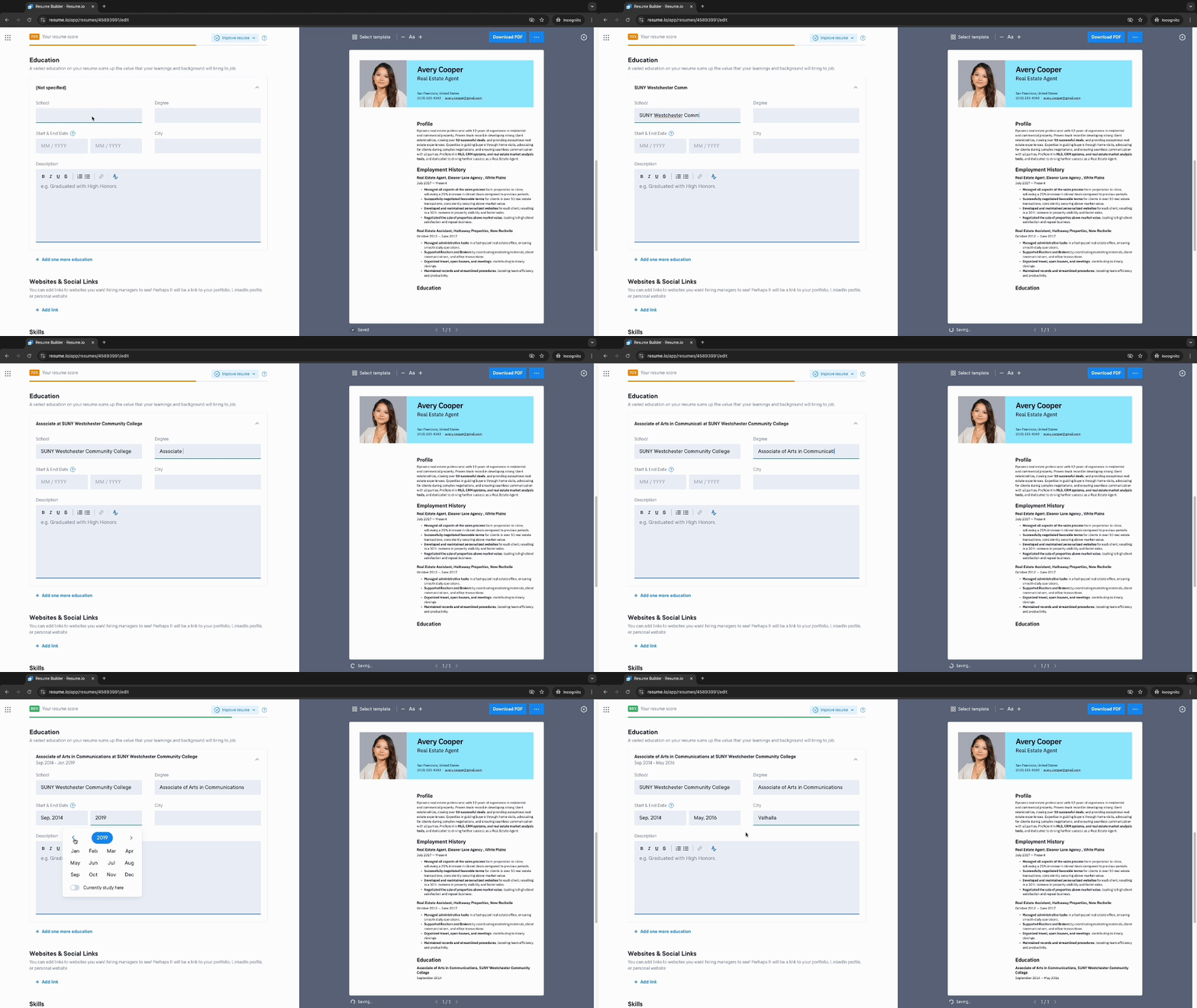
If you earned a GED instead of a traditional diploma, you can list it in the same way, using the credential name and issuing organization.
How do you list a GED on your resume?
You should list a GED on your resume in the education section, just like a high school diploma.
Include the credential name (GED), the issuing organization or state, and the completion date.
If you have additional education or certifications, list those above your GED to keep your resume focused and relevant.
A GED is treated the same as a high school diploma on a resume and should be listed in the education section.
The goal is to present it clearly and professionally without drawing unnecessary attention to the difference.
Example 1: Basic GED listing
General Educational Development (GED)
New York State Education Department
Completed: 2022
Example 2: GED with additional detail
General Educational Development (GED)
Texas Education Agency
Completed: 2021
- Focus: Mathematics and Science
- Honors: High score distinction
Example 3: GED with further education
Certificate in Medical Assisting
Houston Community College
2023
General Educational Development (GED)
Texas Education Agency
Completed: 2021
GED formatting at a glance
| Element | Example |
|---|---|
| Credential | General Educational Development (GED) |
| Issuer | Texas Education Agency |
| Date | Completed: 2021 |
| Optional details | Honors, subject strengths |
You do not need to explain why you earned a GED instead of a diploma.
Focus on presenting your education clearly and let your experience and skills speak for themselves.
But if you’re still unsure, leave it off and focus on stronger achievements.
When should you remove high school or a GED from your resume?
You can remove your high school diploma or GED from your resume once you have a completed college degree or enough relevant work experience to replace it.
At that point, your higher education or professional achievements carry more weight, and removing high school helps keep your resume focused and concise.
High school education is considered foundational, so it becomes less important as you gain higher qualifications or experience.
Employers are primarily interested in your most recent and relevant achievements, so your resume should reflect that progression.
Remove your high school or GED if:
- You have completed a bachelor’s degree or higher
- You have several years of relevant work experience
- You need space for achievements, skills, or certifications
Keep your high school or GED if:
- It is your highest level of education
- You are still in school or recently graduated
- You have limited work experience and need to fill out your resume
When to remove high school from your resume
| Situation | Remove it? | Why |
|---|---|---|
| Completed college degree | Yes | Higher education replaces it |
| Several years of experience | Yes | Work experience is more relevant |
| Still in college | No | Shows full education background |
| No college degree | No | It remains your primary education |
If you remove your high school or GED, double-check that your education section still feels complete.
You may want to replace it with certifications, training, or relevant coursework to maintain balance.
Should you include GPA or coursework with your high school education?
You can include your GPA, coursework, or awards with your high school education if you are a current student or recent graduate.
These details help show your strengths when you have limited work experience.
If you have been out of school for a few years, they are usually no longer necessary.
Including extra details under your high school education can help fill out your resume and give employers a better sense of your academic strengths.
This is especially useful if you are applying for entry-level roles or internships.
You can include:
- GPA or academic performance
- Honors or AP classes
- Relevant coursework tied to the job
- Academic awards or achievements
- Leadership roles or school organizations
When should you leave off your GPA?
- Your GPA is below 3.5
- You graduated more than two years ago
- You have stronger experience or achievements to highlight
In these cases, removing your GPA helps keep your resume focused on what matters most now.
If you are adding coursework or academic achievements, place them as bullet points under your education entry to keep the section easy to scan.
What are common mistakes when listing high school or a GED on a resume?
Common mistakes when listing high school or a GED on a resume include keeping outdated information, formatting it incorrectly, or adding unnecessary details.
These issues can make your resume look unfocused or harder to read.
Keeping your education section clear, relevant, and consistent helps employers quickly understand your background.
Common mistakes to avoid
- Keeping high school after earning a college degree: Once you have higher education or solid work experience, high school is no longer needed. Leaving it on can make your resume feel outdated.
- Listing incomplete or unclear information: Missing key details like dates, location, or the credential name can make your education section harder to understand. Always follow a consistent format.
- Overloading with too many details: Including every class, club, or activity can clutter your resume. Focus only on achievements or coursework that support the job you’re applying for.
- Explaining a GED unnecessarily: You do not need to explain why you earned a GED. Treat it the same as a diploma and present it clearly and confidently.
- Using inconsistent formatting: Mixing styles across education entries can make your resume look unpolished. Keep structure, spacing, and wording consistent.
High school and GED mistakes at a glance
| Mistake | Why it’s a problem | What to do instead |
|---|---|---|
| Keeping it too long | Takes up space | Remove once no longer relevant |
| Missing key details | Reduces clarity | Include diploma/GED, school, dates |
| Too much detail | Hard to scan | Focus on relevant highlights |
| Over-explaining GED | Unnecessary | List it confidently and move on |
| Inconsistent formatting | Looks unprofessional | Match all education entries |
After updating your education section, read it quickly as a recruiter would.
If it takes more than a few seconds to understand, simplify it.
Key takeaways
- Include your high school education if it is your highest level of education or if you are early in your career.
- List your diploma or GED in your education section with the school or issuing organization, location, and dates.
- Add GPA, coursework, or achievements only if they strengthen your application.
- Remove high school once you have a college degree or enough relevant work experience.
- Keep formatting consistent and focus on clarity so employers can quickly understand your background.
FAQs
Here are a few common questions about listing a high school diploma or GED on your resume.
Is a GED or HSED better?
No, neither is better in most hiring situations.
A GED (General Educational Development) and an HSED (High School Equivalency Diploma) are both recognized as equivalent to a high school diploma, and employers typically treat them the same on a resume.
The best option depends on your state and personal education path.
Do jobs verify your high school diploma?
Yes, some employers may verify your high school diploma or GED, especially during background checks.
This is more common for entry-level roles or positions that require specific education credentials.
Always list accurate information to avoid issues later in the hiring process.
What do you call a high school degree on a resume?
You should list it as “High school diploma” on your resume.
If you earned a GED, use “General Educational Development (GED)” instead.
Using the correct and widely recognized terms helps keep your education section clear and professional.


