

Free online courses and certifications can improve your resume, but only if they are relevant to the role and show meaningful skills.
Employers are not impressed by long lists of short courses.
What matters is choosing the right ones and presenting them clearly so they support your application.
What are the best free certifications for your resume?
The best free certifications for your resume are those that are recognized by employers, require real effort to complete, and directly relate to the job you are targeting.
Certifications from platforms like Google, HubSpot, and IBM are widely respected because they demonstrate practical, job-ready skills in areas like marketing, data, and technology.
Digital marketing and sales certifications
Free marketing certifications are some of the most widely recognized because they focus on tools and platforms employers already use.
They often include practical tasks such as campaign setup, analytics tracking, and content strategy.
These certifications are especially valuable for entry-level candidates or those moving into digital roles.
They can also help demonstrate hands-on knowledge even if you do not yet have formal marketing experience.
| Certification | What it covers | Benefits | Best suited for |
|---|---|---|---|
| Google Digital Marketing | SEO, analytics, online strategy | Recognized by employers, broad foundation | Entry-level marketing roles |
| Google Ads certifications | Paid advertising, campaign setup | Tool-specific expertise, highly practical | PPC, performance marketing |
| HubSpot Inbound Marketing | Content, lead generation, funnels | Strong industry recognition | Content and inbound roles |
| HubSpot Content Marketing | Blogging, content strategy | Demonstrates strategic thinking | Content creators and marketers |
Data, tech, and IT certifications
Technical certifications are often the most impactful because they show measurable, job-ready skills.
Many of these courses include projects, coding exercises, or real datasets, which adds credibility.
They are particularly useful for career changers or candidates entering technical roles without formal education.
Employers tend to value these certifications more when they align directly with the tools or programming languages used in the role.
| Certification | What it covers | Benefits | Best suited for |
|---|---|---|---|
| Google Data Analytics | Data analysis, spreadsheets, SQL | Strong brand recognition, practical skills | Entry-level data roles |
| IBM Data Science Certificate | Machine learning, Python, data tools | In-depth learning, project-based | Data science beginners |
| freeCodeCamp certifications | HTML, CSS, JavaScript, Python | Hands-on coding experience | Aspiring developers |
| AWS Cloud training | Cloud fundamentals, infrastructure | Relevant for many industries | IT and cloud roles |
Business, project management, and soft skills certifications
Business and soft skill certifications can strengthen your resume when they support your core experience rather than replace it.
These courses typically focus on communication, leadership, and organization, which are valuable across many roles.
However, they are less impactful on their own compared to technical certifications.
They work best when paired with real work examples that show you applying these skills in practice.
| Certification | What it covers | Benefits | Best suited for |
|---|---|---|---|
| LinkedIn Learning certifications | Communication, leadership, tools | Easy to access, broad topics | General professional development |
| Alison leadership courses | Team management, communication | Structured learning, recognized platform | New or aspiring managers |
| Project management foundations | Planning, workflows, coordination | Transferable across industries | Admin, operations, PM roles |
Creative and design certifications
Creative certifications can help demonstrate practical skills when your portfolio is still developing or limited.
Many of these courses focus on tools like design software, video editing, or content creation.
They are most useful when paired with examples of your work.
Employers will often look for both the certification and proof that you can apply the skill in real projects.
| Certification | What it covers | Benefits | Best suited for |
|---|---|---|---|
| Adobe Creative Cloud tutorials | Photoshop, Illustrator, design tools | Tool-specific skills | Designers and creatives |
| Canva design courses | Visual design, branding basics | Quick, practical skills | Entry-level design roles |
| Skillshare creative courses | Illustration, video, UX basics | Broad creative exposure | Content creators |
| Google UX Design Certificate | User experience, research, prototyping | Structured, job-relevant learning | UX/UI beginners |
When are free certifications worth adding to your resume?
Free certifications are worth adding to your resume when they are relevant to the job, come from a recognized provider, and show skills you cannot easily demonstrate through work experience.
Hiring managers are not looking for volume.
They want clear evidence that you can do the job, so only include certifications that add something new and meaningful to your application.
| Question to ask yourself | If yes | If no |
|---|---|---|
| Is this relevant to the job description? | Include it | Leave it out |
| Is the provider recognized (Google, IBM, HubSpot, etc.)? | Adds credibility | May not be worth listing |
| Does it show a specific, practical skill? | Strengthens your profile | Too vague to be useful |
| Does it add something new beyond your experience? | Valuable addition | Likely unnecessary |
| Did it require real effort or assessment? | Signals commitment | May look superficial |
What is the difference between a certificate and a certification?
A certificate usually shows that you completed a course, while a certification proves that you passed an exam or met a recognized professional standard.
Certifications are typically more rigorous and carry more weight with employers.
Certificates are more common in online learning and often require less assessment.
Both can be useful on a resume, but certifications generally have a stronger impact.
How do you list free certificate courses on your resume?
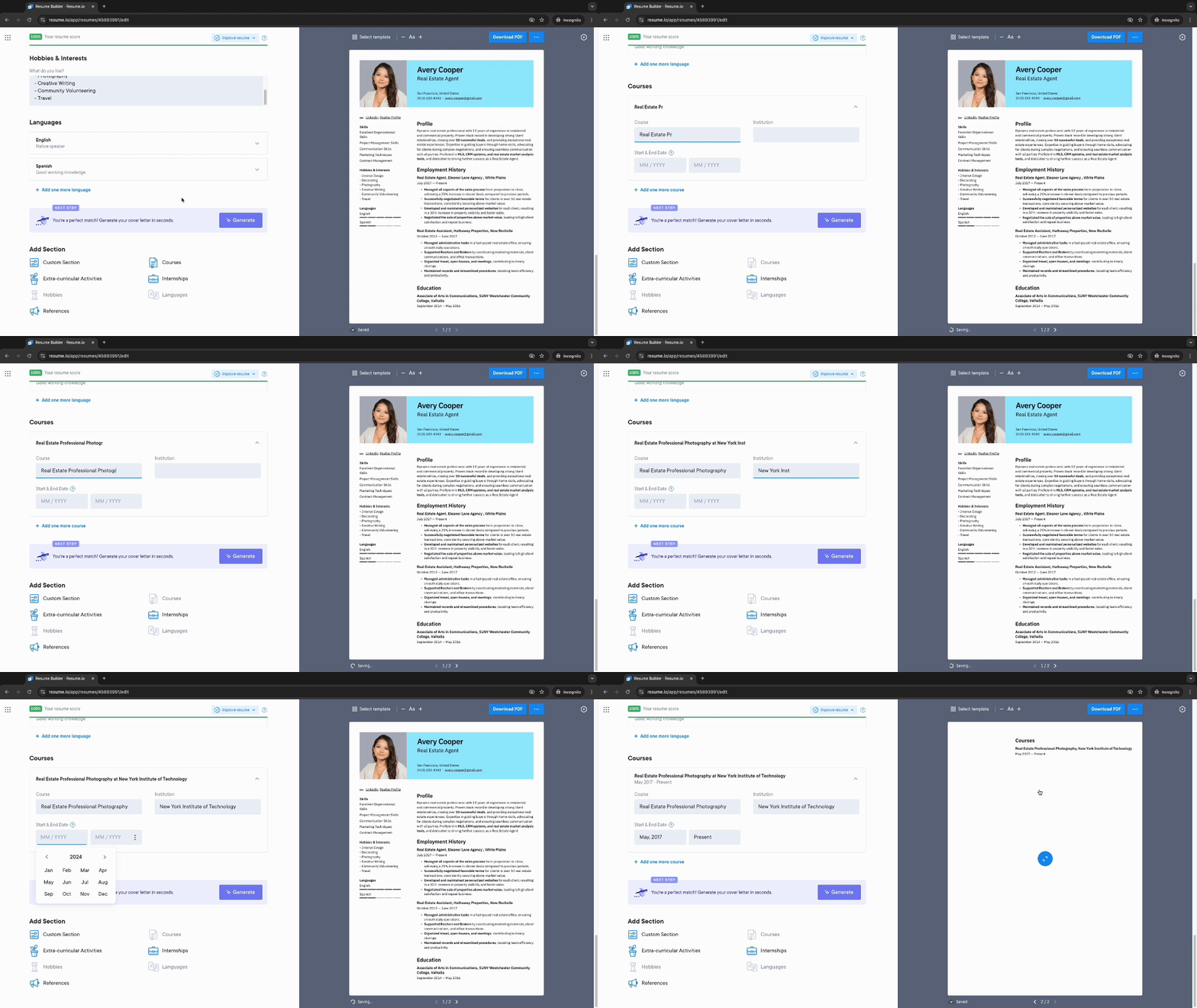
Free certifications should be listed in a dedicated certifications section or within your education section, depending on their relevance and importance.
The key is to present them clearly and consistently, including the certification name, provider, and completion date if it adds value.
Where you place certifications depends on how important they are to the role.
If they are directly relevant or required, they can sit near the top of your resume.
If they are more supportive, they can be placed below your education or toward the end.
Keep the formatting simple so hiring managers can quickly scan and understand what you have completed.
Option 1: Dedicated certifications section
Certifications
Google Data Analytics Certificate, Google
HubSpot Inbound Marketing Certification, HubSpot
Option 2: Within education section
Education
Bachelor of Science in Business Administration
University of Texas
Additional training
Google Ads Certification, Google
freeCodeCamp JavaScript Certification
Practical tips for listing certificates
- Include the certification name and provider
- Add the date only if it is recent or relevant
- Keep descriptions short or omit them entirely
- Prioritize certifications that match the job requirements

How do you list free courses on your resume?
Free courses can be listed on your resume when they are relevant to the role and help demonstrate useful skills.
Unlike certifications, they are usually included as part of your education or professional development rather than in a standalone section, especially if they are shorter or less formal.
Most free courses do not carry the same weight as certifications, so they should support your resume rather than take focus away from your experience.
They are especially useful for students, career changers, or candidates building new skills.
If a course directly relates to the job, it can strengthen your application by showing initiative and upskilling.
Option 1: Under education
Education
Bachelor of Arts in Marketing
University of Florida
Relevant coursework
Content Marketing Strategy, HubSpot Academy
Introduction to SEO, Google Digital Garage
Option 2: Professional development section
Professional development
Introduction to Python, freeCodeCamp
Social Media Strategy, LinkedIn Learning
Practical tips for listing free courses
- Only include courses that are directly relevant
- Group multiple courses under one heading to save space
- Avoid listing very short or basic courses
- Use your LinkedIn profile for a fuller list if needed
Which free certifications are best for students or entry-level resumes?
The best free certifications for students or entry-level candidates are those that show practical, job-ready skills and match the roles you are applying for.
With limited experience, these certifications help demonstrate initiative and your ability to learn quickly.
Focus on certifications that build real, usable skills, such as:
- Digital marketing: Google Digital Marketing or HubSpot certifications are widely recognized and useful for entry-level roles.
- Data and analytics: Google Data Analytics or basic Excel and SQL courses help demonstrate analytical ability.
- Coding and technical skills: freeCodeCamp or beginner Python courses show practical, hands-on learning.
- Business and communication: LinkedIn Learning or similar courses can support roles that require organization and teamwork.
Focus on 1-3 certifications that directly support your target role rather than trying to cover multiple areas.
What mistakes should you avoid when adding free certifications to your resume?
A common mistake is including too many certifications that are not relevant to the job.
This can make your resume look unfocused and distract from your actual experience.
- Listing too many certifications: A long list does not add value. Focus on a few that clearly support your application.
- Including irrelevant courses: Certifications should match the role. Unrelated topics can weaken your overall positioning.
- Adding low-effort or very short courses: Courses that take little time or have no assessment often carry less weight with employers.
- Repeating skills already shown in experience: If your work history already proves the skill, the certification may be unnecessary.
- Formatting them inconsistently: Keep naming, providers, and structure clear so hiring managers can scan quickly.
Key takeaways
Free certifications can strengthen your resume when they are relevant, credible, and clearly presented.
- Focus on certifications that match the job you are applying for
- Prioritize recognized providers like Google, HubSpot, or IBM
- Limit your list to a few high-impact certifications
- Place them clearly in a certifications or education section
- Use free courses to support your profile, not replace experience
- Look at free online courses as an easy way to strengthen your application

FAQs
Free certifications and courses can support your resume when used strategically and kept relevant to your target role.
Are free certifications valuable?
Yes, free certifications can be valuable if they are relevant to the job and come from recognized providers.
They help demonstrate practical skills and show that you are proactive about learning.
However, they are most effective when they add something new beyond your existing experience.
Can I get free courses on my resume?
Yes, you can include free courses on your resume if they are relevant and support your application.
They are usually listed under education or professional development rather than in a certifications section.
Focus on courses that show useful, job-related skills.
Which certification is most in demand?
There is no single certification that is most in demand across all roles, but certifications in areas like data analytics, digital marketing, cloud computing, and AI are widely valued.
The best choice depends on your target job and industry.
Always prioritize certifications that match the skills listed in job descriptions.