

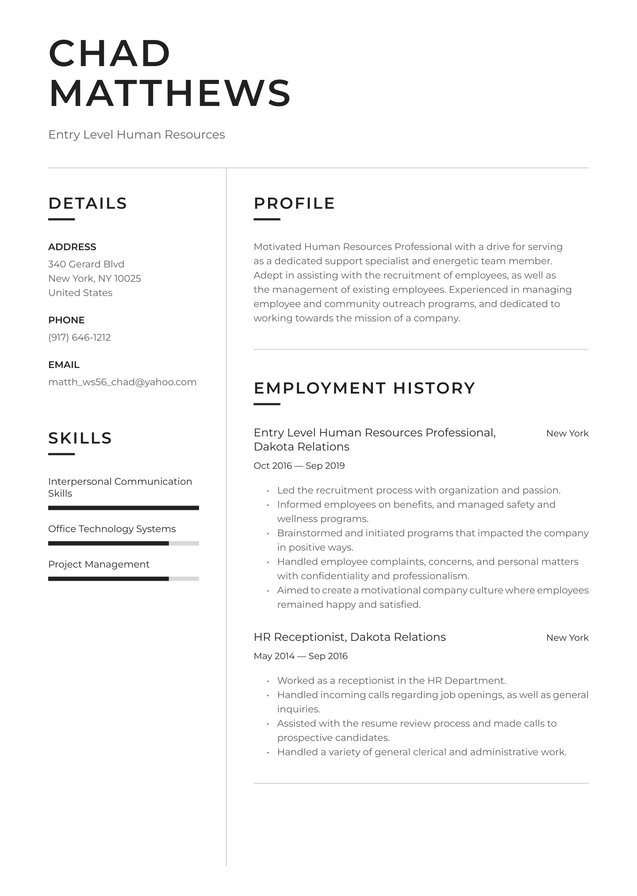
10/2016 - 09/2019, Entry Level Human Resources Professional, Dakota Relations, New York
- Led the recruitment process with organization and passion.
- Informed employees on benefits, and managed safety and wellness programs.
- Brainstormed and initiated programs that impacted the company in positive ways.
- Handled employee complaints, concerns, and personal matters with confidentiality and professionalism.
- Aimed to create a motivational company culture where employees remained happy and satisfied.
05/2014 - 09/2016, HR Receptionist, Dakota Relations, New York
- Worked as a receptionist in the HR Department.
- Handled incoming calls regarding job openings, as well as general inquiries.
- Assisted with the resume review process and made calls to prospective candidates.
- Handled a variety of general clerical and administrative work.
08/2012 - 05/2014, Associate of Public Relations, Molloy College, New York
09/2008 - 06/2012, High School Diploma, Dover High School, Dover
- Interpersonal Communication Skills
- Office Technology Systems
- Project Management
06/2014 - present, Strategic Human Resources Management, Babson College
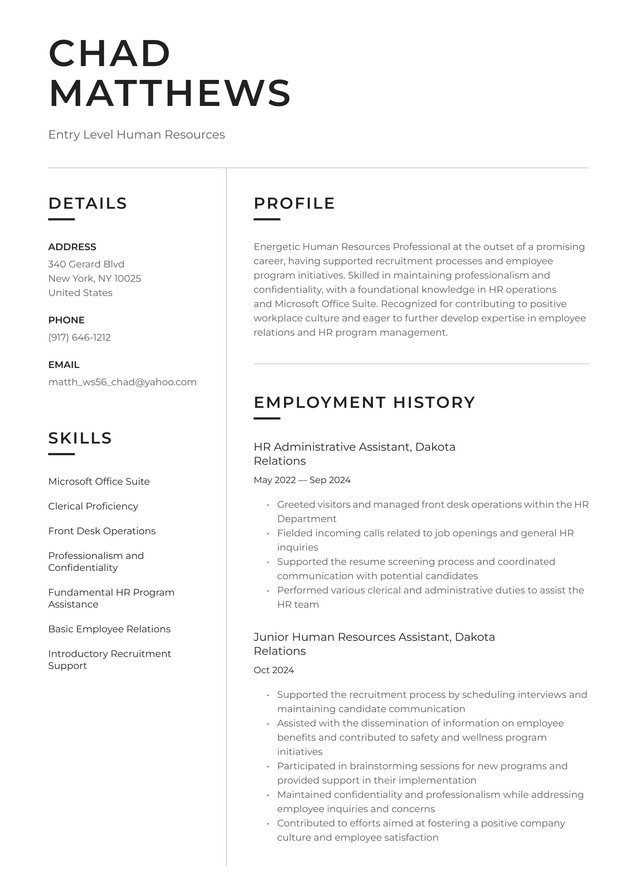
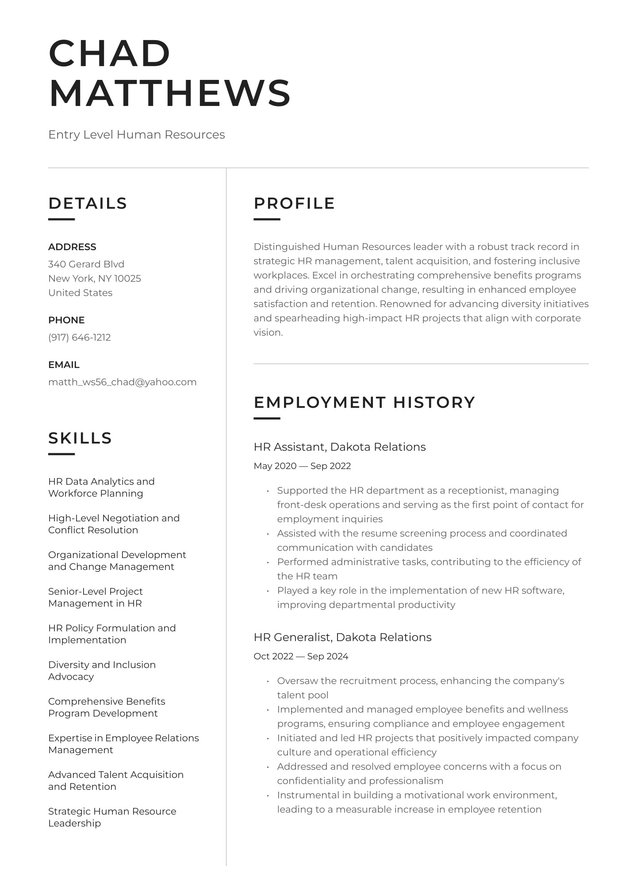
An entry-level HR resume has a job no other resume has, because the people reading it do the exact work you are asking to join. This guide shows you how to write an entry-level HR resume that proves you already understand what recruiters look for. Below you will find adaptable resume examples you can shape around your own background.
Related Resume Examples
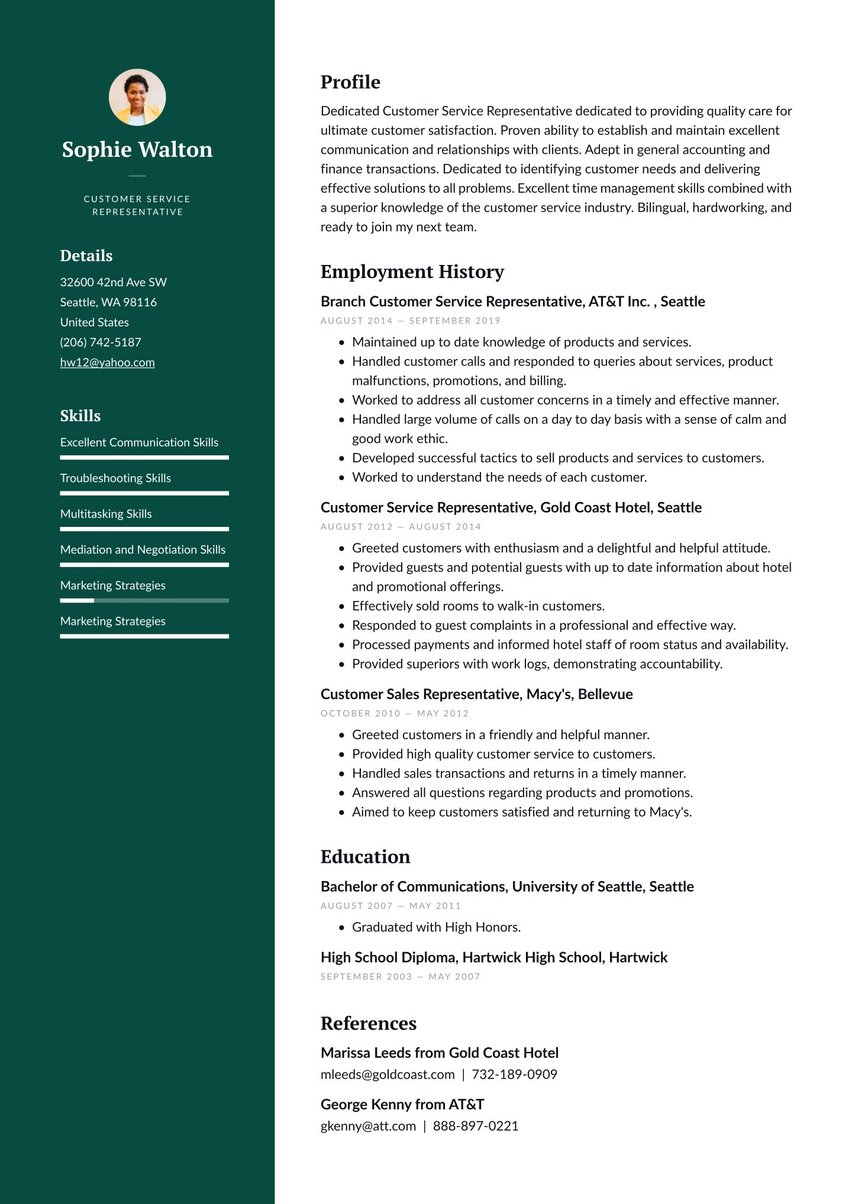
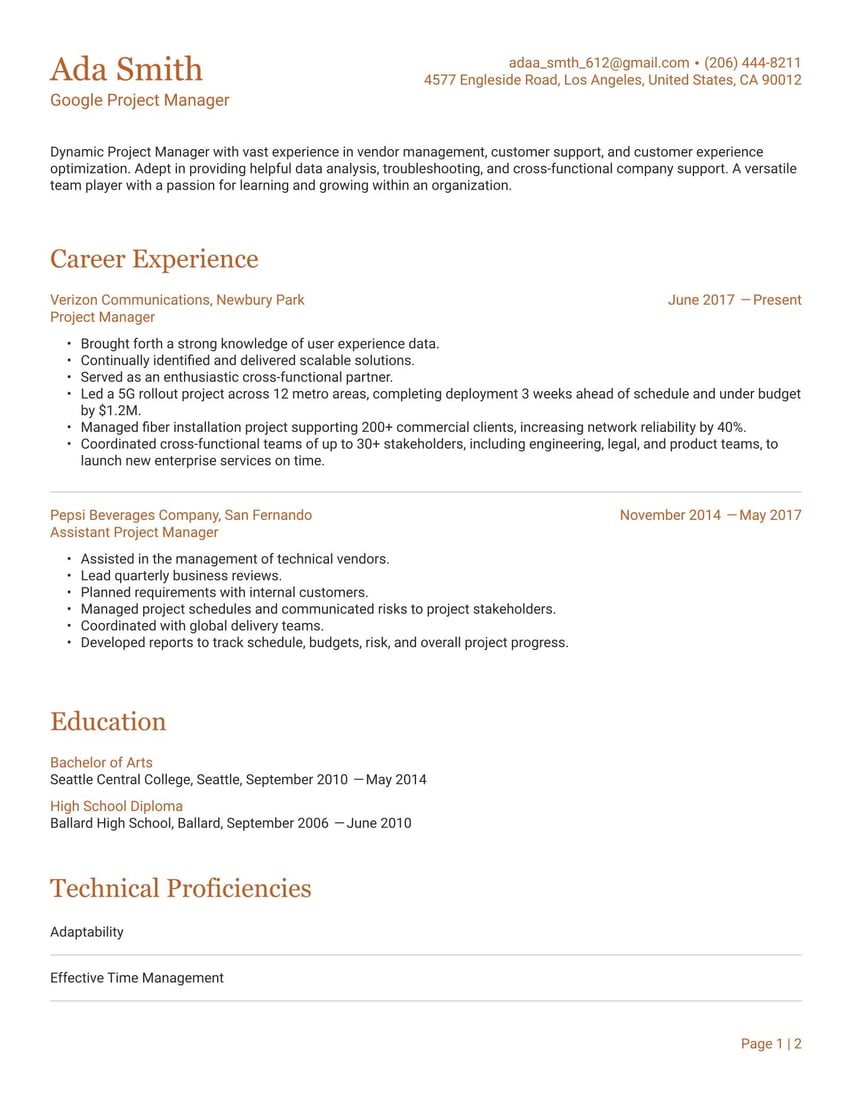
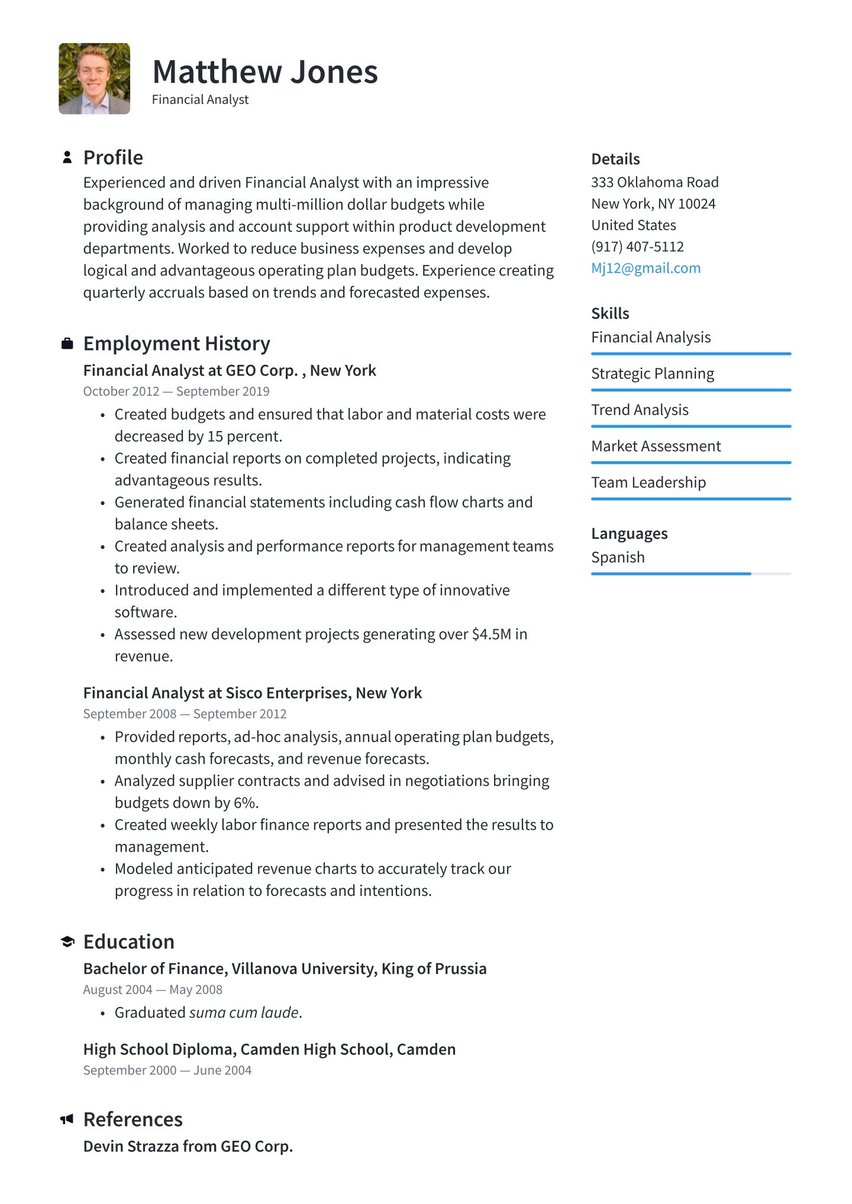
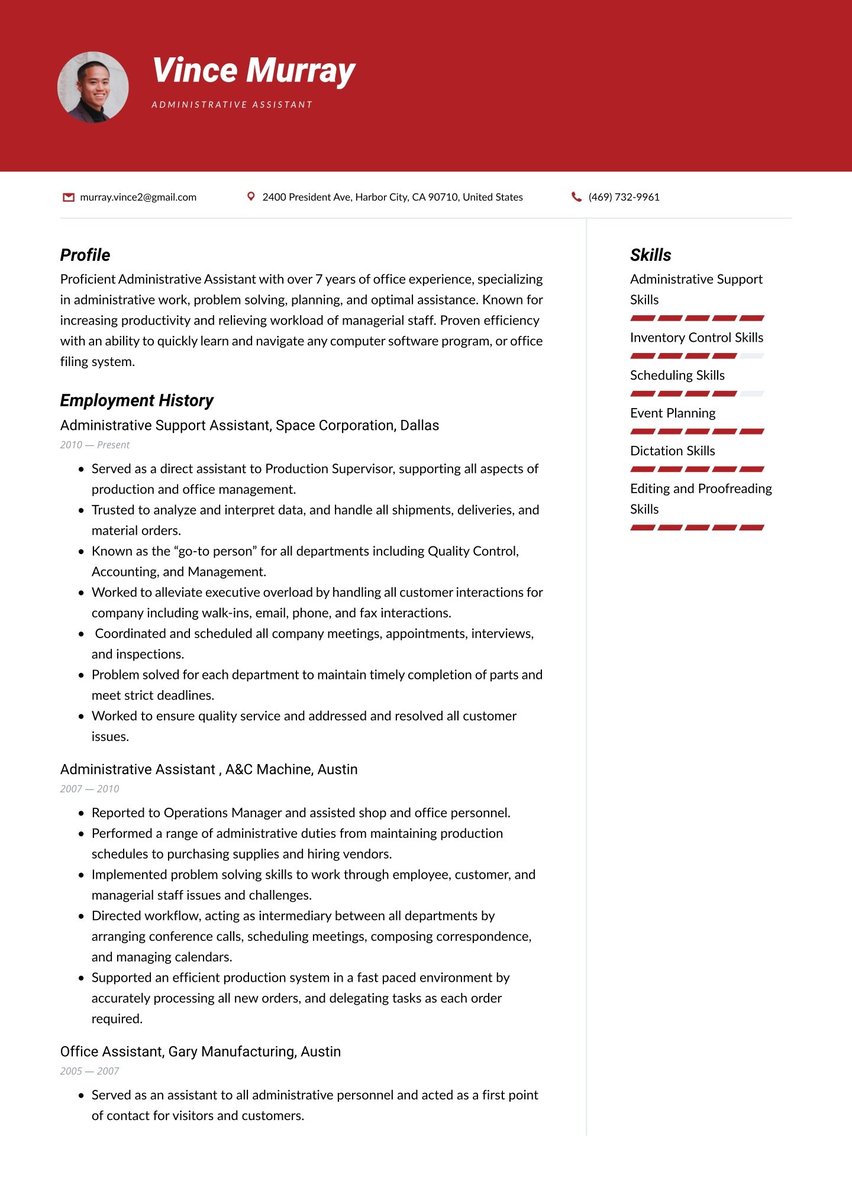
Human Resources Assistant resume example

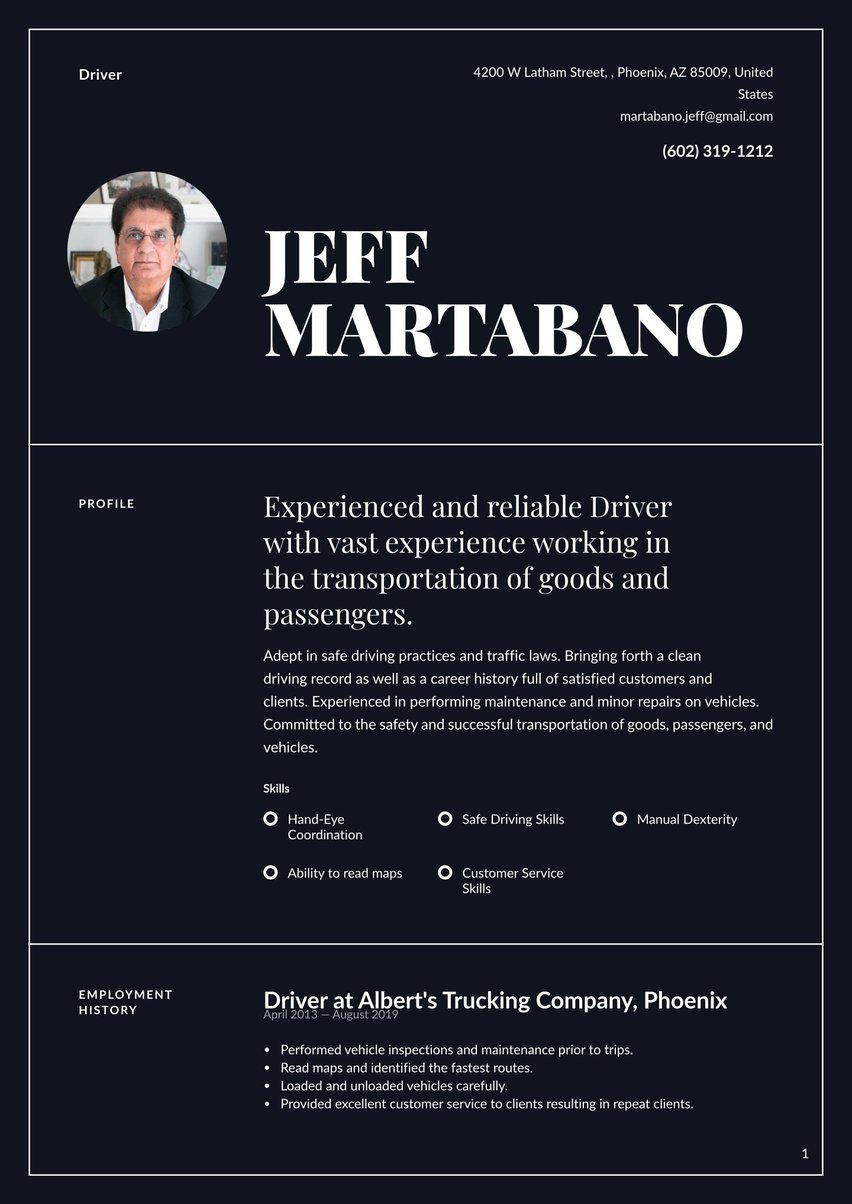
Targeted at Human Resources Assistants, this clean, professional layout highlights your organizational skills and attention to detail. Its structured sections and subtle design elements showcase your expertise in compliance and employee relations, impressing hiring managers effortlessly.
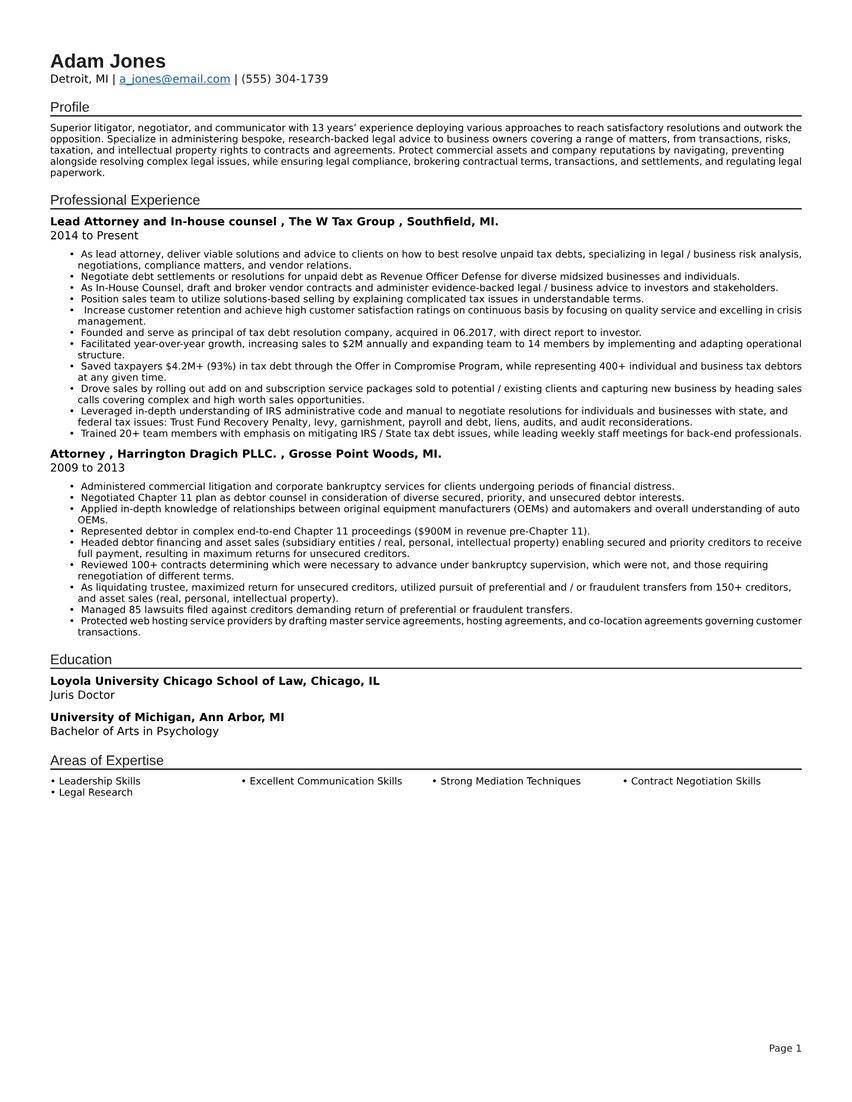
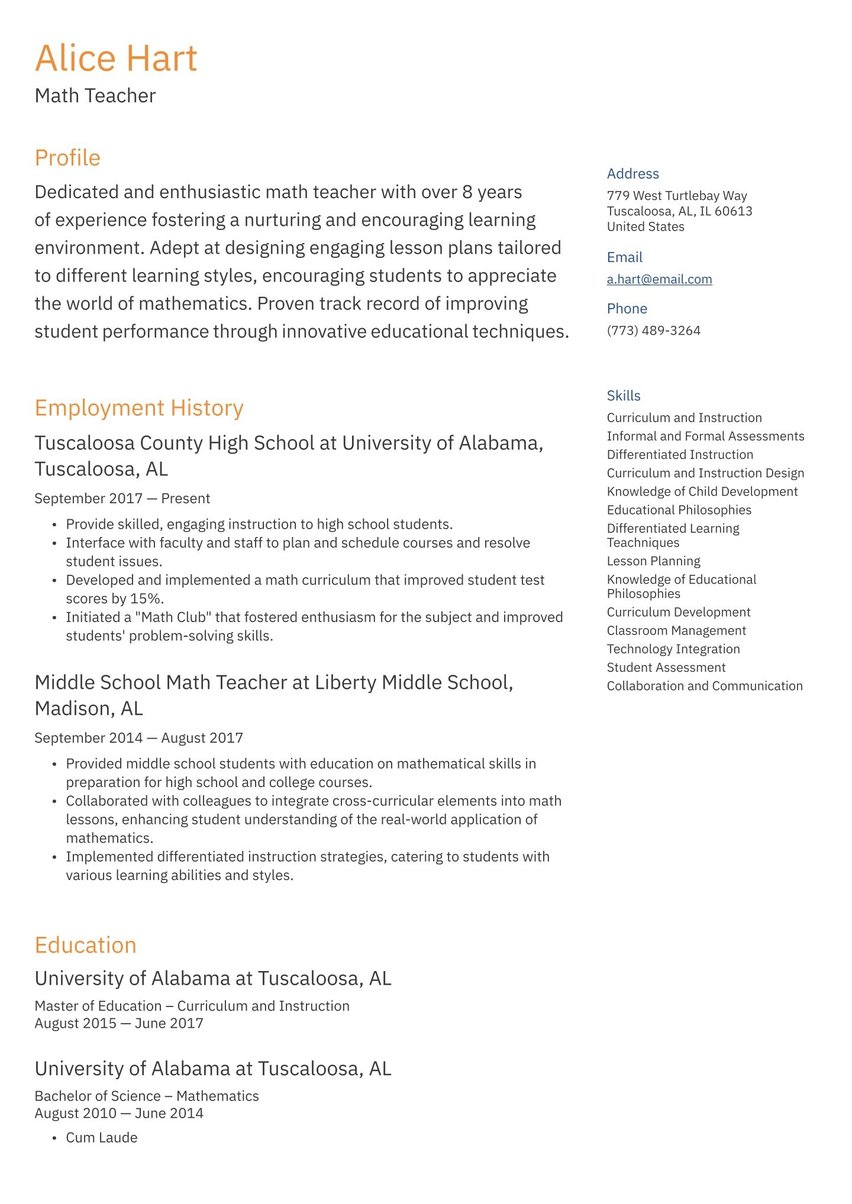
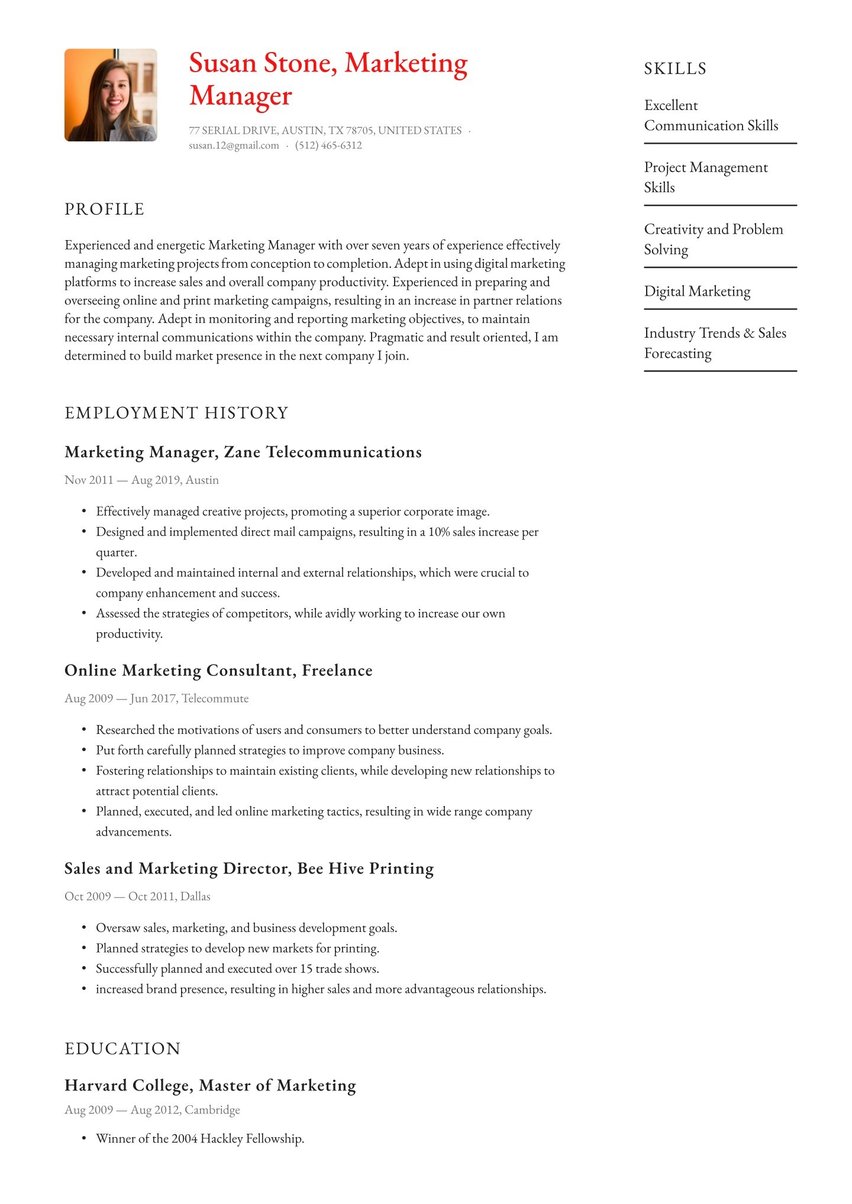
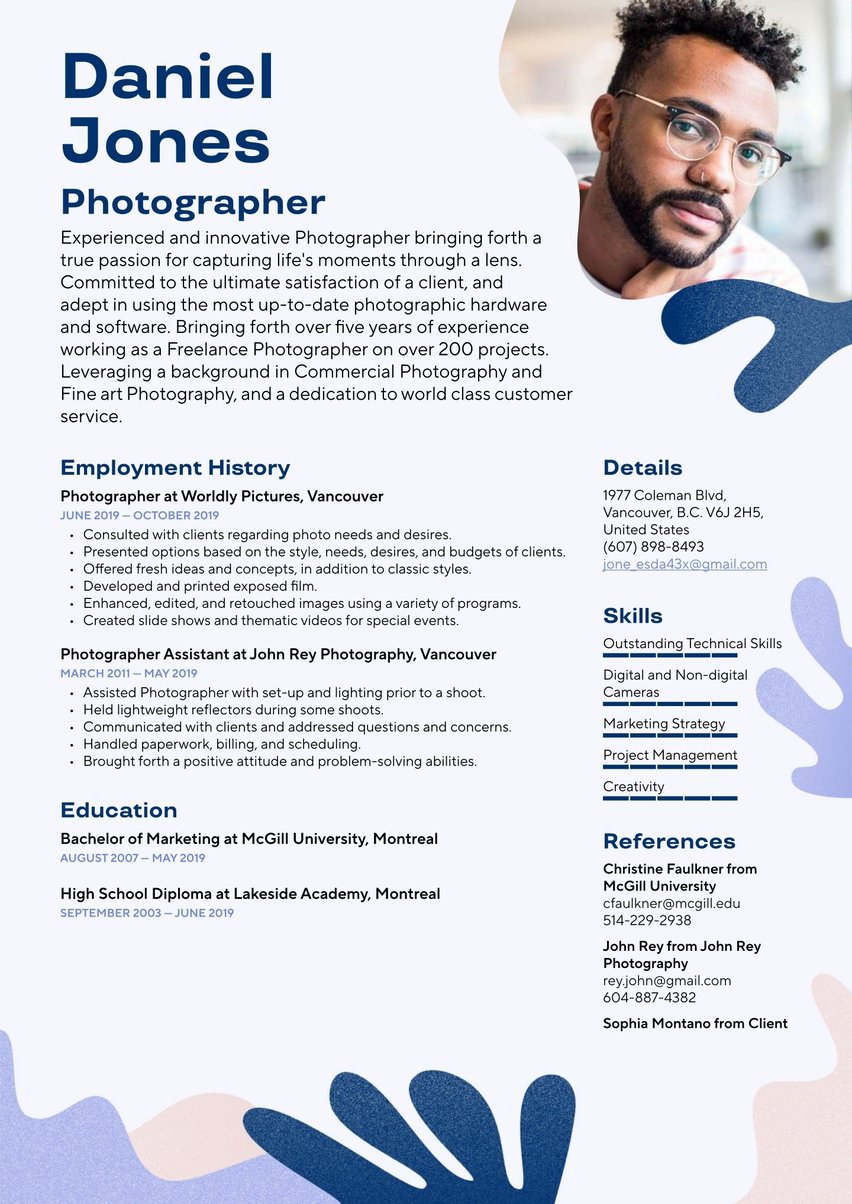
Human Resource Generalist resume example

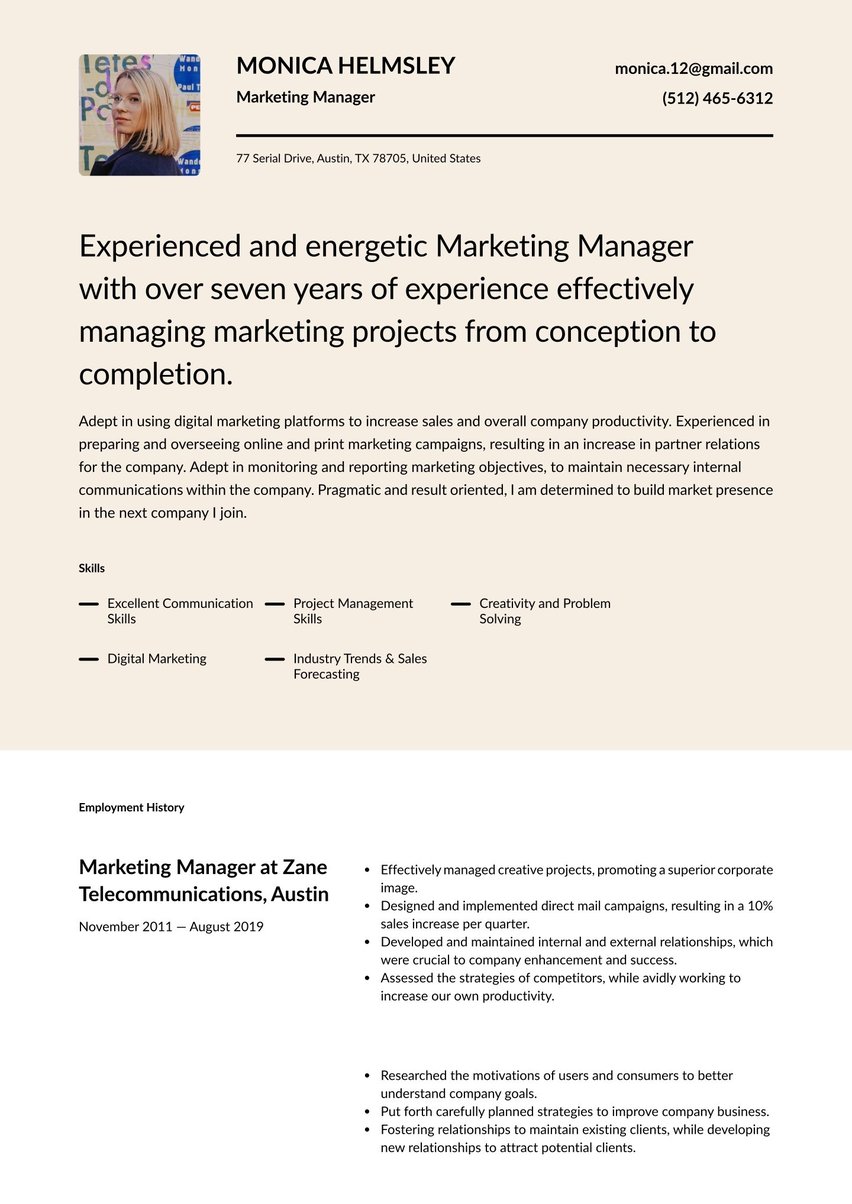
Targeted at HR professionals, this clean, structured layout highlights your organizational skills and people-first approach. Its balanced formatting showcases expertise in employee relations and recruitment, helping you connect with leadership and foster workplace trust.
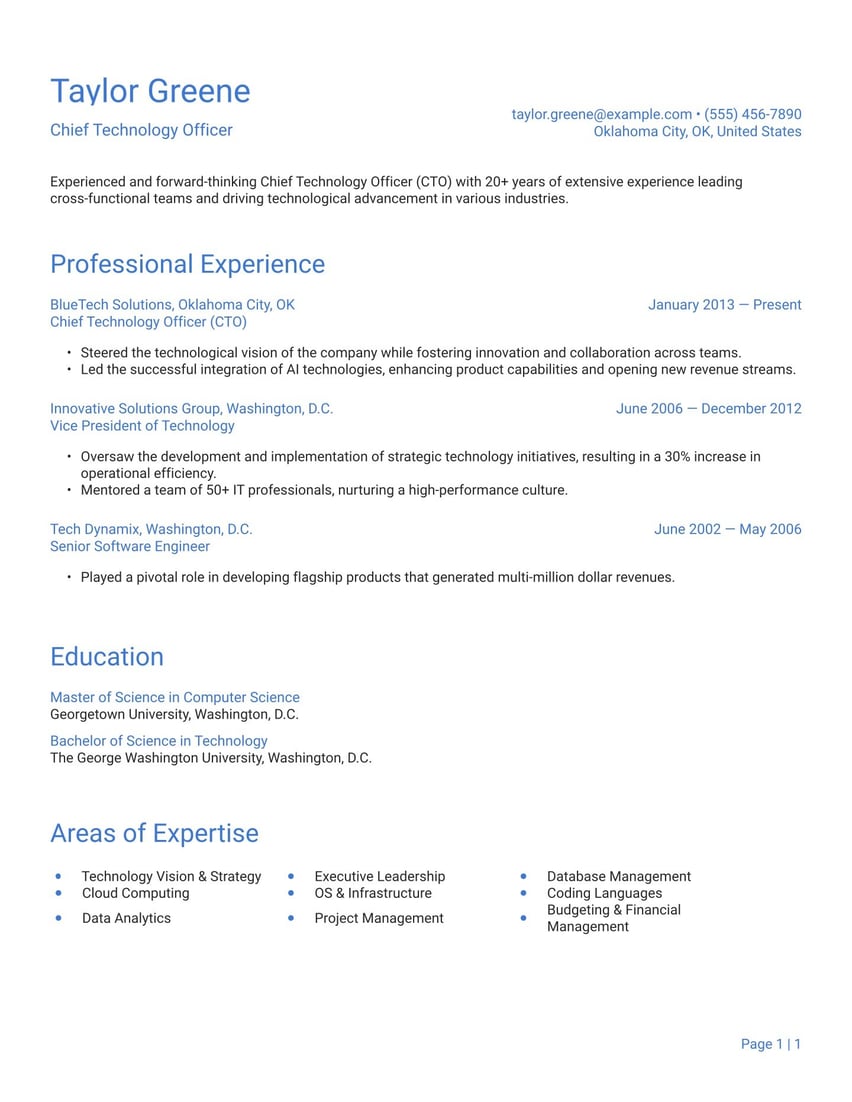
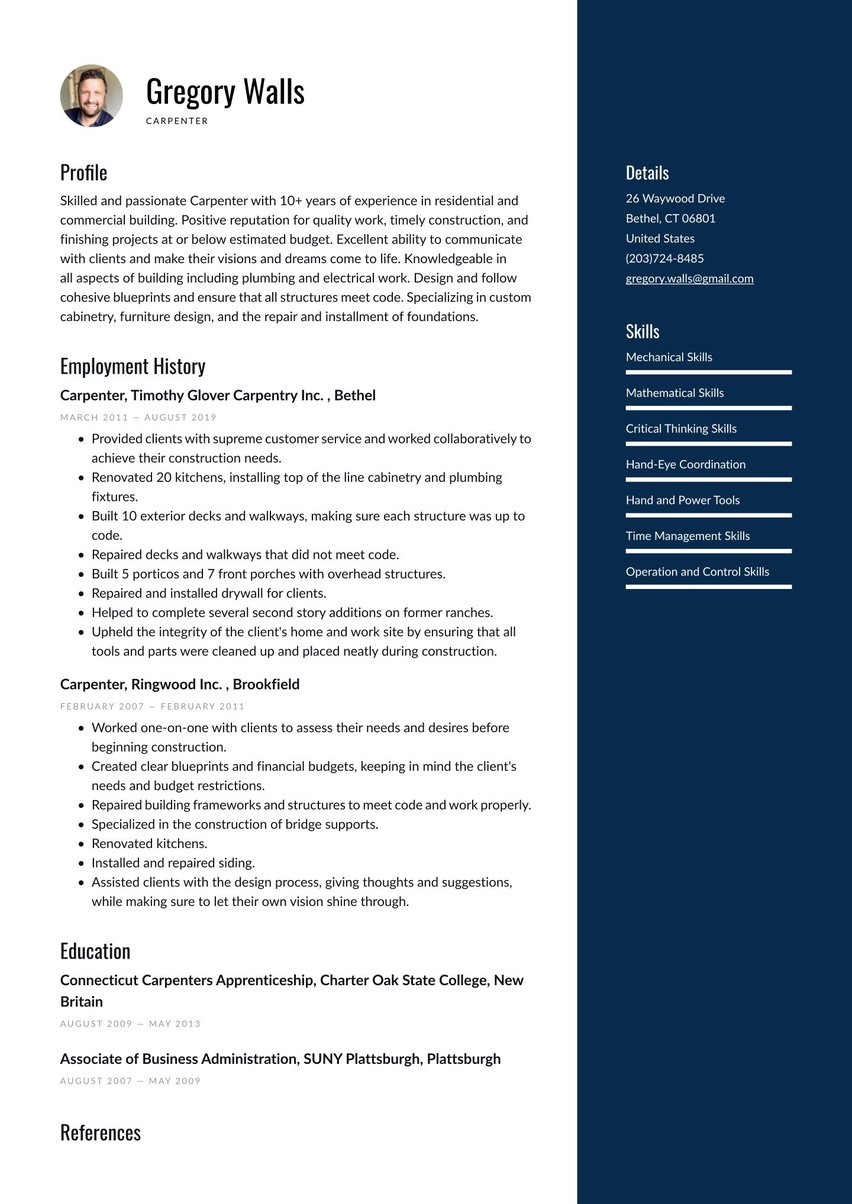
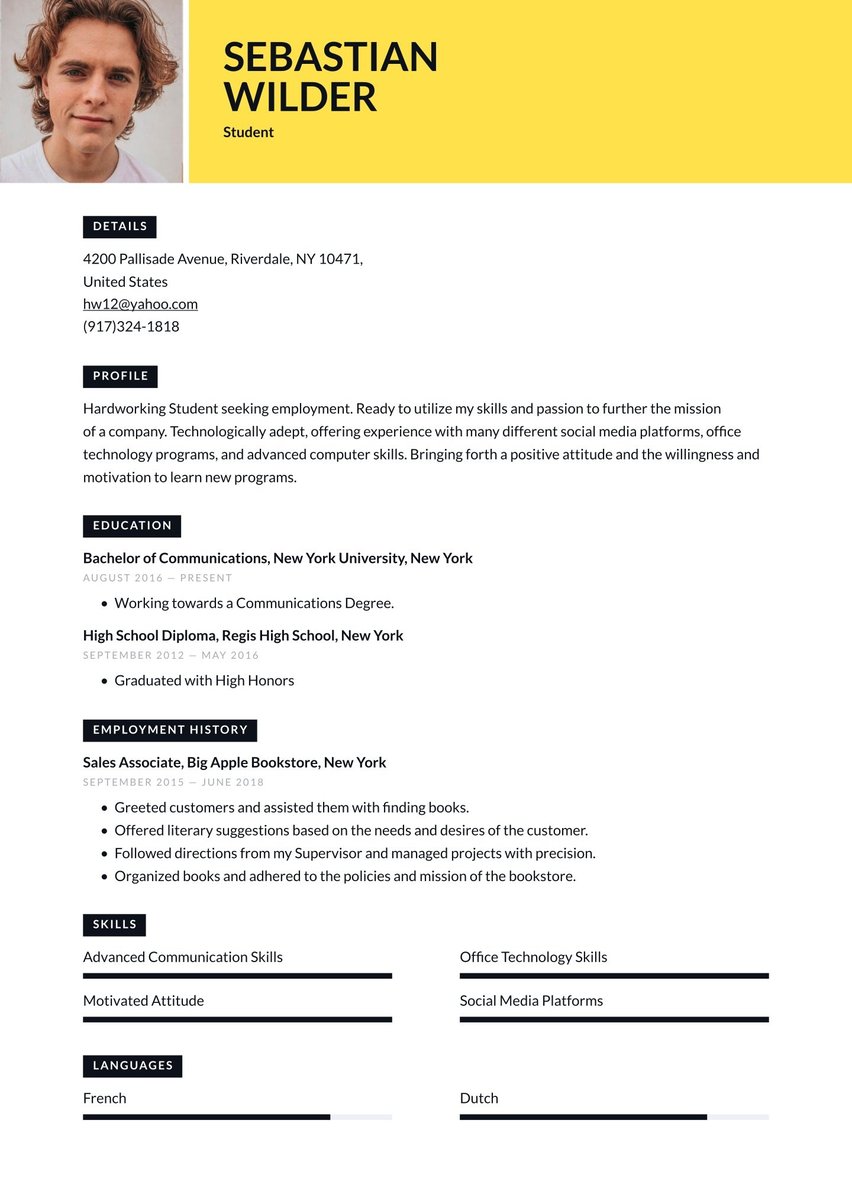
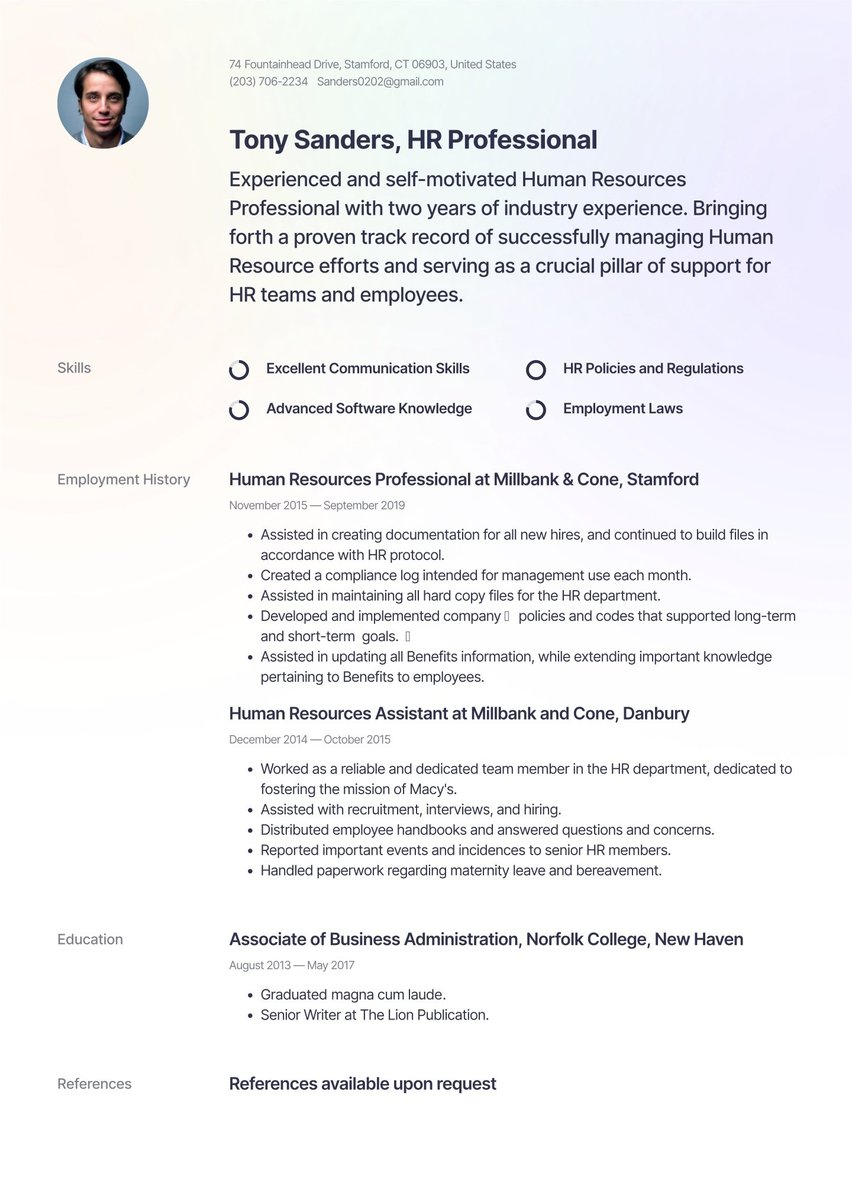
HR Coordinators resume example

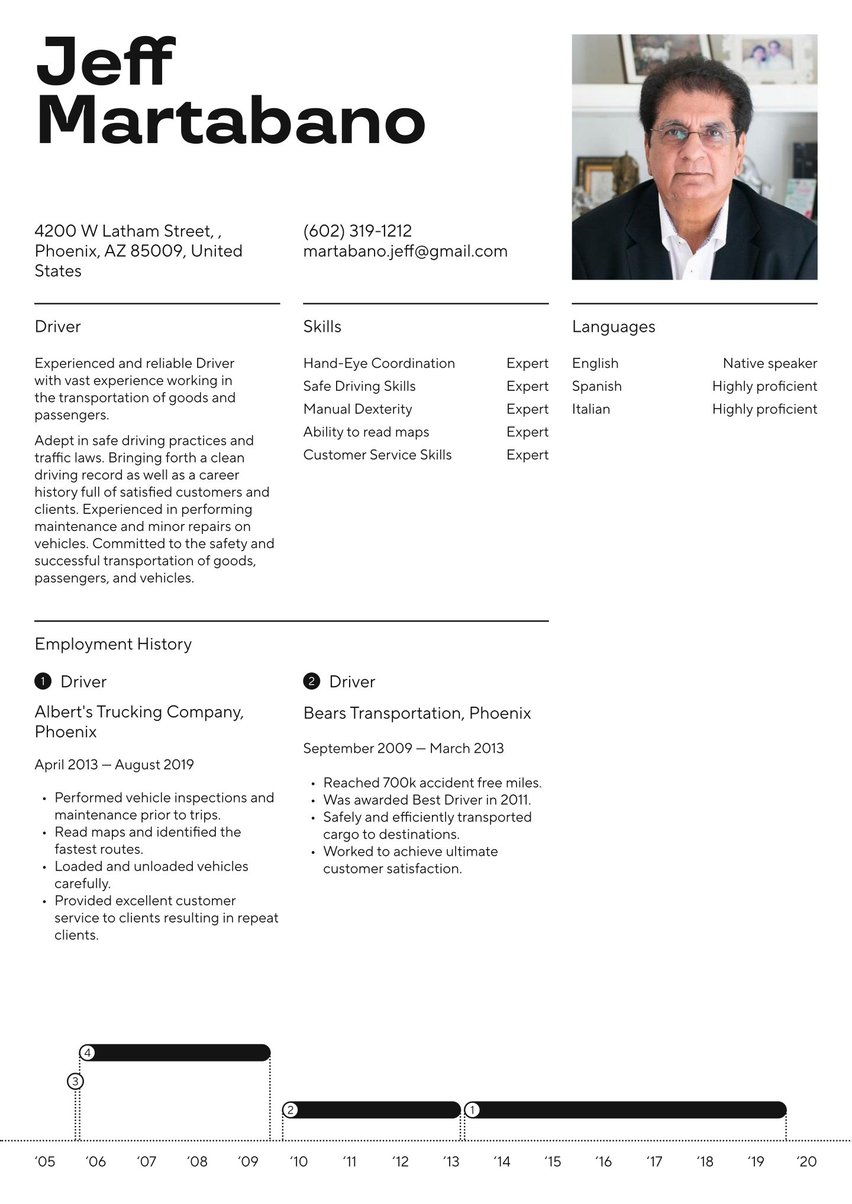
Optimized for HR professionals, this clean, structured layout highlights your recruiting, training, and employee relations expertise with clarity. Its balanced design emphasizes key achievements, helping you connect with talent-focused organizations and decision-makers.
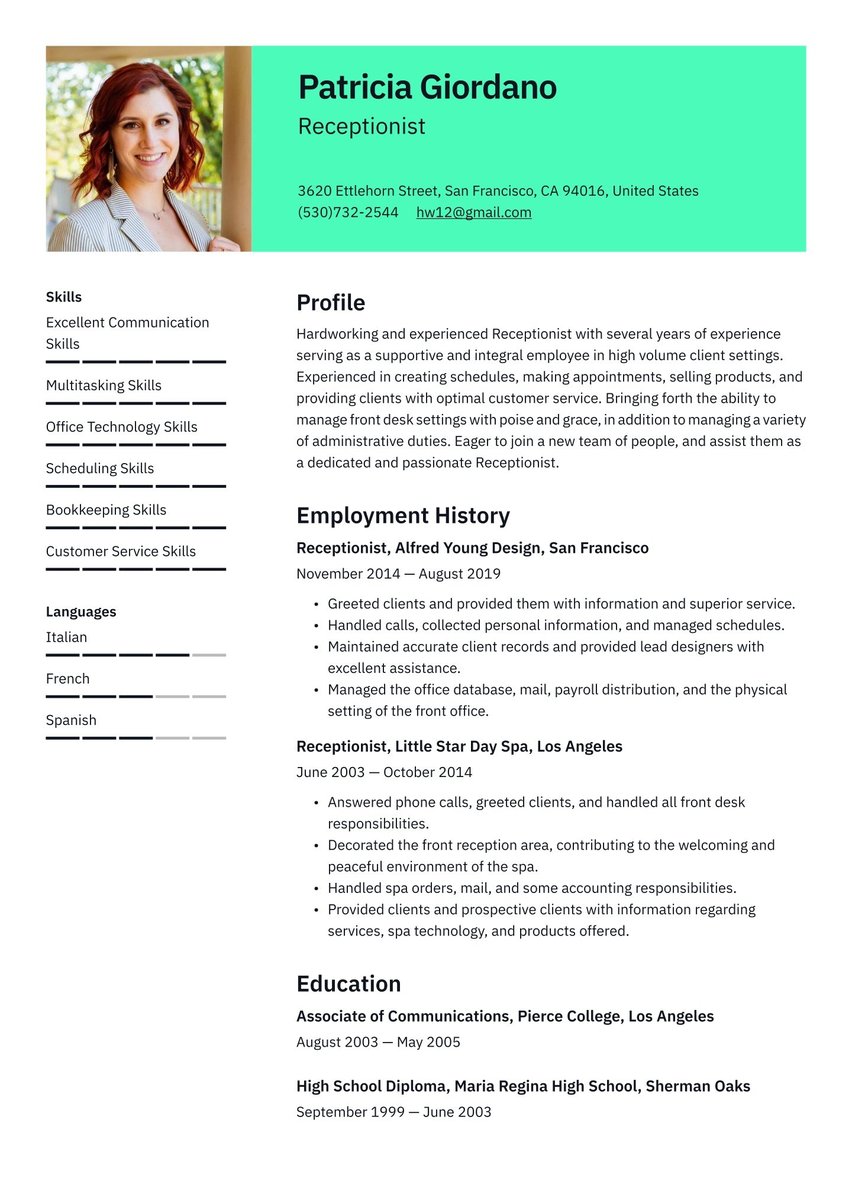
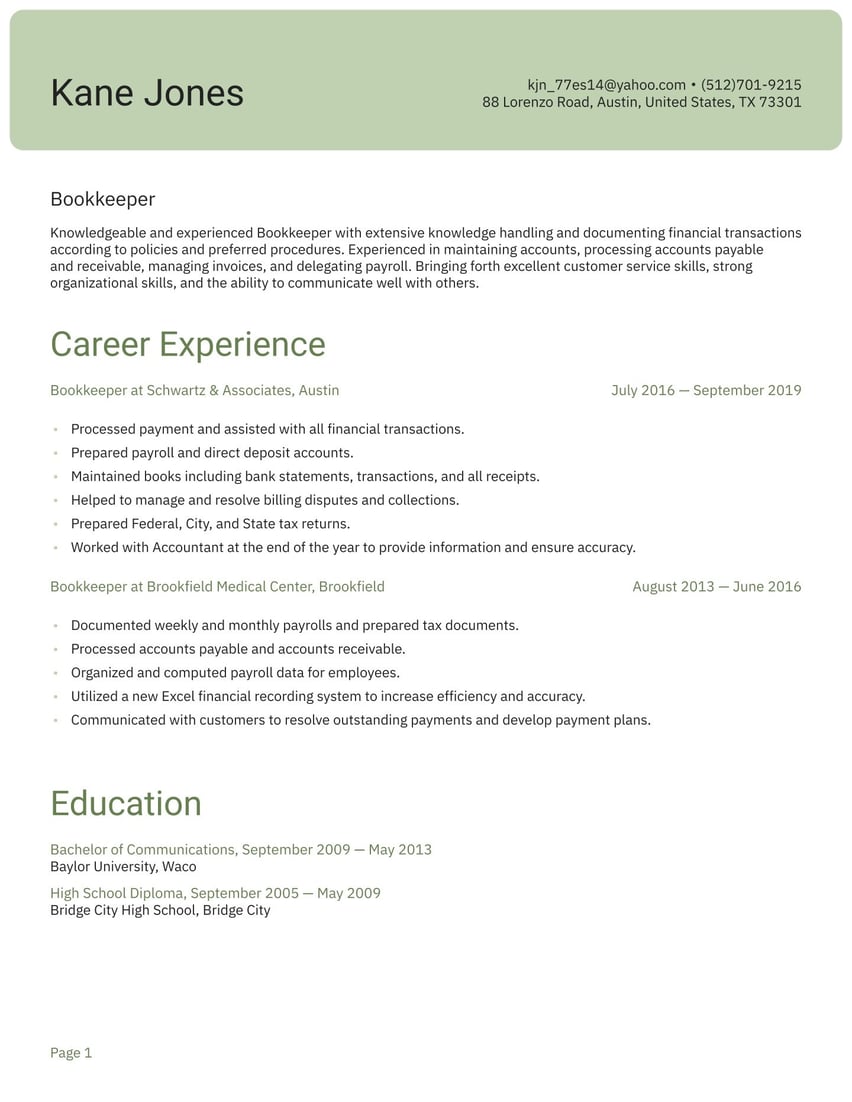
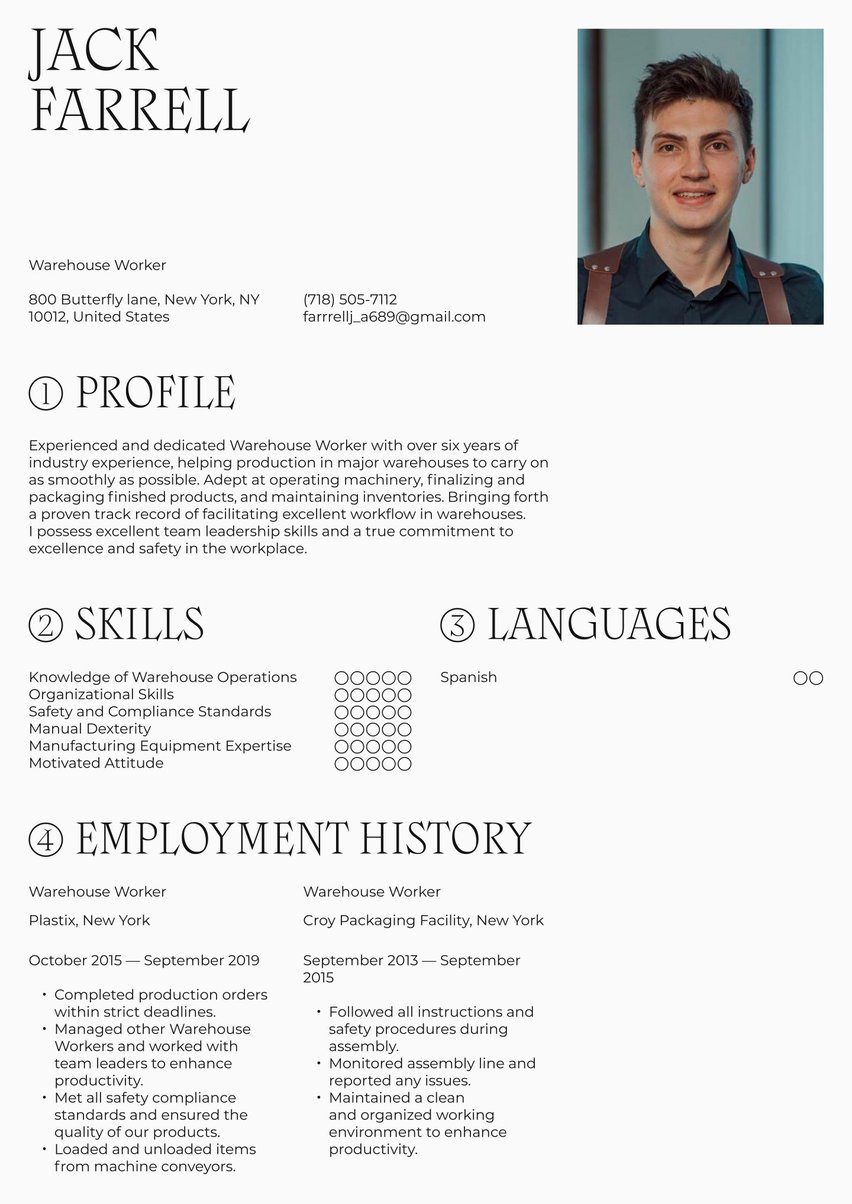
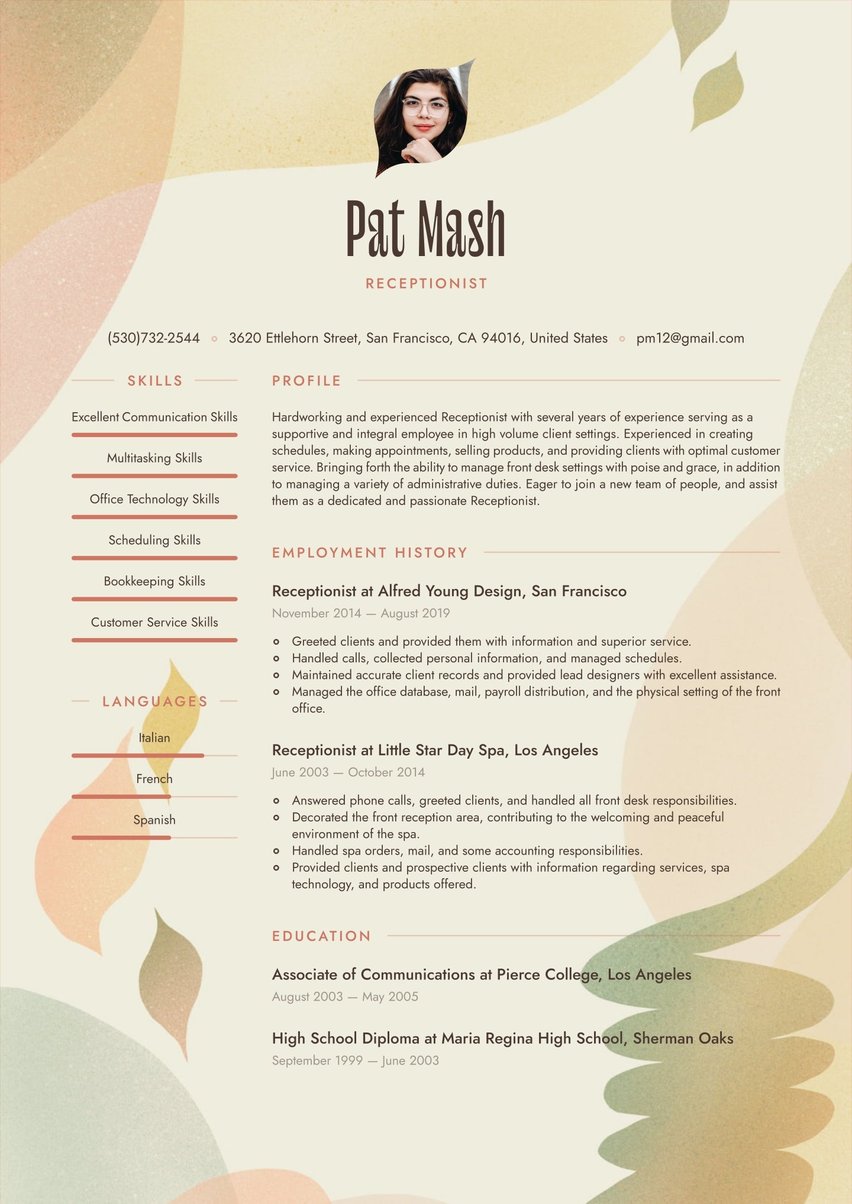
HR Business Partner resume example

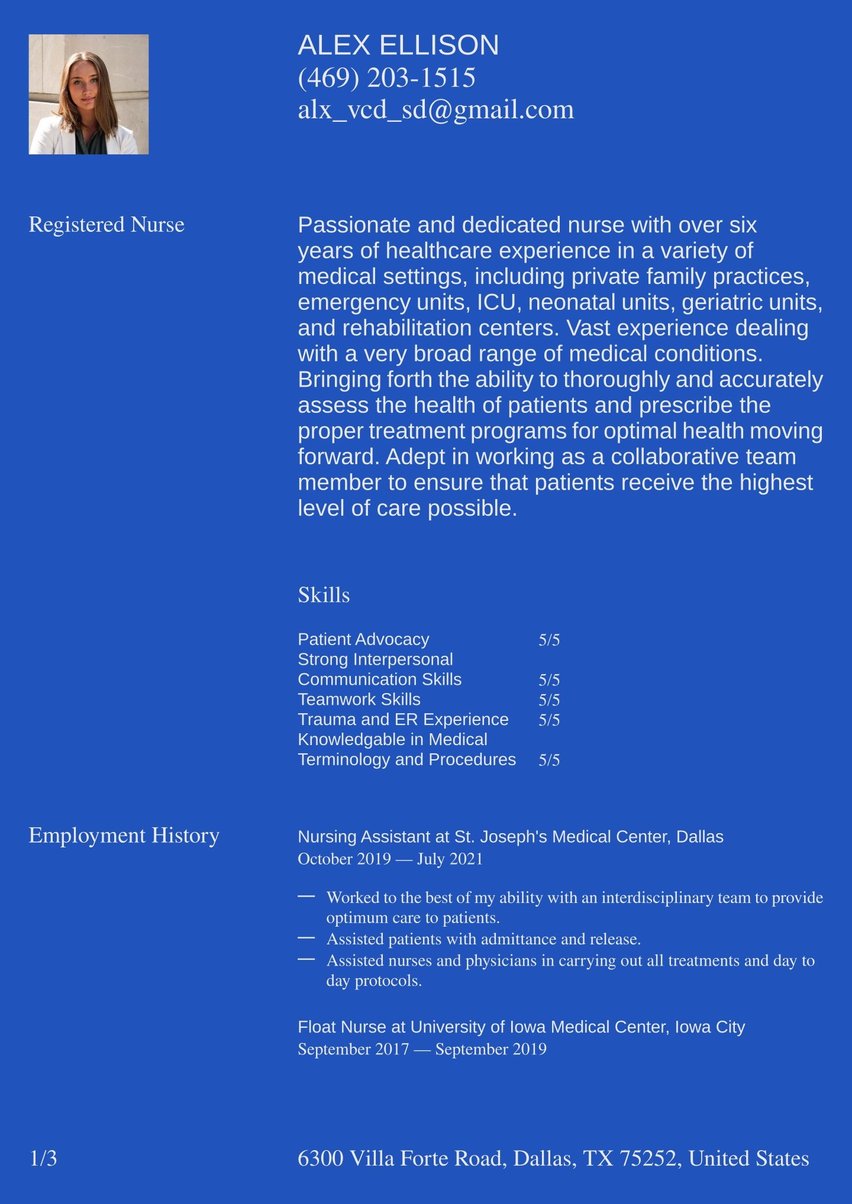
Structured for HR professionals, this clean, modern layout spotlights leadership and strategy with bold headers and ample white space. Its organized design highlights your expertise in employee engagement and performance, impressing business leaders and hiring managers alike.
These examples show what effective entry-level HR resumes look like whether you are coming from school, an internship, or a different field.
How to write an entry-level HR resume
Writing an entry-level HR resume comes down to four clear steps.
Work through them in order and you will finish with a focused, one-page document that reads like it was written by someone who belongs in the profession.
Step 1: Open with a summary, not an objective
Lead with a summary that states your direction and your strongest evidence, because a summary says what you offer while an objective only says what you want.
Recruiters respond to the former, and the difference between an objective and a summary matters most when your history is short.
Name your degree, internship, or relevant background rather than describing yourself in vague terms.
- Example: "Recent human resources graduate with internship experience supporting onboarding and records management for a 200-employee logistics firm."
Step 2: Lead with quantified achievements
Frame every past role, campus position, or volunteer project around outcomes rather than duties, and put a number on it wherever you can.
The reliable pattern is action verb plus task plus measurable result, and learning to quantify your bullet points is what makes a short history feel substantial.
- Example: "Coordinated orientation schedules for 30 new student employees each semester with zero booking conflicts."
Step 3: Match the job description
Read the posting closely and mirror its exact wording in your summary, skills, and bullets.
HR teams write those postings themselves, so echoing their language shows you read carefully, which is itself an HR skill.
This single habit shapes everything from the keywords you choose to the way you order your experience.
- Example: A posting asking for "HRIS data entry" should produce a bullet that says "HRIS data entry," not "updated computer files."
Step 4: Choose a clean, ATS-safe format
Keep the layout simple, because applicant tracking software parses your resume before any human reads it, and two-column templates, tables, and graphics often break that parse.
Standard section headings, a single column of core content, and a legible font travel safely.
Confirming that your resume passes ATS before you apply removes the guesswork.
Example: Use headings such as "Work experience" and "Skills" rather than creative labels like "My journey."

What are some effective ways to format an entry-level HR resume?
The reverse chronological format is the strongest choice for most entry-level HR candidates, because recruiters and parsing software both expect it.
A hybrid format suits graduates whose skills and education outweigh their work history, while a functional format is rarely worth the tradeoff.
This comparison shows when each one fits.
| Format | Best for | Watch out for |
|---|---|---|
| Reverse chronological | Candidates with any work history, including part-time or unrelated jobs | Thin experience can look sparse without strong bullet points |
| Hybrid | Graduates with strong coursework, certifications, or projects but little employment | Keep the skills section evidence-based, not a list of adjectives |
| Functional | Career changers hiding long gaps | Many HR reviewers distrust it precisely because it obscures the timeline |
Whichever you choose, keep the whole document to a single page.
At this stage you do not have enough material for two, and that restraint reads as good judgment.

How can I make my entry-level HR resume stand out to employers?
Treat your resume as a work sample, not just an application, because screening resumes is one of the first tasks you will perform in an HR role.
The reviewer is quietly asking whether you would pass your own screen.
That is the insight most entry-level candidates miss: an accountant is not judged on whether their resume looks like good accounting, but an HR candidate is judged on whether their resume shows they understand hiring.
Three moves create that impression quickly.
First, quantify whatever you can, since class sizes, budgets, headcounts, and turnaround times all become evidence.
Second, list any credential that shows commitment, such as aPHR certification, SHRM Certified Professional eligibility, or completed coursework in employment law.
Third, name the systems you have touched, because familiarity with tools like Workday, BambooHR, or ADP sets you apart from candidates who list only personality traits.
Employment of human resources specialists is projected to grow 6% from 2024 to 2034, with about 81,800 openings each year (US Bureau of Labor Statistics, 2025), so the field is open, though those openings still draw crowded shortlists.
What skills should I highlight in an entry-level HR resume?
Highlight a balanced mix of interpersonal ability and the administrative, technical work that entry-level HR actually consists of.
Day one in an HR assistant or coordinator role is mostly records, scheduling, and communication, so your skills section should prove you can handle all three.
Hard skills
- HRIS platforms such as Workday, BambooHR, or ADP
- Microsoft Excel and Google Sheets
- Records management and data-entry accuracy
- Basic knowledge of employment law and compliance
- Interview scheduling and calendar coordination
Soft skills
- Written and verbal communication
- Confidentiality and discretion
- Attention to detail
- Conflict resolution
- Organization and time management
Do not list every skill you own.
Choose the eight to twelve that appear in the postings you are targeting, and be ready to back each one with an example in the interview.
A shorter, defensible list beats a long, generic one, because HR reviewers know exactly what padding looks like.
Are there specific keywords that hiring managers look for in entry-level HR resumes?
Yes, and they come straight from the job description in front of you rather than from any universal list.
Postings for HR assistants and coordinators repeat a recognizable vocabulary: onboarding, offboarding, HRIS, benefits administration, employee relations, recruitment coordination, personnel records, and compliance.
The difference between a keyword and a skill is worth holding onto, because skills are what you can do, while keywords are how a specific employer phrases what you can do.
"Onboarding" and "new hire orientation" describe the same work, but if the posting uses one and your resume uses the other, the ATS scores it as a weaker match and a human skims past it.
The safest terms to adopt are the ones the employer has already chosen, so treat the posting as your vocabulary list rather than guessing at standard phrasing.
How can I optimize my entry-level HR resume with the right keywords?
Place your most important terms in more than one section, since a keyword that appears in both your summary and your skills list reads as a genuine strength rather than a one-off mention.
Weight them toward the top of the page, where both software and busy readers look first.
Stay honest, and adopt only terms you can discuss comfortably in an interview, because a claim you cannot support will surface within minutes of a screening call.
How can I highlight my experience effectively in an entry-level HR resume?
List your experience in reverse chronological order and present every role as HR-relevant evidence, whatever the original job title was.
Almost any job you have held contains work that maps onto HR, and naming that overlap directly is what turns a thin history into a credible one.
The table below shows how common entry-level backgrounds translate.
| Your background | How it reads as HR experience |
|---|---|
| Retail or hospitality | Conflict resolution, scheduling, and handling difficult conversations calmly |
| Reception or administration | Records management, confidential communication, and calendar coordination |
| Campus club or society officer | Recruitment, event coordination, and volunteer management |
| Tutoring or mentoring | Training, onboarding, and one-to-one support |
Structure each entry with a title, employer, dates, and three to five bullets that each open with a strong action verb.
One bullet per skill works well, so rather than three bullets about answering phones, write one on communication, one on scheduling, and one on a filing system you improved.
If you completed an HR internship, place it first and give it the most detail, since even a single semester of direct exposure outweighs years of loosely related work.
If you have no employment history at all, lead with education and treat group projects and society roles as your experience.
How should I tailor my entry-level HR resume for different job applications?
Adjust your resume for every application rather than sending one version everywhere, because entry-level HR titles hide very different jobs.
An HR assistant posting at a 50-person company means generalist work across payroll, records, and recruiting, while a recruiting coordinator role at a large firm is scheduling and candidate communication almost exclusively.
The same resume cannot serve both well.
Tailoring takes about fifteen minutes per application.
Read the posting and mark its five or six most repeated requirements.
Rewrite your summary to speak to that specific role.
Reorder your skills so the closest matches sit at the top, and reorder the bullets within each job so the most relevant achievement leads.
You are not inventing anything, only resequencing what is already true so the reviewer finds their answer in the first ten seconds.
Candidates who tailor also interview better, because the exercise forces you to understand the role before you ever speak to anyone about it.
What are common mistakes to avoid when writing an entry-level HR resume?
The most damaging mistake is any error an HR professional would catch in someone else's resume, since typos, inconsistent dates, and an unprofessional email address read as disqualifying in a candidate who wants to screen resumes for a living.
Apologizing for inexperience is the second trap, because phrases like "although I lack experience" hand the reviewer a reason to pass when your education and relevant work already make the case.
Avoid vague personality claims such as "people person" with nothing behind them, since reviewers see these on hundreds of resumes and discount them instantly.
Do not list responsibilities without outcomes, and do not stretch the document with filler.
Finally, never overstate a credential or a system you have barely used, because HR teams verify claims as part of the job, and a small exaggeration costs more in this field than in any other.
Key tips for writing a compelling entry-level HR resume
- Treat your resume as a work sample, because an entry-level HR resume is judged as proof you understand hiring and must pass the exact screen you are asking to run.
- Lead with a summary rather than an objective, and use a reverse chronological format that both recruiters and applicant tracking systems parse cleanly.
- Pull keywords from each specific job posting and place your strongest matches near the top, using only terms you can defend in an interview.
- Present non-HR experience as HR evidence with quantified bullets, so retail, campus, and administrative roles read as conflict resolution, coordination, and records management.
- Tailor every application by reordering your skills and bullets to match the posting's top requirements, since entry-level HR titles describe very different jobs at different companies.
FAQs
A few questions come up again and again when people write their first HR resume.
Is a summary or an objective better for an entry-level HR resume?
A summary. Objectives were standard years ago but now read as dated, and they focus on your goals rather than your value to the employer.
Two or three sentences naming your education, strongest relevant experience, and target role make a far stronger opening.
Can I get an entry-level HR job with no experience?
Yes. HR assistant and coordinator roles are designed as entry points, and hiring teams expect candidates whose evidence comes from education, internships, and transferable work.
A resume that frames campus, volunteer, or administrative experience around HR tasks competes well against candidates with thin but direct experience.
How long should an entry-level HR resume be?
One page. Early in your career you do not have enough material to justify a second page, and a concise resume signals the judgment HR work demands.
Cut older or unrelated roles before you let the document spill over.