

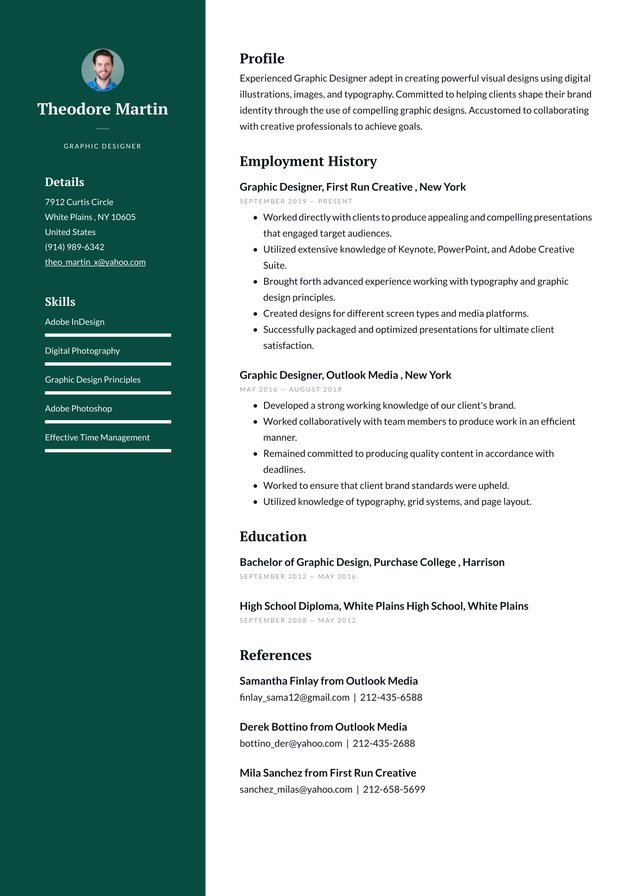
Experienced Graphic Designer adept in creating powerful visual designs using digital illustrations, images, and typography. Committed to helping clients shape their brand identity through the use of compelling graphic designs. Accustomed to collaborating with creative professionals to achieve goals.
09/2019 - 02/2021, Graphic Designer, First Run Creative , New York
- Worked directly with clients to produce appealing and compelling presentations that engaged target audiences.
- Utilized extensive knowledge of Keynote, PowerPoint, and Adobe Creative Suite.
- Brought forth advanced experience working with typography and graphic design principles.
- Created designs for different screen types and media platforms.
- Successfully packaged and optimized presentations for ultimate client satisfaction.
05/2016 - 08/2019, Graphic Designer, Outlook Media , New York
- Developed a strong working knowledge of our client's brand.
- Worked collaboratively with team members to produce work in an efficient manner.
- Remained committed to producing quality content in accordance with deadlines.
- Worked to ensure that client brand standards were upheld.
- Utilized knowledge of typography, grid systems, and page layout.
09/2012 - 05/2016, Bachelor of Graphic Design, Purchase College , Harrison
09/2008 - 05/2012, High School Diploma, White Plains High School, White Plains
- Adobe InDesign
- Digital Photography
- Graphic Design Principles
- Adobe Photoshop
- Effective Time Management
A strong graphic designer resume shows your eye for layout and hierarchy before a hiring manager reads a single word. This guide walks through how to write a graphic designer resume that recruiters and applicant tracking systems both respond to, with real samples for every experience level you can adapt. Below you will find advice on skills, keywords, formatting, and the mistakes that quietly cost designers interviews.
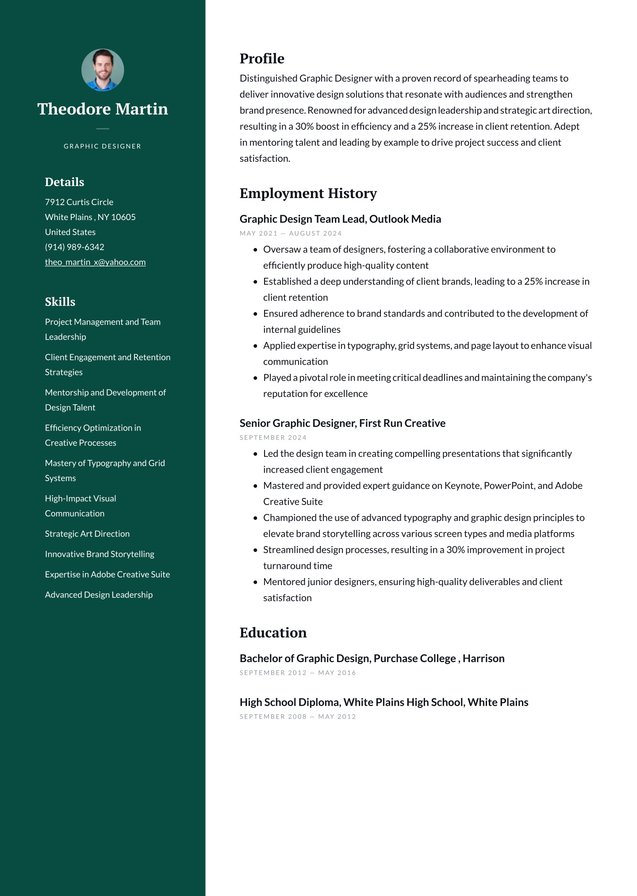
Related Resume Examples
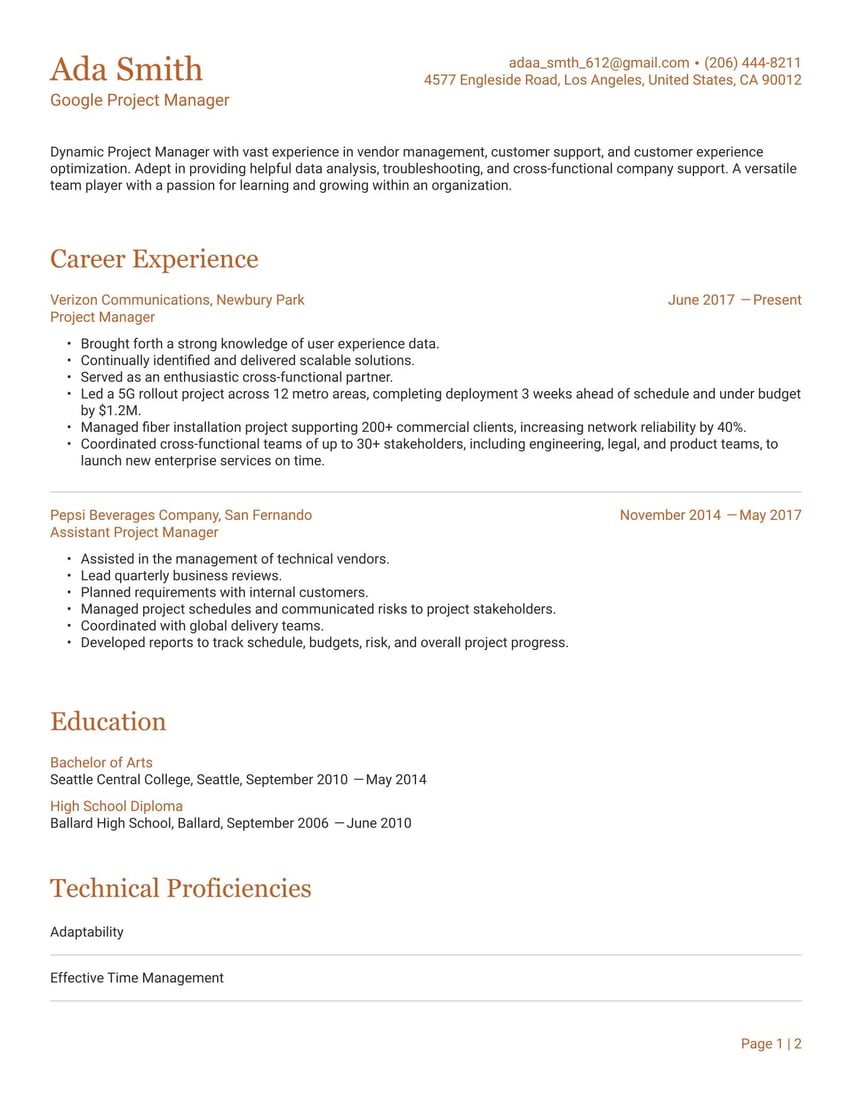
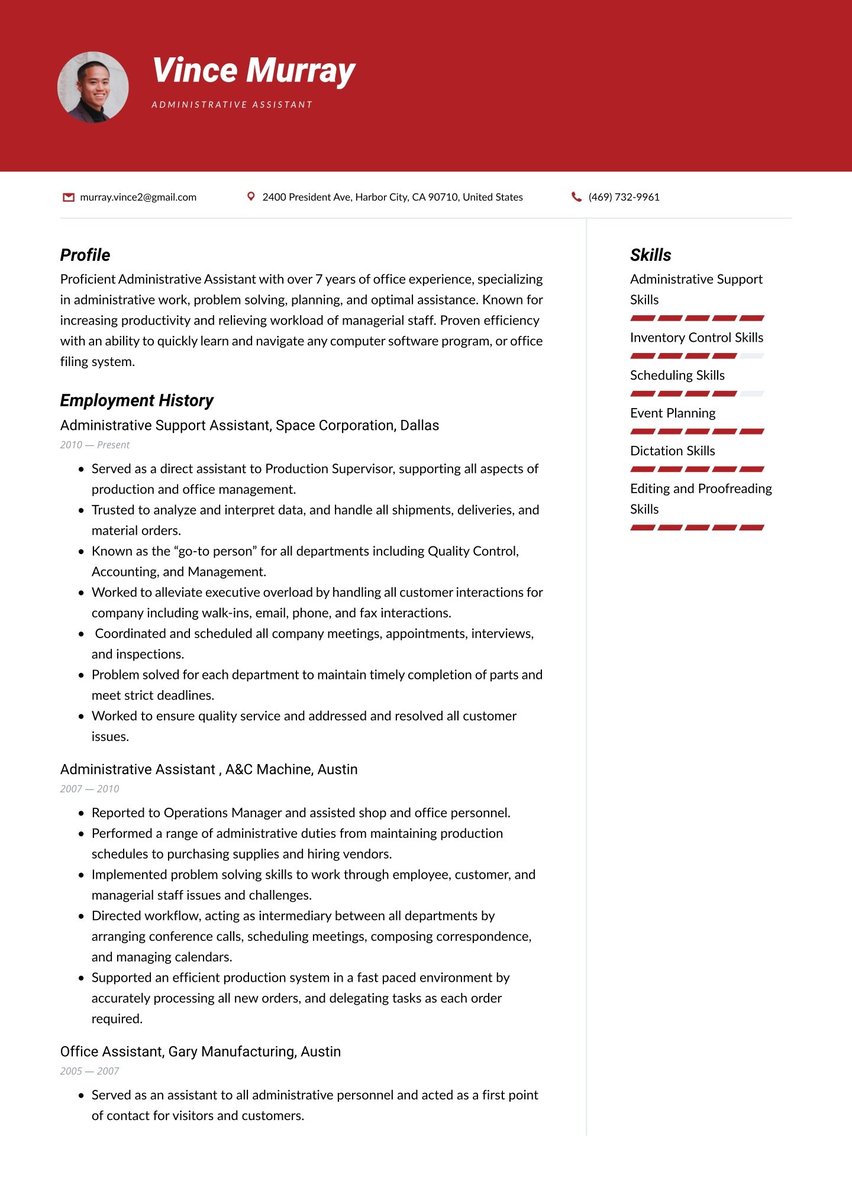
Art Director resume example

A smart fit for Art Directors, this sleek, modern layout spotlights your creativity and leadership. Its balanced structure and bold headers showcase your design expertise and project management skills, impressing clients and creative teams alike.
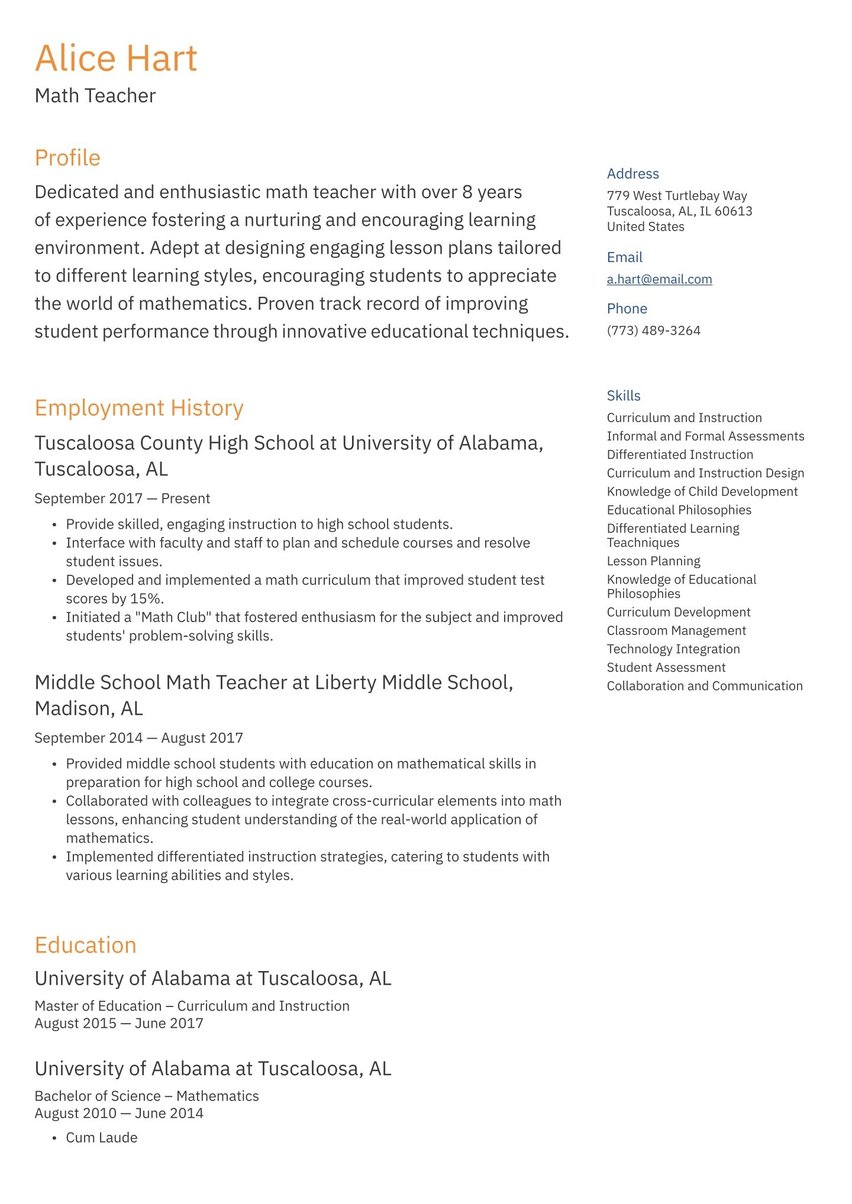
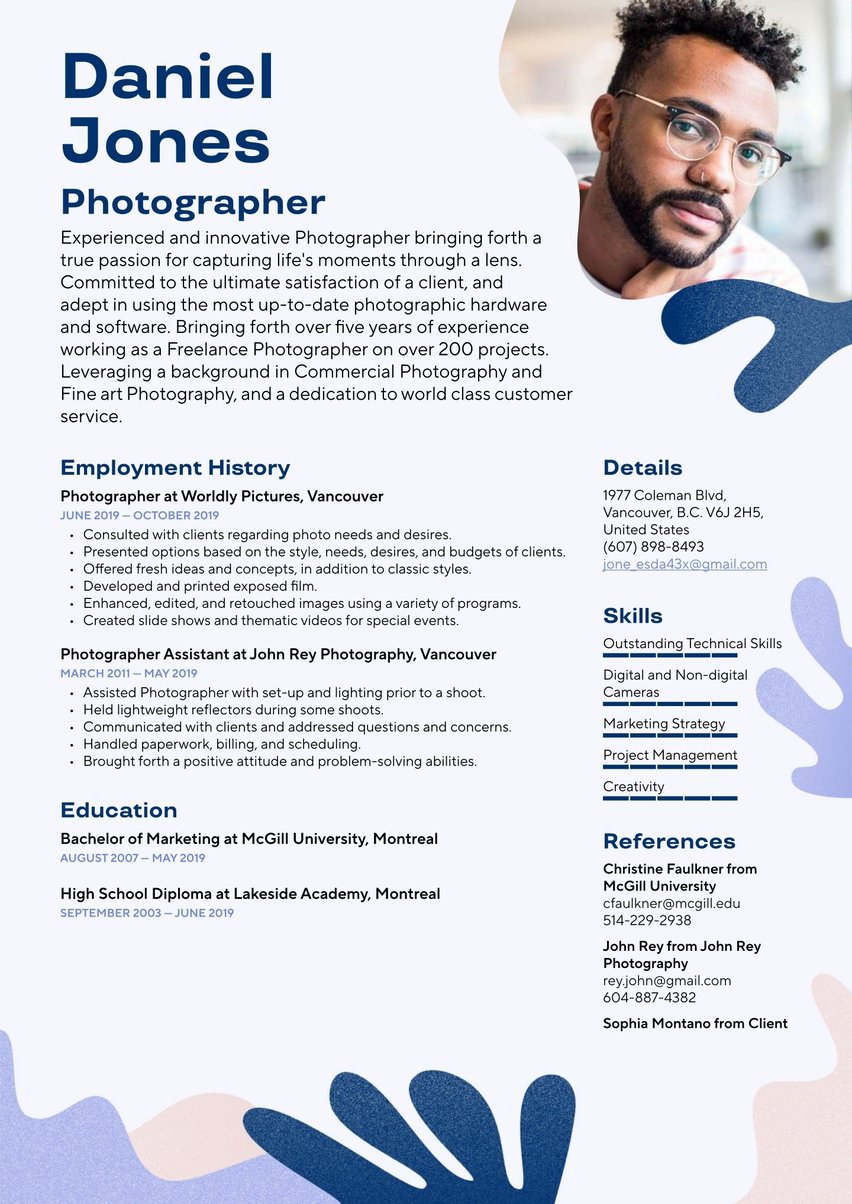
Photographer resume example

Tuned for creative professionals, this sleek, minimalist layout spotlights your artistic eye and technical expertise as a Photographer. Its clean structure and subtle accents emphasize your portfolio and achievements, captivating clients and employers alike.
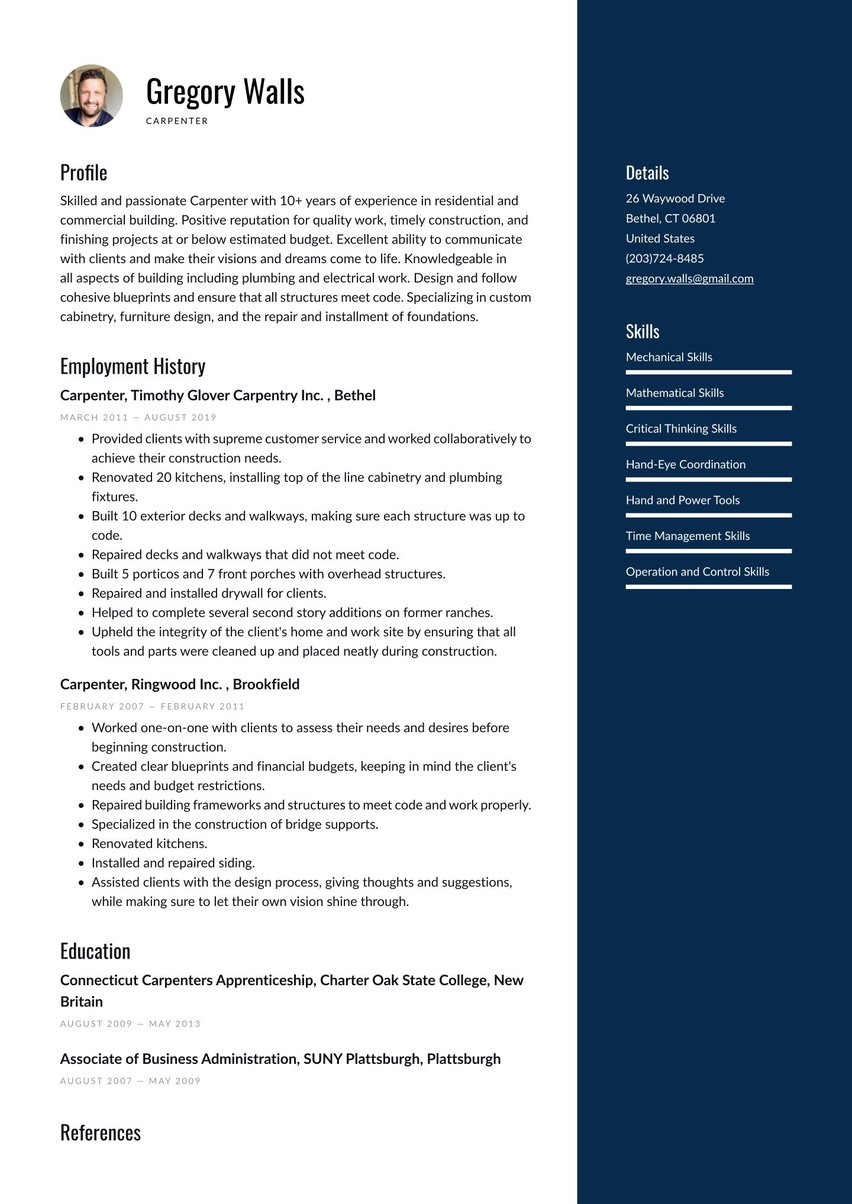
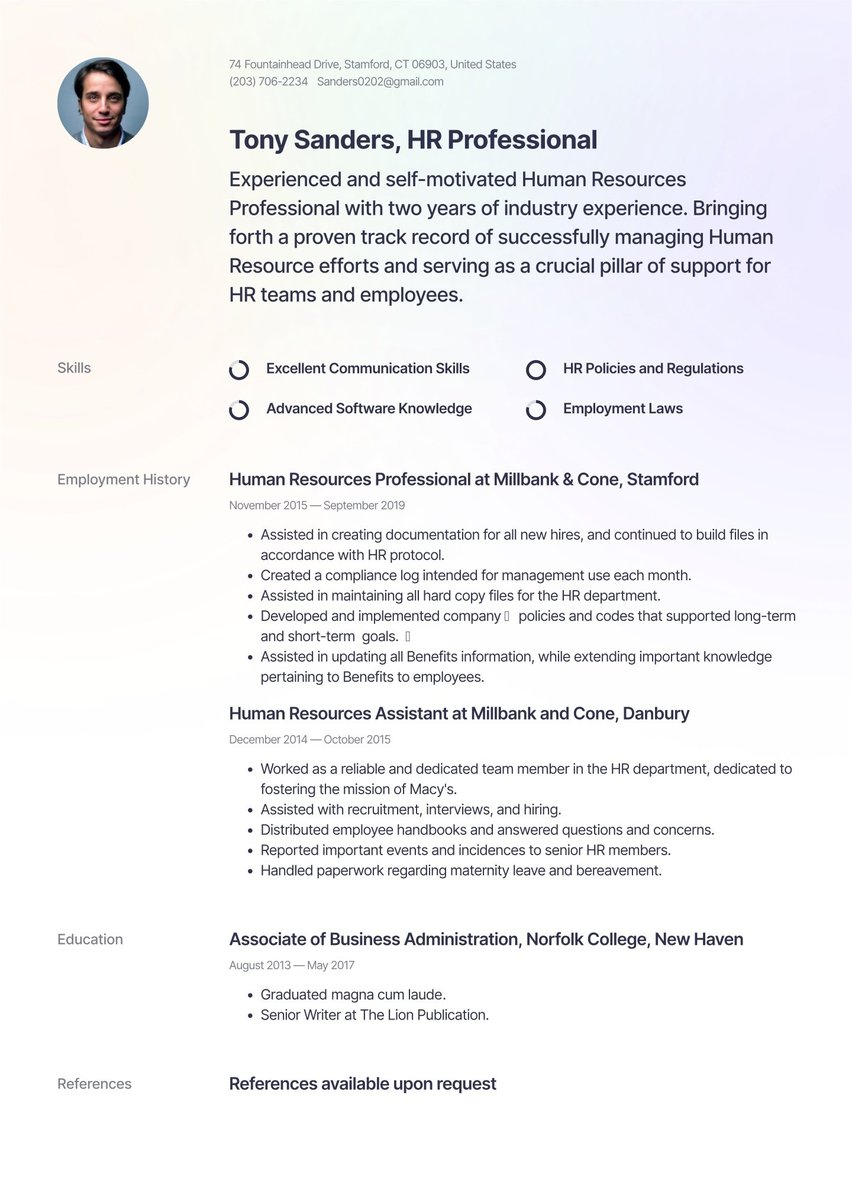
Visual Artist resume example

Crafted for visual artists, this bold, gallery-inspired layout spotlights your creativity with clean lines and dynamic spacing. Its modern structure highlights your technical skills and artistic achievements, impressing clients and creative directors alike.
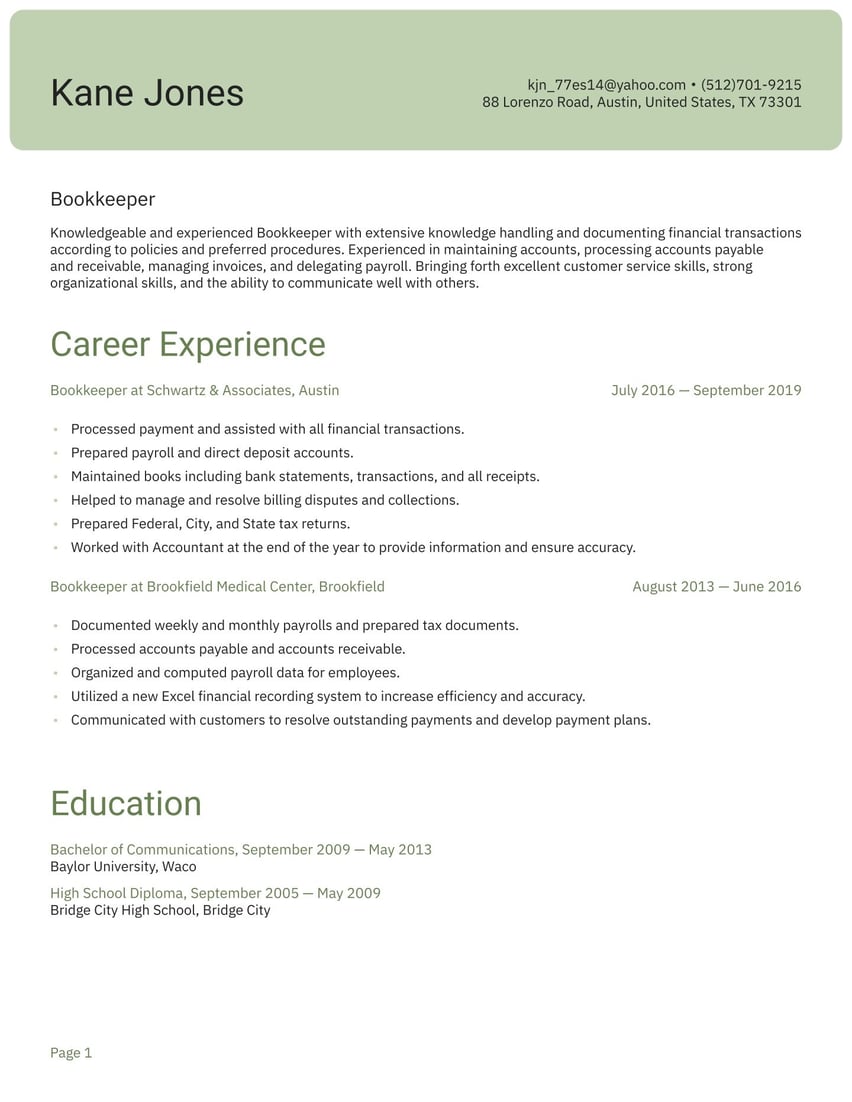
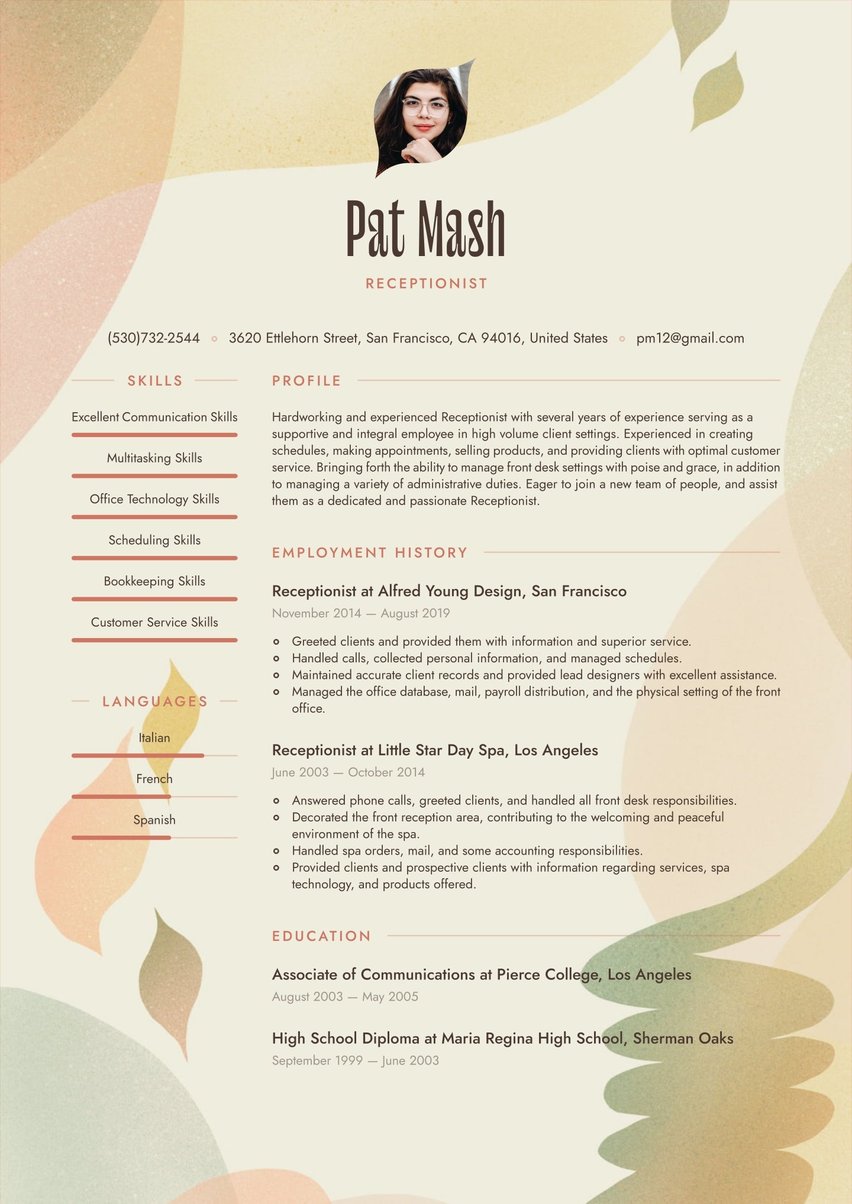
Motion Graphics Artist resume example
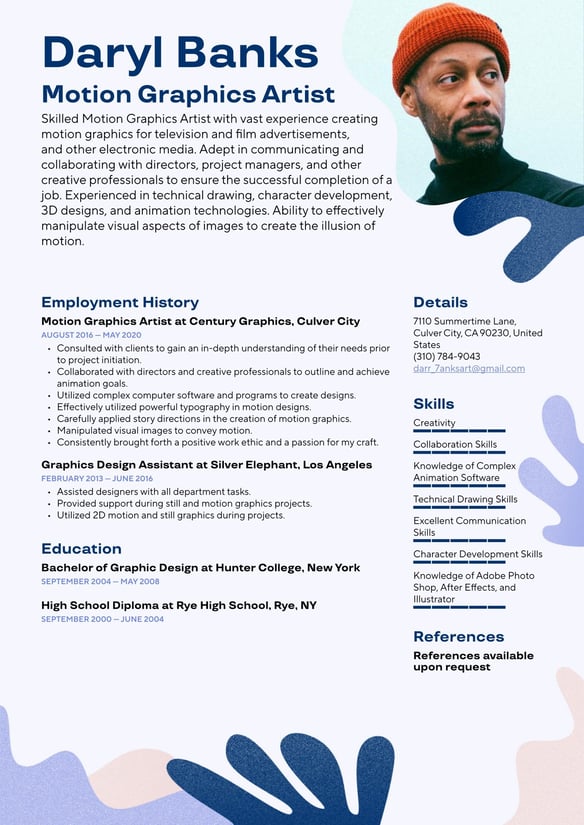
Tuned for creative visionaries, this sleek, dynamic layout spotlights your technical expertise and artistic flair as a Motion Graphics Artist. Its clean structure and bold typography amplify your skills, ensuring your portfolio captivates creative teams and directors.
Digital Marketing resume example

Created for digital marketing managers, this sleek, modern layout highlights your strategic expertise and analytical skills. Its clean structure and bold headings showcase accomplishments with clarity, helping you impress data-driven and creative audiences alike.
Creative Director resume example
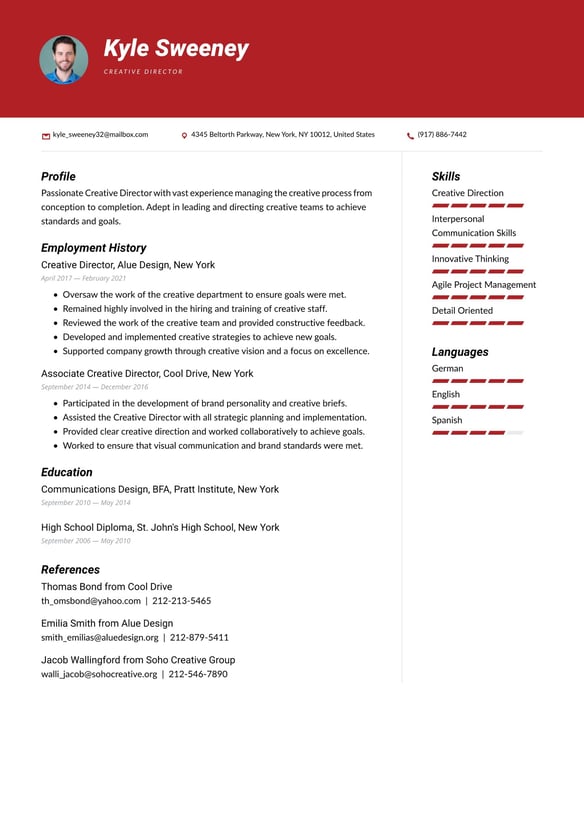
Tuned for bold visionaries, this sleek, modern layout spotlights your leadership and innovation as a Creative Director. Its clean structure and elegant typography amplify your expertise, inspiring confidence in clients and creative teams alike.
Illustrator resume example

A smart fit for Illustrators, this template’s clean, creative layout highlights your artistic flair and technical expertise. Its balanced structure showcases your skills and projects, helping you connect with clients and creative teams effortlessly.
Videographer resume example

Crafted for creative storytellers, this sleek, modern layout spotlights your technical skills and artistic vision as a Videographer. Its clean structure and bold headings amplify your expertise, ensuring your narrative captivates clients and employers alike.
How to write a graphic designer resume
Writing a graphic designer resume comes down to four clear steps.
Work through them in order and you will have a focused, interview-ready document that reads as cleanly as it looks.
Step 1: Open with a focused summary
Your summary is the trailer for everything below it, so use two or three sentences to state your specialism, your experience level, and the value you bring.
Name your strongest tools and the kind of design you do, rather than listing generic traits.
A sharp opening tells a creative director what type of designer you are within seconds.
- Example: "Graphic designer with six years of experience in brand identity and packaging, fluent in Adobe Illustrator and InDesign, delivering visual systems that hold up across print and screen."
Step 2: Lead with measurable achievements
Hiring managers want outcomes, not task lists, so frame your work using a simple Action plus Tool plus Result formula.
Swap vague duties like "oversaw design work" for the specific impact you created, and attach a number wherever you honestly can.
Numbers give your creative claims something concrete to stand on.
- Example: "Redesigned a client's campaign landing pages in Figma, increasing click-through rate by 18% across three product launches."
Step 3: Match the job description
Every posting uses slightly different language, so read it closely and mirror the terms that matter before you submit.
If a role emphasizes typography and UI work, those words belong in your summary and skills, assuming they are true of you.
Tailoring signals genuine interest and helps your resume pass automated screening.
- Example: "A posting asking for 'brand identity' and 'design systems' should see both phrases reflected honestly in your summary and experience bullets."
Step 4: Choose a clean, ATS-safe format
A cluttered layout can break automated parsing and tire a recruiter's eyes, so keep your structure simple and your text selectable rather than trapped in images.
Save the experimental work for your portfolio and let the resume prove you can organize information with discipline.
The layout you choose is itself a quiet demonstration of your judgment.
- Example: "One column, clear section headings, a readable font, and a single accent color read well to both a person and a scanner."
What are some effective ways to format a graphic designer resume?
Reverse chronological is the right format for most graphic designers, because it puts your most recent and relevant work where hiring managers look first.
A functional or skills-based layout fits better if you are new to the field, returning after a break, or building a career mostly from freelance projects.
The table below shows when each option makes sense and what to watch for.
| Format | Best for | Watch out for |
|---|---|---|
| Reverse chronological | Designers with steady, relevant experience | Highlights gaps if your history is uneven |
| Functional (skills-based) | Career changers, new designers, freelancers | Some recruiters distrust it if it hides dates |
| Hybrid | Designers with strong skills and solid experience | Can run long if you are not disciplined |
Whichever you choose, keep the visual treatment restrained.
Your portfolio carries the creative range, while the resume proves you can present information with structure and clarity.
How can I make my graphic designer resume stand out to employers?
The single most effective way to stand out is to put your portfolio link near the top and make it impossible to miss, because in creative hiring the portfolio is often reviewed before the resume itself.
Treat the resume as the clear, structured proof of skill and impact, and treat the portfolio as the evidence.
Together they answer the only two questions a creative director really has: can you do the work, and can you organize your thinking.
Beyond the portfolio, one habit sets serious candidates apart: keeping two versions of your resume ready.
Recruiters and designers repeatedly point out that the same document rarely works everywhere, so a two-version approach removes the compromise:
- Version A, the ATS-clean resume: A single-column, low-decoration layout built to pass automated screening at larger companies and job boards.
- Version B, the creative resume: A portfolio-styled document with subtle branding, used for agencies, startups, and direct outreach where a human sees it first.
Match whichever version you send to how the application will be read, and your work will land in front of the right eyes in the right context.

What skills should I highlight in a graphic designer resume?
Highlight a balanced mix of technical software skills and the soft skills that prove you can work with clients and teams, because employers now screen for both.
Lead with the tools and disciplines named in the job posting, then support them with the human skills that keep projects on track.
Grouping them makes the list of skills easy to scan for a recruiter and easy to parse for a tracking system.
Hard skills that carry weight
- Adobe Creative Suite (Photoshop, Illustrator, InDesign, After Effects)
- Figma and Sketch for interface and layout work
- Typography, color theory, and layout design
- Branding, logo, and print production
- UI and UX basics, plus emerging AI design tools
Soft skills that round you out
- Communication and presenting concepts to clients
- Creative problem solving and adapting to feedback
- Time management across multiple deadlines
- Creativity and brainstorming ideas
- Collaboration with cross-functional teams
Do not let the skills box do all the work.
The strongest resumes prove each claim inside the experience section, showing where a skill produced a real result rather than simply asserting it.
Are there specific keywords that hiring managers look for in graphic designer resumes?
Yes, and the most reliable source for them is the job description itself, because applicant tracking systems rank resumes partly on how closely they match the posting's language.
Most companies use these systems to filter applications before a person reviews them, so a resume missing the expected terms can be screened out despite strong work.
The fix is to mirror the exact phrasing a role uses, provided it reflects your real experience.
Keywords are not universal, though, since a packaging role and a motion role reward very different terms.
| Design specialism | Keywords hiring managers look for |
|---|---|
| Brand and identity | Brand identity, visual systems, logo design, style guides |
| Digital and UI | UI design, UX basics, Figma, design systems, responsive layout |
| Print and packaging | Typography, print production, layout, prepress, packaging |
| Motion and social | After Effects, motion graphics, social assets, storyboarding |
Match your resume to the column that fits the role, and pull the exact software names from the posting itself.
Copying a role's real language beats any generic keyword list, because it reflects the specific work that employer needs done.
How can I optimize my graphic designer resume with the right keywords?
Read the posting closely and pull out the repeated nouns and tools, then place them naturally in your summary, skills, and experience bullets.
Keep the language honest, because an interview will quickly expose any skill you claimed but cannot demonstrate.
Aim for genuine matches rather than stuffing, since modern systems weigh context, and a human reader will notice keyword padding straight away.
How can I highlight my experience effectively in a graphic designer resume?
Present your experience in reverse chronological order with bullet points that show outcomes, not duties, so the reader sees the value you delivered at each role.
Start each bullet with an action verb, name the tool or method where it adds clarity, and attach a measurable result whenever one exists.
Ten to fifteen years of relevant history is plenty, and older roles can sit in an undated "Additional experience" line.
Six tips for framing your experience well:
- Open each bullet with a strong verb like designed, led, or produced, not "responsible for."
- Name the specific tool or method when it sharpens the point, such as Figma or InDesign.
- Quantify the result with a percentage, volume, or timeframe wherever you honestly can.
- Show scope by noting audience size, number of assets, or the platforms the work reached.
- List freelance projects in the same shape as staff roles, with dates and a client or "Self-employed."
- Cut duties that any designer could claim, and keep only the work that shows your impact.
Framed this way, each role reads as a record of results rather than a summary of responsibilities, which is exactly what a hiring manager scans for.
How should I tailor my graphic designer resume for different job applications?
Tailor every application by reading the specific posting, then adjusting your summary, skills order, and experience bullets to match what that role values most.
A branding studio, a product team, and a print house look for different strengths, so the version you send should foreground the work that fits the job in front of you.
This takes minutes once your base resume is strong, and it noticeably improves your response rate.
A practical tailoring routine looks like this:
- Read the posting twice and mark the skills and tools it repeats.
- Reorder your skills so the most relevant ones sit first.
- Swap one or two experience bullets to spotlight matching work.
- Adjust your summary line to name the specialism the role centers on.
The goal is not a new resume each time.
It is a focused edit that makes the reader feel the role was written with them in mind.
What are common mistakes to avoid when writing a graphic designer resume?
The most damaging mistakes are over-designing the layout, hiding the portfolio link, and listing duties instead of results.
Designers often assume a heavily styled resume proves creativity, but dense graphics, decorative fonts, and skill-rating bars tend to confuse tracking systems and slow human readers down.
A single typo does even more harm on a designer's resume, where attention to detail is part of the job.
Watch for these specific pitfalls:
- Burying the portfolio link, or forgetting to make it clickable in a digital file
- Replacing text with icons or images that a tracking system cannot read
- Using star ratings or bar charts to represent skill levels
- Writing generic bullets that could belong to any designer
- Letting the resume spill past two pages without strong reason
Fixing these is mostly about restraint.
Let the portfolio show range, keep the resume clean and legible, and make sure every claim on the page earns its place.
Key tips for writing a compelling graphic designer resume
- Put your portfolio link near the top and make it clickable, since it is often reviewed before the resume in creative hiring.
- Lead every experience bullet with an outcome, using an Action plus Tool plus Result formula and a number wherever you honestly can.
- Group your skills into hard and soft categories so both recruiters and tracking systems can scan them quickly.
- Keep two resume versions ready, one ATS-clean for online applications and one lightly styled for agencies and direct outreach.
- Mirror the exact language of each job posting in your summary and skills, provided every claim is true of you.

Graphic designer job market and outlook
Graphic design remains a competitive field with steady demand, so understanding the numbers helps you set realistic expectations and target the best-paid corners of the industry.
The median annual wage for graphic designers was $61,300 in May 2024, with the lowest 10% earning under $37,600 and the highest 10% earning over $103,030 (US Bureau of Labor Statistics).
Pay varies widely by specialism and sector, which is worth weighing as you decide where to aim.
Employment is projected to grow 2% between 2024 and 2034, slower than the average across all occupations, yet about 20,000 openings are expected each year as designers move roles or leave the workforce (US Bureau of Labor Statistics).
Specialized design services and advertising tend to pay above print and publishing, so the industry you enter shapes your earning potential as much as your skill does.
Frequently asked questions
A few common questions come up repeatedly from graphic designers preparing their resumes.
Should a graphic designer resume be one page?
Yes, in most cases one page is right, especially for entry-level and mid-career designers.
A single, well-organized page shows you can prioritize and edit, which are core design skills.
Move to two pages only when you have extensive senior experience that a hiring manager genuinely needs to see.
Do I need a separate portfolio if my resume has design work on it?
Yes, a dedicated portfolio is essential in graphic design hiring, because employers want to see full projects, not thumbnails on a resume.
Keep the resume clean and text-based, and let a clearly linked online portfolio carry your visual work.
Update it every few months so your strongest recent pieces lead.
Can I use a creative resume template as a graphic designer?
Yes, but with care.
A lightly styled template works well for agencies and direct outreach where a person reviews it first, while a plain, single-column version is safer for large employers using automated screening.
Keeping both ready means you never have to compromise readability for style.