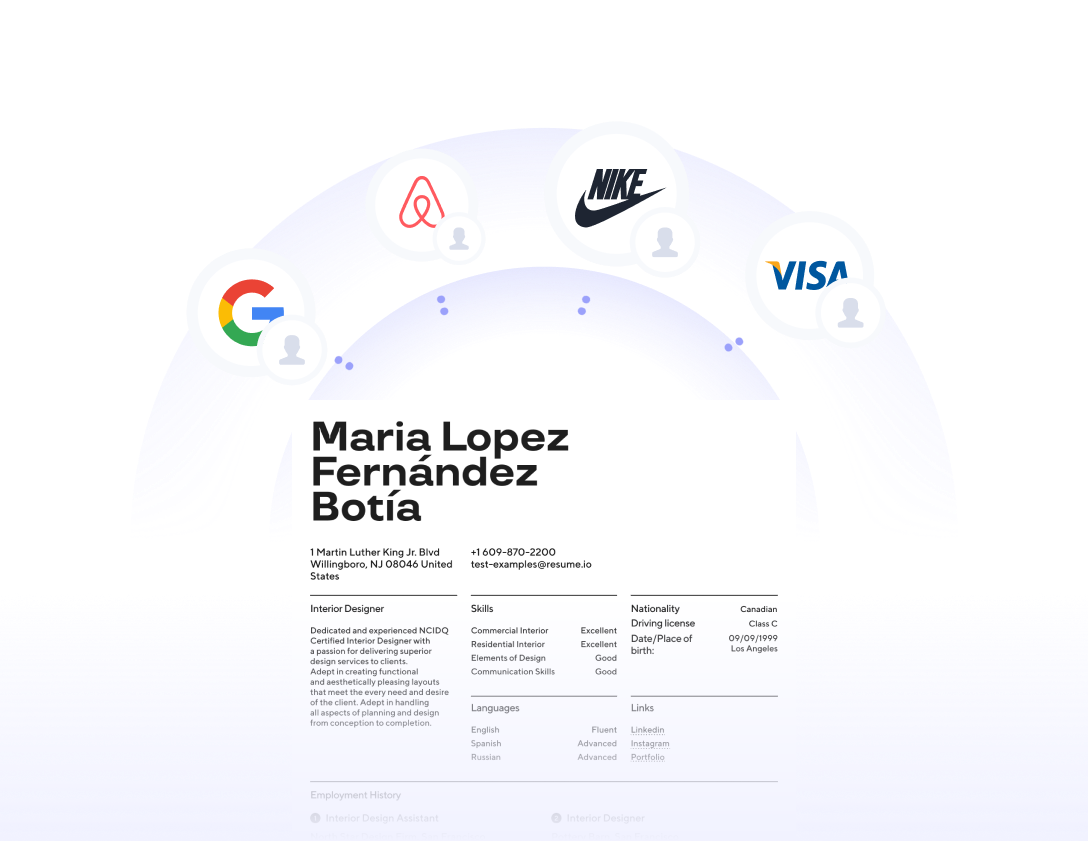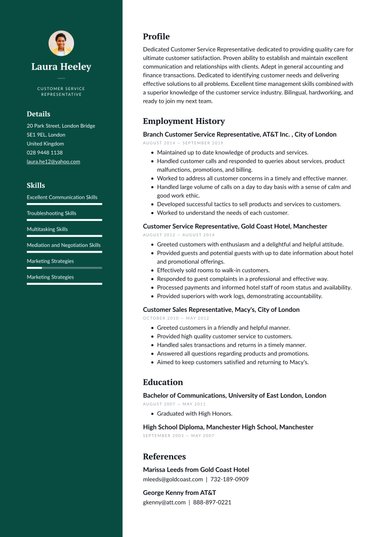

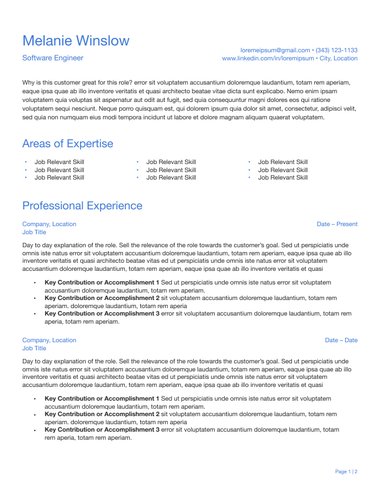

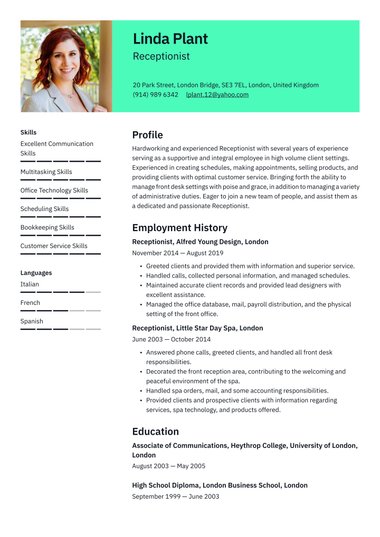
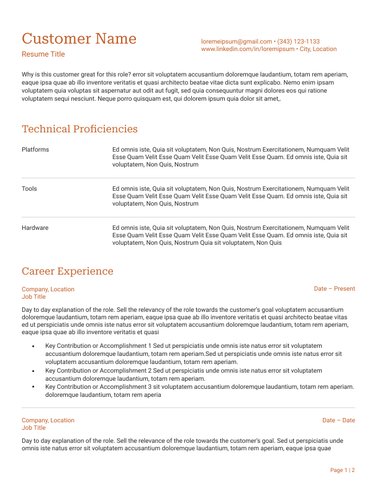

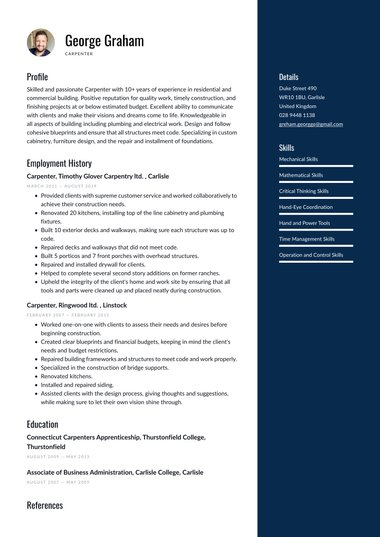
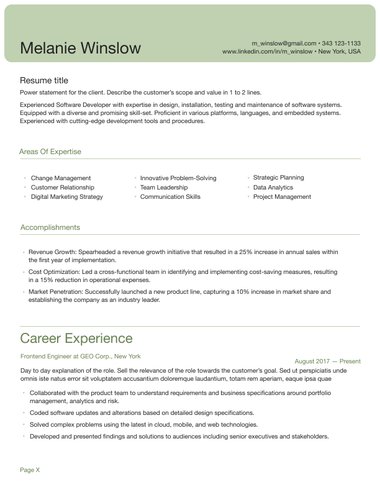
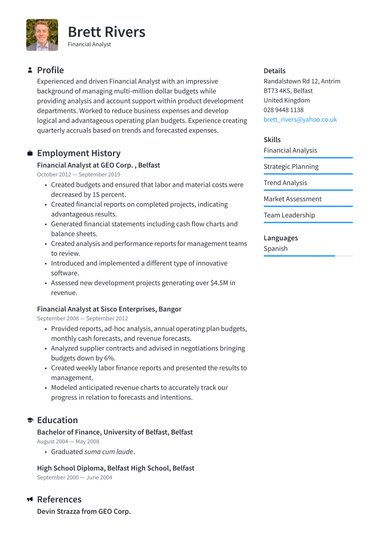
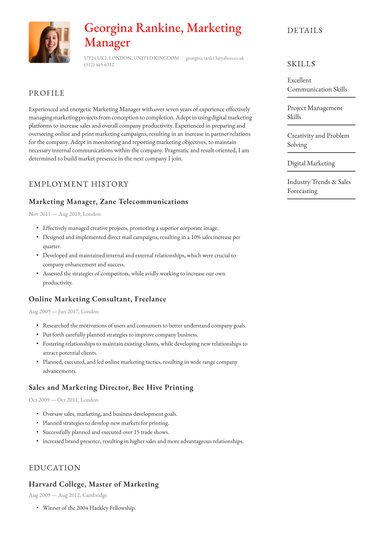
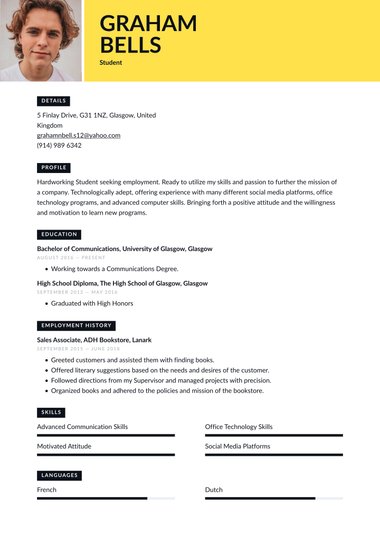
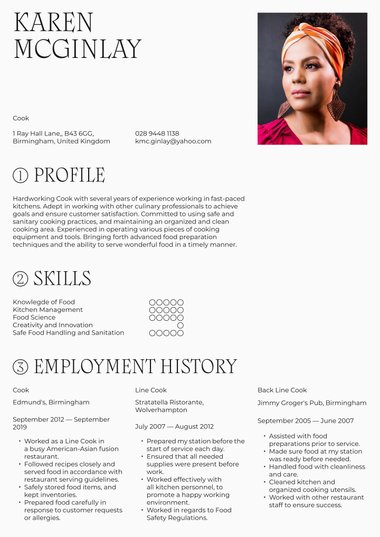
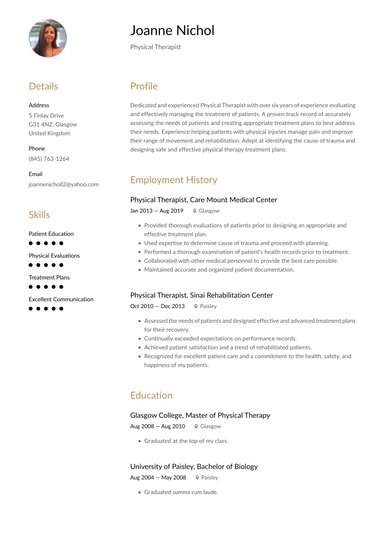
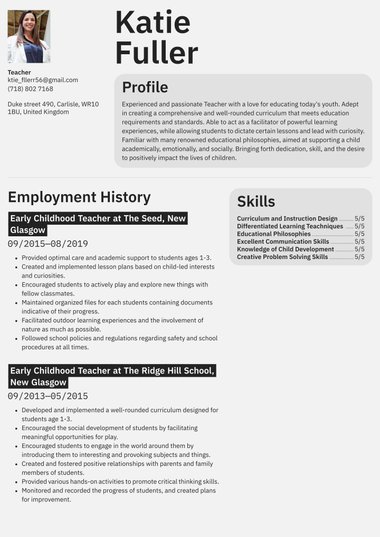
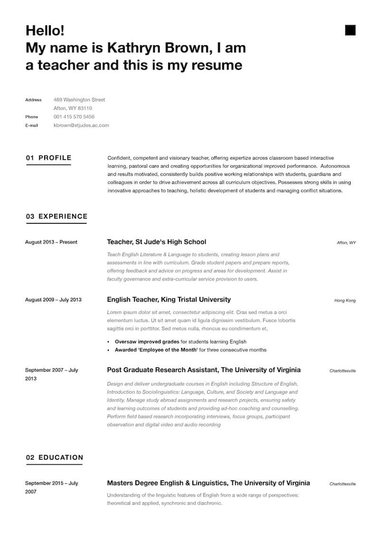
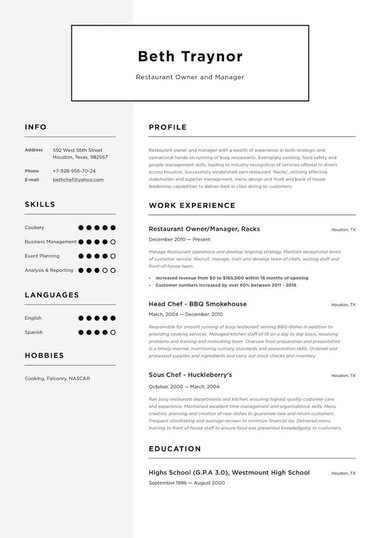
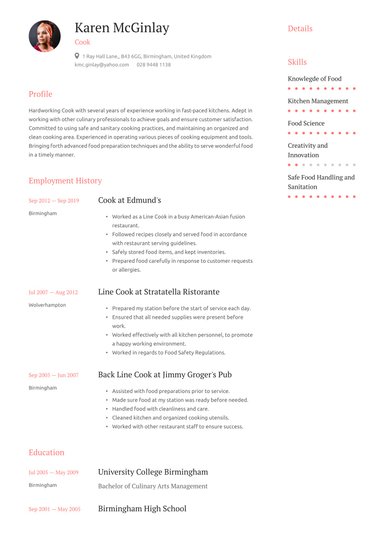
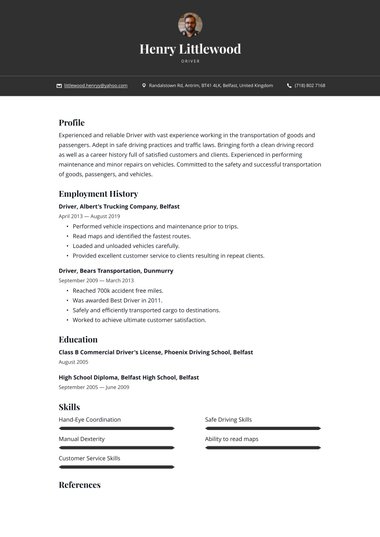
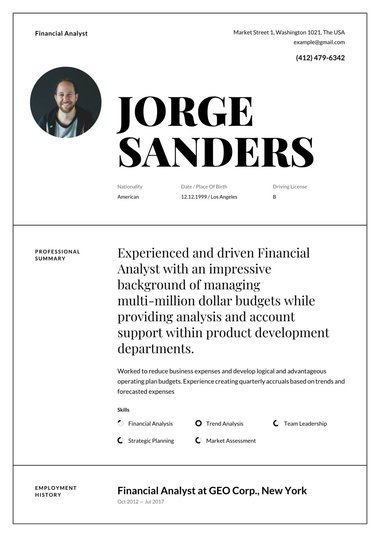
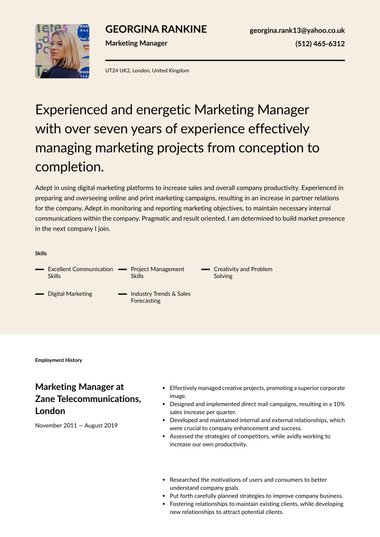
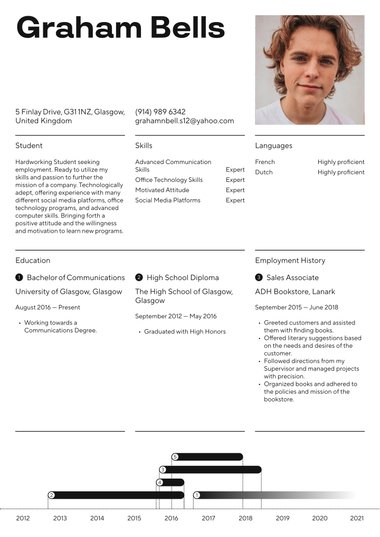
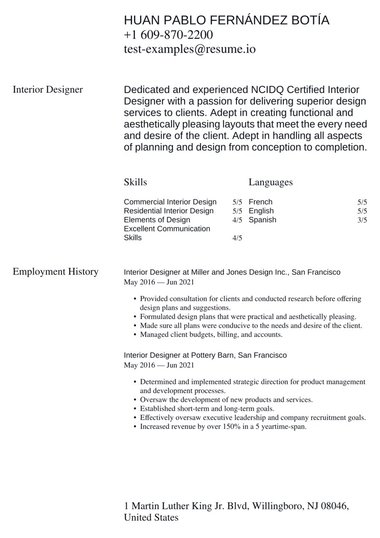
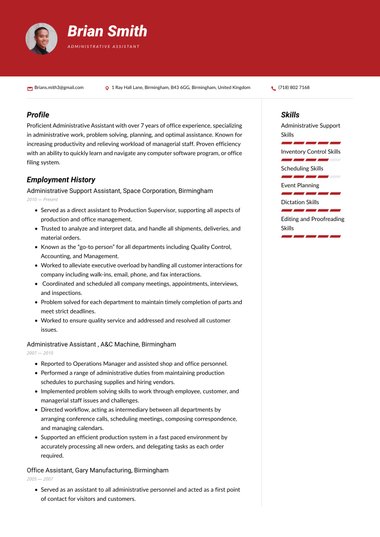
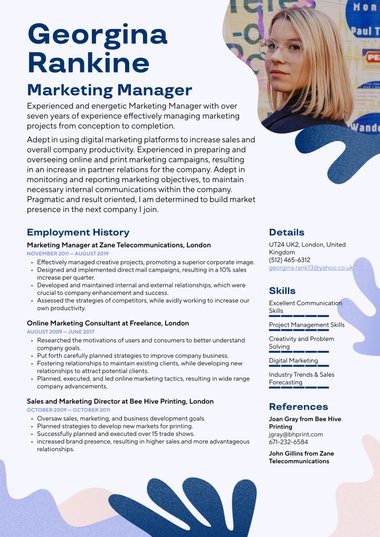
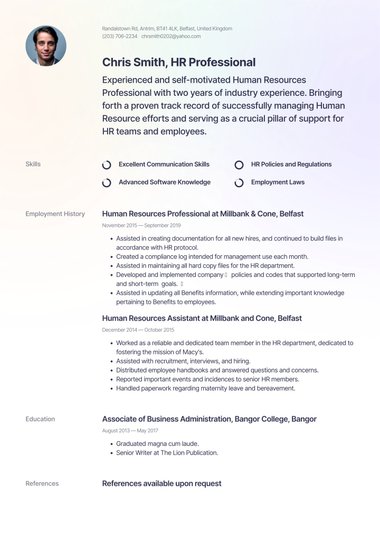
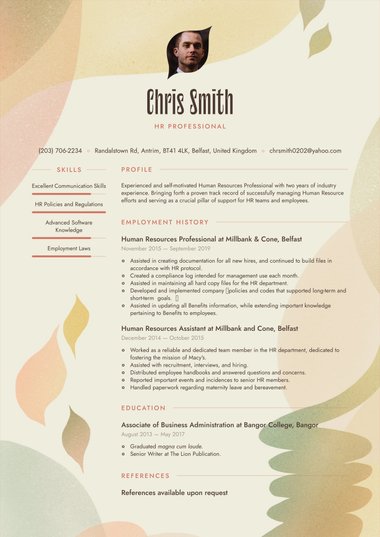
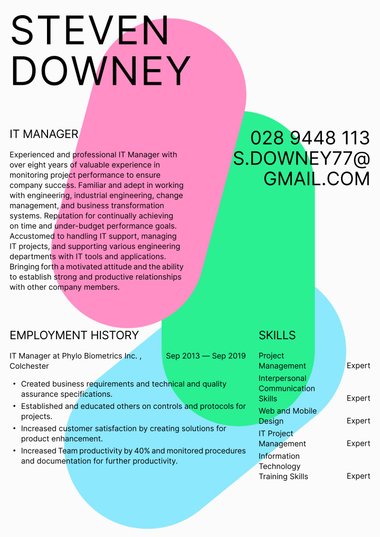
A one-page CV template gives you a layout built to fit your experience, relevant skills, and education onto a single A4 page.
Page length depends on how much you write, so every Resume.io template on this page can produce a one-page CV, and you can choose on style alone.
Pick a layout below, add your details, and download your CV as a PDF.
Does your CV have to be one page?
No, your CV does not have to be one page.
Most UK CVs run to two A4 pages, but one page is often the better choice for school leavers, graduates, career changers, and anyone with a short work history.
Senior, academic, medical, and scientific roles usually need more space.
When you are writing your CV, length is one decision among many, alongside the format and how closely you tailor it to the job description.
These factors decide whether one page is right for you:
| Factor | One page suits you if | A longer CV suits you if |
|---|---|---|
| Industry norms | You work in a field where short, skills-based CVs are common, such as retail or hospitality | You work in academia, medicine, science, or senior management, where detail is expected |
| Experience level | You are a school leaver, graduate, or career changer with limited relevant experience | You have several relevant roles and achievements to show |
| Job requirements | The advert asks for core skills you can evidence briefly | The role asks for a detailed record of technical skills or projects |
A one-page CV also has a practical advantage when an employer prints applications, as there is no second page to get separated from the first.
For part-time, seasonal, and entry-level roles, one page is usually enough to cover everything the advert asks for.
What are the pros and cons of a one-page CV?
A one-page CV is quick to read and shows a recruiter you can prioritise what matters.
Its main drawbacks are limited space for detail and the temptation to cram content in with small fonts and narrow margins, which makes the page harder to read.
| Pros | Cons |
|---|---|
| Concise: Only your most relevant information makes the cut, which keeps a recruiter reading | Limited space: Extensive experience may mean cutting achievements you would rather keep |
| Easy to scan: Key details are quick to locate | Less context: The scope of technical or senior work can be hard to explain briefly |
| Shows judgement: Editing to one page proves you can identify and communicate what matters | Formatting pressure: Squeezing content in can shrink fonts and margins until the page looks crowded |
| Shows industry knowledge: In fields where one page is the norm, it signals you know the expectations | Sparse risk: With very little to include, a one-page layout can leave obvious gaps |
Formatting pressure is the one con you fully control.
Keep body text at 10 points or larger, and leave margins wide enough that the page does not look crammed.
When content still spills over, cut words before you shrink anything, or try a more compact design from our wider range of CV templates.
What should you include on a one-page CV?
A one-page CV should include your contact details, a short personal statement, your work history, key skills, and education.
Add awards or publications only when they are relevant to the job, as every line on a one-page CV needs to support your application.
- Contact information: Put your name, phone number, email, and location at the top, so a recruiter can reach you.
- Professional summary: Write a two to three sentence personal statement that sums up your experience and what you offer.
- Job history: List roles in reverse-chronological order, with company name, job title, location, and dates, followed by your achievements, quantified where you can.
- Skill list: Include the hard and soft skills that match the job advert.
- Education and certifications: Add your degree, university, and location, plus any professional certifications.
- Awards or publications: Add these at the bottom if they show something the job needs.
The order of these sections can change with your situation.
Graduates can place education above job history, while experienced candidates should lead with their work.
Whichever order you choose, your strongest evidence should sit in the top third of the page, where it is read first.
What should you leave off a one-page CV?
Leave off anything that does not help you get this particular job, from unrelated roles to everyday duties.
Personal details and references also take up space a one-page CV cannot spare, and an old-style career objective is better replaced altogether.
- Day-to-day tasks: Focus on achievements and results instead of routine duties.
- A career objective: Swap it for a personal statement, which tells the employer what you offer, not what you want.
- Personal details: Your date of birth, marital status, religion, political views, and hobbies can go, unless the hobbies relate to the role.
- References: Employers will ask for them if they are interested, so a line saying references are available on request is not needed.
- Unrelated jobs: Cut positions that do not support this application.
Cutting is easier with the job advert open beside you.
Highlight the skills and duties it mentions, then check each line of your CV against them.
Anything without a match is a candidate for removal.
How far back should a one-page CV go?
A one-page CV should usually cover the last 10 to 15 years of your career.
That keeps the focus on your recent experience and achievements, which are the details a hiring manager most wants to see, and it makes the page quicker to scan.
Limiting the time span also reduces the risk of age discrimination.
Age is a protected characteristic under the Equality Act 2010, but unfair treatment still happens.
The right span depends on your career stage:
| Career stage | What to include |
|---|---|
| School leaver or graduate | Education, part-time work, volunteering, and placements |
| Early career | Every relevant role, with your strongest results |
| Mid or late career | Recent roles in detail, with earlier roles reduced to a line each |
| Career changer | Transferable skills first, then the roles that prove them |
If you want to show older roles, list them under an additional experience heading without dates.
A recruiter still sees the breadth of your background, and the page stays focused on what you have done recently.
Key tips
- Start each bullet point with an action verb and end it with a result, so each line shows what you achieved.
- Combine short, related roles, such as several temporary contracts with the same agency, into a single entry.
- Put your contact details on one line, separated by vertical bars, to save space at the top.
- Trim bullet points that end with a single word on its own line, as a few cut words can free up a whole line.
- Save and send your CV as a PDF, so it stays on one page when an employer opens it.
Frequently asked questions
These are the questions job seekers most often ask before choosing a one-page CV template.
Is a one-page CV the same as a resume?
No, although the two look similar. A resume is the US term for a short job application document, often one page long, while a UK CV usually runs to two pages.
A one-page CV follows UK conventions, such as a personal statement and no photo, in a shorter format.
Should a one-page CV include a photo?
No, most UK employers prefer a CV without a photo, and on a one-page CV the space is better used for your experience.
Add a photo only if the job advert asks for one, as some acting and modelling roles do.
Should I send a cover letter with a one-page CV?
Yes, send a cover letter with a one-page CV unless the job advert says not to.
The cover letter gives you room for the context a one-page CV leaves out, such as why you want the role and what drew you to the employer.